
- How insurance reimbursement affects Nevada health care (reviewjournal.com)

It’s been in the air for much of the past year, and as many of the some-feared and some-promised changes have happened around us, those health care business owners who rely on insurance reimbursement have waited with bated breath for a sign of what’s to come. The Trump administration has promised, via stump speech and now executive order, the rapid repeal and replacement of the Affordable Care Act, but what is simple to say is often far more difficult to accomplish.
- MEDICARE UNSUSTAINABILITY... the U.S. population continues to age... This has contributed to explosive growth in Medicare participation...
- INSURING THE UNINSURED...the American public has determined to no longer accept 30 million uninsured Americans who are not Medicare-eligible as the status quo. Caring for these individuals through catastrophic care via public emergency rooms has become untenable both fiscally and morally…
- VALUE-BASED CARE...care reimbursement models have been established to replace the traditional fee-for-service model that has dominated American health care for generations. FFS models reimburse health care providers for services rendered in the form of treatment or testing and have seen unsustainable inflation over the past 10 years…
- ELECTRONIC HEALTH RECORDS...One of the key elements of a VBC system is the interoperability of health care records, which permits and encourages (by ease of use) coordination of care across providers...This reduces redundancies and the probability of contraindicated treatment being administered in good faith…
- ACCOUNTABLE CARE ORGANIZATIONS...are groups of health care providers who come together to voluntarily give coordinated high-quality care to their Medicare patients. ACOs tie payments to quality metrics and the cost of care…
- WHAT’S NEXT?...Increase capacity utilization...Consolidation…
- SCALING UP...While apparently antithetical to the current market, scaling up is the external version of increasing capacity utilization. Often a practice’s assets can only be maximized by increasing the scale of the practice...
- Express Scripts Reveals What Really Drives Drug Spending—And Why the Government May Do No Better (drugchannels.net)

Last week, Express Scripts released its 2016 Drug Trend Report for the commercial market…For 2016, drug trend—the year-over-year change in spending—was a mere 3.8% for Express Scripts’ commercial plan sponsor customers. The Express Scripts data also highlight how drug prices were only part of the reason behind moderating drug spend. Contrary to the public rhetoric, increased utilization was a bigger influence than higher prices for both specialty and traditional drugs...The new Express Scripts report deconstructs year-over-year changes in drug spending into its two primary components:
- Unit costs—the payer’s cost per unit of therapy. Unit costs vary with: 1) the rate of inflation in brand-name drug prices, 2) shifts to different drug options within a therapeutic class, 3) a shift in mix of therapeutic classes utilized by beneficiaries, and 4) the substitution of generic drugs for brand-name drugs. Note that for the second year in a row, the Express Scripts unit cost data account for the value rebates shared with payers.
- Utilization—the total quantity of drugs obtained by a payer’s beneficiaries. Utilization varies with: 1) the number of people on drug therapy, 2) the degree to which people adhere to their drug therapy, and 3) the average number of days of treatment.
- This Week in Managed Care: February 3, 2017 (ajmc.com)

Laura Joszt, assistant managing editor at The American Journal of Managed Care. Welcome to This Week in Managed Care from the Managed Markets News Network
- This Week in Managed Care: January 27, 2017 (ajmc.com)

Laura Joszt, assistant managing editor at The American Journal of Managed Care. Welcome to This Week in Managed Care from the Managed Markets News Network
- This Week in Managed Care: February 17, 2017 (ajmc.com)
Laura Joszt, assistant managing editor at The American Journal of Managed Care. Welcome to This Week in Managed Care from the Managed Markets News Network
- New website will help Nevadans understand perils of opioid medications (reviewjournal.com)

The state medical board has launched a new website designed to help Nevadans understand the impacts of using opioid-based medications...The knowyourpainmeds.com website created by the state Board of Medical Examiners will also serve as a portal for consumers to file a complaint if they feel their medical provider is not acting appropriately related to the prescribing of medications...We feel that the launch of this new informational tool clearly demonstrates the board’s commitment to creating awareness and our efforts to address this problem...Opioid abuse is expected to be a significant issue for the Nevada Legislature this session...
- Pharmacy Week in Review: February 3, 2017 (pharmacytimes.com)

Kelly Walsh, PTNN. This weekly video program provides our readers with an in-depth review of the latest news, product approvals, FDA rulings and more.
- Pharmacy Week in Review: February 17, 2017 (pharmacytimes.com)

Kelly Walsh, PTNN. This weekly video program provides our readers with an in-depth review of the latest news, product approvals, FDA rulings and more.
- Pharmacy Week in Review: February 10, 2017 (pharmacytimes.com)

Brian Haug, President of Pharmacy and Managed Markets, Pharmacy Times (PTNN) This weekly video program highlights the latest in pharmacy news, product news, and more.
- Walgreens, Rite Aid amend deal to $7 per share, extend end date (drugstorenews.com)
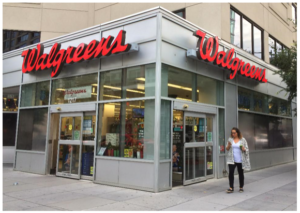
Walgreens Boots Alliance and Rite Aid on Monday morning extended their previously announced definitive merger agreement under which Walgreens Boots Alliance will acquire all outstanding shares of Rite Aid...The retail pharmacy operations also restructured a new deal that would value Rite Aid at between about $6.8 billion and $7.4 billion, depending on required store divestitures, down from an initial acquisition cost of $9.4 billion...Under the terms of the amendment, the parties have agreed to reduce the price for each share of Rite Aid common stock to be paid by Walgreens Boots Alliance...price will be a maximum of $7 per share and a minimum of $6.50 per share...Walgreens Boots Alliance will be required to divest up to 1,200 Rite Aid stores and certain additional related assets if required to obtain regulatory approval...