
- Study: With FDA Input, Compassionate Use Programs Appear to Work Well (ptcommunity.com)Availability of Investigational Medicines Through the US Food and Drug Administration’s Expanded Access and Compassionate Use Programs (jamanetwork.com)

When terminally ill Americans receive experimental medicines through so-called “compassionate use” programs, they typically only get these drugs after extensive tests for safety and effectiveness, a recent study suggests...This means that sufficient evidence of safety and effectiveness has been generated, ensuring that terminally ill patients are not being exposed to therapies that are unlikely to be beneficial or unsafe...this...suggests that companies and the FDA are providing expanded access to experimental therapies in a responsible way that protects patients and the public health...This system may change under The Right to Try Act of 2017, which would let companies decide whether to give patients experimental therapies without any input from the FDA...The chances of a drug not helping a patient or causing serious harm are higher when medicines are earlier in development, Paul Beninger, MD, MBA, of Tufts University School of Medicine...This is much more likely with Right to Try than with the current compassionate use system…
- June 22 The Week in Pharmacy: ADA Hosting 78th Scientific Sessions (pharmacytimes.com)

Ned Milenkovich, PharmD, JD, PTNN. , Pharmacy Week in Review, this weekly video program provides our readers with an in-depth review of the latest news, product approvals, FDA rulings and more.
- Unjustified medication shortened 456 lives in a UK hospital, report says (reuters.com)Gosport hospital deaths: Prescribed painkillers 'shortened 456 lives' (bbc.com)Gosport War Memorial Hospital: The Report of the Gosport Independent Panel (gosportpanel.independent.gov.uk)

More than 450 patients died prematurely in a British hospital after they were given powerful painkillers with no medical justification, in what a damning report on Wednesday found was a “disregard for human life”...Britain’s prosecution service said it would examine whether criminal charges could be brought following the deaths at Gosport War Memorial Hospital in southern England...An independent panel found that between 1989 and 2000, there was an institutionalized regime of prescribing and administering dangerous doses of opioids at the hospital which were not clinically necessary...“There was a disregard for human life and a culture of shortening the lives of a large number of patients,” the report said, adding that warnings from nurses had been ignored and there had been a failure by police and medical regulators to protect patients.
- Kentucky sues Walgreens for its alleged role in the opioid crisis (cnbc.com)

Kentucky has sued Walgreens for its role in the state's opioid epidemic...Attorney General Andy Beshear filed the suit against Walgreens for its dual role as a distributor and a pharmacy, saying it allegedly failed to monitor its own operations and shipped and dispensed large amounts of opioids...The lawsuit alleges "unfair, misleading and deceptive business practices by Walgreens for excessively distributing and dispensing opioids in Kentucky and for failing to legally report to state and federal authorities the suspiciously large orders it received for prescription opioids."...This is the sixth opioid-related suit Beshear has filed. He's sued three drug distributors, AmerisourceBergen, which Walgreens Boots Alliance owns a roughly 26 percent stake in, McKesson and Cardinal Health. He's also sued pharmaceutical manufacturers, including Johnson & Johnson.
- Reno VA nursing home receives low rating (kolotv.com)

The Reno VA Hospital's nursing facility is under the microscope..."We have work to do, we know that and we are ready and willing to do it," said Glenna Smith, Hospital’s Public Affairs Officer...the nursing home received a one-star rating for quality between the months of July and September 2017. But overall, it received two stars...Smith explains the low rating can be attributed to a big change. That change took place a few years ago to better position with the Center for Medicare and Medicaid Services rating system, which is used for private sector nursing homes...But Smith says the VA hospital can't pick and choose who to care for, like its counterparts in the private sector. So that leads to admitting patients who are severely ill, which impacts the ratings...The most recent rating between January and March 2018 saw an increase. The overall rating went to three stars with quality going to two...Smith says paying attention to how to treat pain and also increasing veteran patients' mobility are two biggest factors to improving the ratings...
- Opioid supply levels decline in most states, report finds (biopharmadive.com)Opioid Supply Levels Decline in Most States (avalere.com)
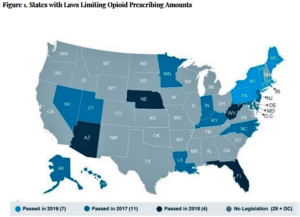
A new report on opioids from DC-based healthcare consulting firm Avalere found supply levels were 11% lower in 2017 compared with 2016...The decline is seen in most states, and the greatest reductions are where laws have been passed to set limits on opioid prescriptions, with Maine seeing a fall of 24.8% after legislation was passed in 2016...The only state to see an increase was Idaho, with a 59.7% growth in opioid prescriptions. This included an almost three-fold rise between 2016 and 2017 in the amount of oxycodone sold...Avalere's analysis is based on opioid analgesics data from the Drug Enforcement Agency's Automation of Reports and Consolidated Orders System, which tracks distribution of most controlled substances from manufacture through distribution and point-of-sale...
- Nevada sets 1st execution since 2006 after fight over drugs (tri-cityherald.com)Judge OKs Nevada execution, but questions about drugs remain (rgj.com)
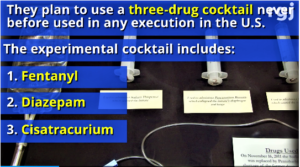
Dozier's death warrant was signed by Clark County District Court Judge Jennifer Togliatti, who last November blocked the execution over concerns that one drug in the three-drug protocol would immobilize the inmate and mask any signs of pain and suffering. The warrant didn't address her previous concerns..."The (state) Supreme Court never decided whether Mr. Dozier would experience extreme pain, or if he would suffocate to death, or if this protocol is constitutionally adequate," ACLU legal director Amy Rose said Wednesday. She conceded that her group didn't have legal standing to act on Dozier's behalf unless he asks for it...Dozier, 47, has said he wants to die and doesn't really care if he experiences pain. But he did let a team of federal public defenders challenge the drugs and method that Nevada prison officials planned to use...Nevada and other states have struggled in recent years to find drugs after pharmaceutical companies and distributors banned their use for executions...
- This Week in Managed Care: June 22, 2018 (ajmc.com)

Laura Joszt, Managing Editor at The American Journal of Managed Care. Welcome to This Week in Managed Care from the Managed Markets News Network
- 340B audits target hospitals more than pharma, sparking lawmaker criticism (biopharmadive.com)

CDR Krista M. Pedley, HRSA Director
The 340B Drug Pricing Program took center stage at the Senate's HELP panel for the third time in several months...this time turning the focus to audits of hospitals and drug manufacturers conducted by the Health Resources and Services Administration...HRSA Director Krista Pedley said that, in the past five years, 12 of 600 program manufacturers faced audits compared to 981 of 12,700 of hospitals...No findings of wrongdoing were discovered in any of the 12 audits of manufacturers, she noted, whereas 60% of the audits of covered entities resulted in repayment to manufacturers...
- FDA suggests new reimbursement idea for antimicrobial drugs (pharmaceutical-technology.com)

The Food and Drug Administration has published a statement from its commissioner Scott Gottlieb proposing a new reimbursement model for antibiotics and antimicrobials, which it believes will help achieve associated public health goals and overcome investment challenges...The FDA’s idea is that instead of hospitals being reimbursed for antimicrobials on a per-use, which it claims is hindering research and development in the field, they will be reimbursed for licences for certain antimicrobials drugs that target multi-drug resistant infections...The FDA believes this model will help to achieve public health goals because it would ‘create a natural market for drugs that meet certain public health criteria, by providing a predictable return on investment and revenue stream through more foreseeable licensing fees’ and ‘it would put the institutions fully in charge of stewardship of these important medicines. Once they purchase the ability to access a drug, they would be stewards of its use up to a certain number of annual doses’...the proposal would address investment challenges faced by producers of antimicrobials that target multi-drug resistant organisms because it may offer a ‘pull incentive’ that can create a predictable market for antimicrobials with a narrow set of public health applications. In addition, it could disconnect return on investment on these drugs from the volume of the drug that is used...