
- Walgreens opens 1,000th drug disposal kiosk in Las Vegas (reviewjournal.com)

If you need to get rid of old or expired medication, there are now 11 local Walgreens where you can get the chore done...The company opened its 1,000th medication disposal kiosk in the nation...4905 W. Tropicana Ave. in Las Vegas. The steel-box kiosks in Walgreens pharmacies are open during store hours for people to drop off unused pills for free, ensuring that the active ingredients don’t get into Nevada’s landfills or sewage systems...Gov. Brian Sandoval, who was on hand for the kiosk unveiling, said the disposal boxes also will help curb Nevada’s opioid crisis by keeping the drug out of the wrong hands...There are 12 kiosks located in Nevada: one in Henderson, nine in Las Vegas, one in North Las Vegas and one in Reno...Richard Ashworth, Walgreens president of operations, said the kiosks across the U.S. have already collected more than 270 tons of medications since the program began in 2016. The company plans to open 500 more kiosks...
- 5 Key Questions Pharmacy Owners Should Ask Themselves (pharmacytimes.com)

Pharmacy owners who ask themselves the following 5 questions on a weekly basis will find that this exercise helps them create the pharmacies that they want, ones that matter in their communities and ones that help create lifestyles that benefit their families.
- Is what got me where I am today going to get me where I want to go tomorrow?
- Have I differentiated myself in the marketplace?
- Am I organizing my time, effort, and other resources around winning strategies and great marketing to build the future I want, or am I still clinging to the status quo, which is based on yesterday’s breadwinners and today’s mistakes?
- Am I focusing each hour of every single working day on those few activities that contribute the most to increasing cash flow and profits?
- What do potential patients value most that they are not finding from me and are seeking from my competitors?
- Pfizer wins appeal against CMA fine over epilepsy drug price (pharmaceutical-technology.com)

...Pfizer has won its appeal in the UK’s Competition Appeals Tribunal against a £84.2m ($111.6m) fine imposed by the Competition and Markets Authority for dramatically increasing the price of its epilepsy drug, Epanutin...Following a three year investigation, the CMA ruled in 2016 Pfizer and its distributor Flynn Pharma had abused their dominant market position by raising the price of Epanutin from £2.83 per pack of capsules to £67.50, which represents more than a 2,000% increase. Annual NHS spending on the drug increased from £2m in 2012 to £50m in 2013...Philip Marsden, the CMA’s chairman...said the companies had “deliberately exploited” the generic product loophole that allowed the price increase...“Businesses are generally free to set prices as they see fit but those holding a dominant position should not abuse this situation and set prices that are excessive and unfair. There is no justification for such rises when phenytoin sodium capsules are a very old drug for which there has been no recent innovation or significant investment.”...The CTA declared that...CMA had not applied the correct legal tests to assess whether the price rise was excessive and had failed to consider the correct price for the product and take into account other comparable products
- AbbVie slammed by FDA for improper handling of Humira death complaints: report (fiercepharma.com)
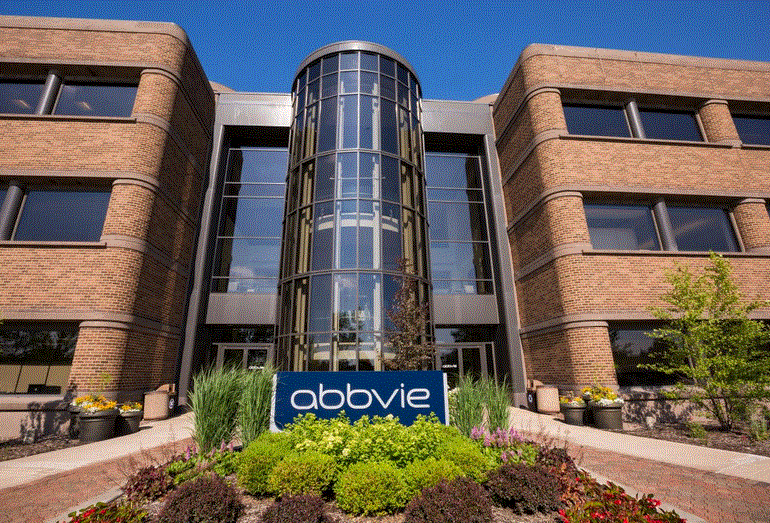
A number of AbbVie products coming out of its North Chicago, Illinois, manufacturing facility have been tied to death complaints, including its mammoth blockbuster Humira, and the FDA says the drugmaker has not done enough to investigate those complaints...FDA inspectors found that AbbVie had received five complaints tied to deaths after taking Humira and Venclexta. While the drugmaker reported those, it didn't go back and compile historical data about death complaints tied to drugs coming from the same lots. It turns out those lots had been tied to another 8 to 11 complaints each...an AbbVie spokeswoman countered the FDA observation, saying the company “investigates all complaints where a death has occurred during the use of our products,” and that “written complaint procedures are in place to investigate, analyze and resolve complaints.”...The FDA also found AbbVie's procedures for handling death complaints for products made at the plant “inadequate.”...no document showed that AbbVie evaluated complaints to see if there were other ones for nearby lot numbers or different strengths, or that it examined the reserve sample...the agency also warned AbbVie for not examining reserve samples at least once a year for evidence of deterioration, and for its failure to investigate drug batches manufactured close to a problematic one.
- Doctor brings concierge-level service to medicine on the Las Vegas Strip (lasvegasmagazine.com)

Dr. Shannon Orsak has been practicing emergency-room medicine in the state of Texas since the late ’90s. In February 2007, he opened the first free-standing emergency room in the state. “My brother and I went to the state and legislated so the politicians would pass a law so we could get a license and with that it opened up a groundwork where other people could go and start their own,” Orsak says...The next goal for Orsak and his partners was to bring his business model to Las Vegas, but make it Vegas-sized...Elite Medical Center is now open within walking distance of the Strip, and will offer emergency medical care with a concierge-type level of service...We’re an acute-care hospital. But most likely our patients are going to be in the emergency and then be discharged. We don’t expect that many admissions. We’re going to be taking care of people on the Strip...We are a full-service hospital so: X-rays, CAT-scans, full-service lab, full-service pharmacy, 20 in-patient beds, 20 ER beds. It’ll look like a hotel and a suite at Caesars. All our staff has the same philosophy—going that extra mile...
- This Week in Managed Care: June 15, 2018 (ajmc.com)

Kelly Davio, welcome to This Week in Managed Care from the Managed Markets News Network
- NIH Targets $500 Million At Opioid Crisis (forbes.com)NIH leadership outlines interdisciplinary FY2018 research plan for HEAL Initiative (nih.gov)
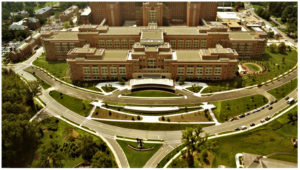
The National Institutes of Health is explaining how it will spend $500 million in research funds Congress appropriated to address the current opioid crisis...The list of objectives, published...in the Journal of the American Medical Association, includes: developing new medications to treat opioid addiction; tinkering with existing medications so they can be taken less often; improving medicines that reverse overdoses; developing new models of caring for people with opioid addiction in the healthcare and criminal justice systems; determining the best way to care for newborns in opioid withdrawal; discovering and validating new targets for non-addictive pain drugs and devices, and partnering with pharmaceutical companies to accelerate new pain and addiction medications. The $500 million will be distributed as research grants after a call for proposals later this summer.
- Theranos founder Elizabeth Holmes indicted for alleged fraud, out as CEO (statnews.com)U.S. Files Criminal Charges Against Theranos’s Elizabeth Holmes, Ramesh Balwani (wsj.com)

Elizabeth Holmes
A grand jury has indicted CEO Elizabeth Holmes and...Sunny Balwani for alleged fraud at Theranos, the disgraced Silicon Valley company that once promised to revolutionize blood testing in a pitch that was too good to be true...The criminal charges filed by federal prosecutors allege that Holmes and Balwani bilked investors out of hundreds of millions of dollars while also defrauding doctors and patients through years of lies that put thousands of people in personal danger...(they) are charged with two counts of conspiracy to commit wire fraud and nine counts of wire fraud in the indictment, which was handed down on Thursday and unsealed on Friday. They now each face a maximum of 20 years in prison and up to $2.7 million in fines, a figure that doesn’t include any cash the government might demand as restitution for the alleged fraud...Holmes and Balwani lied brazenly about their technology’s capabilities — even though they knew it was inaccurate, unreliable, slow, and limited in terms of the tests it could perform...They marketed their blood test sold in Walgreens stores to consumers in Arizona and California, the indictment says, even though they knew it could not consistently report accurate levels of calcium, chloride, and potassium, among other medical tests. They told investors that they were using their own proprietary machines to test patients’ blood, when in fact they were using commercially available analyzers they’d purchased...
- June 15 Pharmacy Week in Review: Pharmacist-Physician Collaboration, New Tool for Diagnosing IBS (pharmacytimes.com)

Nicole Grassano, PTNN, Pharmacy Week in Review, this weekly video program provides our readers with an in-depth review of the latest news, product approvals, FDA rulings and more.
- A serious new hurdle for CRISPR: Edited cells might cause cancer, two studies find (statnews.com)CRISPR stocks tank after research shows edited cells might cause cancer (cnbc.com)
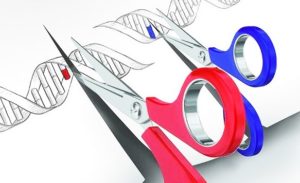
Editing cells’ genomes with CRISPR-Cas9 might increase the risk that the altered cells, intended to treat disease, will trigger cancer, two studies published on Monday warn — a potential game-changer for the companies developing CRISPR-based therapies...scientists found that cells whose genomes are successfully edited by CRISPR-Cas9 have the potential to seed tumors inside a patient. That could make some CRISPR’d cells ticking time bombs...The CEO of CRISPR Therapeutics, Sam Kulkarni, told STAT the results are “plausible.” Although they likely apply to only one of the ways that CRISPR edits genomes (replacing disease-causing DNA with healthy versions) and not the other (just excising DNA), he said, “it’s something we need to pay attention to...We need to do the work and make sure edited cells returned to patients don’t become cancerous.”...Standard CRISPR-Cas9 works by cutting both strands of the DNA double helix. That injury causes a cell to activate a biochemical first-aid kit orchestrated by a gene called p53, which either mends the DNA break or makes the cell self-destruct...The flip side of p53 repairing CRISPR edits, or killing cells that accept the edits, is that cells that survive with the edits do so precisely because they have a dysfunctional p53 and therefore lack this fix-it-or-kill-it mechanism...The reason why that could be a problem is that p53 dysfunction can cause cancer...P53 mutations are responsible for nearly half of ovarian cancers; 43 percent of colorectal cancers; 38 percent of lung cancers; nearly one-third of pancreatic, stomach, and liver cancers; and one-quarter of breast cancers...