
- Nevada doctors voice concerns over opioid law implementation (ktvn.com)
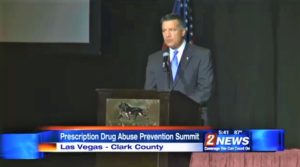
Nevada's new opioid prescription law is only days old but doctors already are worried about how it might be implemented...physicians, lawyers and others expressed concerns this week to the state medical and dental boards over draft disciplinary rules for doctors who write improper prescriptions for pain medications...Under the proposed rules, doctors who violate the new law five times would lose their licenses. The threshold on losing a license would be reduced to three violations by 2020...Several doctors who attended the meeting say the proposed rules don't specify the exact conduct that could lead to penalties or the loss of medical licenses...The doctors voiced concerns that they could be punished for relatively minor mistakes or employee errors.
- Judge deals setback to Cherokee Nation lawsuit over opioids (reuters.com)
A federal judge in Oklahoma has dealt a blow to a Cherokee Nation lawsuit seeking to stop the flow of addictive opioid painkillers in its territory by issuing a preliminary injunction to prevent the case from being heard in tribal court...District Judge Terence Kern ruled the tribal court lacked jurisdiction because the lawsuit involving six wholesale drug distributors and pharmacy operators does not directly concern tribal self-government...“While noting Defendants’ (Cherokee Nation‘s) evidence of the harm opioid abuse has caused to individual tribal members and families, and costs borne by the tribe, the Court cannot plausibly find that such harm is ‘catastrophic for tribal self-government’,” Kern said...The Cherokee Nation in April 2017 became the first major Native American tribe to seek redress in tribal court from wholesale drug distributors and pharmacy operators...The tribe said the highly addictive painkillers were saturating its territory and contributing to violence, delinquency and mortality...The companies said the lawsuit attempted to civilly enforce a federal statute, the Controlled Substances Act, under the guise of the tribe’s statutory and common law...
- Ohio takes steps toward resolution of opioid litigation (pharmacist.com)

Ohio Attorney General Mike DeWine reports the state has begun settlement talks with opioid-makers it has sued alleging illegal marketing, and will meet with a federal judge urging settlement of hundreds of similar suits, in early steps toward resolution of the litigation. DeWine's staff held separate settlement discussions with Johnson & Johnson and Teva Pharmaceutical Industries..."We outlined with them where we feel Ohio needs help—in prevention, education and treatment, as well as the huge problem we’re having with our foster-care system because so many of the parents are addicted," says DeWine. Teva said in a statement, "We appreciate the opportunity to meet with representatives of the Ohio AG’s office to discuss this important public health issue." Johnson & Johnson said: "While we consider the specifics of our discussions with state attorneys general to be confidential, we continue to maintain that allegations made in lawsuits against our company are baseless and unsubstantiated. ... At the same time we recognize that opioid abuse and addiction are serious public health issues that must be addressed...we look forward to being a part of the ongoing dialogue."
- Venezuela $5 Billion In Debt To Pharmaceutical Companies Offers Gold, Diamonds For Medicine (ibtimes.com)

The cash-strapped government of Venezuela offered to trade gold, diamonds and coltan, a rare metal used in cell phones, to pharmaceutical companies the country owes $5 billion in exchange for medicine...Venezuela’s health minister Luis López offered several pharmaceutical companies the goods as an alternative payment for medicine to help stock the bare shelves of the country’s hospitals. Venezuela is $5 billion in arrears to pharmaceutical companies. Tito López who heads, Venezuela’s Pharmaceutical Industry Chamber told the paper that up to 95 percent of medicines available in the country three years ago are no longer there...It’s unclear whether any pharmaceutical company accepted the offer...The attempt at bartering for medicine showcased the dismal economic situation in Venezuela that could be up to $150 billion in debt. Financial mismanagement and a drop in oil prices, a commodity the country relied on, have led to the humanitarian crisis the country now finds itself in. The country also faces U.S. financial sanctions because of the country’s restrictive communist government which the U.S. has called corrupt.
- ASHP Survey: IV Fluid Bag Shortage Affecting Patient Care (ptcommunity.com)

Pharmacists call shortage of small-volume parenteral solutions "severe"...The shortage...is affecting virtually all U.S. hospitals, according to results of a survey by the American Society of Health-System Pharmacists... that limited inventory of the critical product has required health care providers to adopt new procedures and use alternative therapies to treat patients...Survey respondents are taking a variety of steps to mitigate the shortages, including using alternative methods of administration such as intravenous push, intramuscular injections, or oral dosage forms; using nonformulary premixed solutions and/or frozen products; and implementing protocols that restrict the use of product...The shortage of SVPs is the latest in a series of shortages of critical medications, including sodium bicarbonate and epinephrine. Drug shortages pose a significant threat to the safety and quality of patient care in hospitals and other health care settings and may result in delayed treatment and increased risk of adverse reactions and medication errors...“We strongly believe that the current drug shortage situation is unacceptable and unsustainable,” said ASHP CEO Paul W. Abramowitz, PharmD...“It threatens harm to patients, wastes valuable health care resources, causes great uncertainty, and disrupts the health care system.”
- Replacing daily pills with a weekly regimen could help patients adhere to therapy (ptcommunity.com)

Replacing daily pills with a weekly regimen could help patients stick to their dosing schedule... Researchers at Massachusetts Institute of Technology and Brigham and Women’s Hospital have developed a capsule that can deliver a week’s worth of human immunodeficiency virus drugs in a single dose. This advance could make it much easier for patients to adhere to the strict schedule of dosing required for the drug cocktails used to fight the virus...The new capsule is designed so that patients can take it just once a week, and the drug will release gradually throughout the week. This type of delivery system could not only improve patients’ adherence to their treatment schedule but also be used by people at risk of HIV exposure to help prevent them from becoming infected...The MIT/BWH team is also working on adapting this technology to other diseases that could benefit from weekly drug dosing. Because of the way that the researchers designed the polymer arms of the capsule, it is fairly easy to swap different drugs in and out, they say. They are also working on capsules that could stay in the body for much longer periods of time...
- Pharmacy Week in Review: January 12, 2018 (pharmacytimes.com)

Nicole Crisano, PTNN. This weekly video program provides our readers with an in-depth review of the latest news, product approvals, FDA rulings and more.
- Universities accused of unethical ‘pick and mix’ reporting of drug trial results (telegraph.co.uk)

Universities have been accused of undertaking widespread unethical drug trials after The Daily Telegraph revealed Oxford researchers allowed a vaccine to be tested on babies despite doubts about its effectiveness...An analysis by the British Medical Journal cited a “systematic failure” to faithfully report the results of animal tests in order to secure funding and permission for human trials...The alleged practice potentially harms patients and risks stalling scientific progress by putting off investors...The investigation focuses on senior scientists at Oxford University who tested a candidate tuberculosis booster vaccine on monkeys at the Porton Down Government laboratory in Wiltshire in 2006 ahead of a trial involving nearly 2,800 South African babies...The animals inoculated with the drug, MVA85A, died at roughly the same rate as those exposed to TB without it, however this was not disclosed until after funding and permission for the wider infant clinical trial had been sought...Instead, the Oxford team reported that MVA85A had been successful in animal trials overall...Dr Deborah Cohen said the case highlights the “pick and mix” approach some researchers take to reporting the result of animal testing, which is far less stringently regulated than are human trials...
- Price competition to hit oncology next: BioPharma Dive’s 2018 predictions (biopharmadive.com)

Cancer drugs have largely remained unaffected by the still-simmering scrutiny over rising pharmaceutical prices, routinely costing over six figures for a year's treatment...drugmakers retain a free hand to debut new drugs at prices in line or above competitors, even without demonstrably superior efficacy...Yet that state of affairs could soon change. An influx of "me-too" drugs coupled with a lack of clear differentiation across several key classes could spur fitful price competition. That could open the door for payers looking to rein in costs, through more aggressive use of formularies...Lured by the promise of lucrative returns, biopharmas have invested heavily in oncology R&D, swelling pipelines with product candidates — many following in the footsteps of already approved drugs...For drugmakers, the risk is that assets like PD-1/L1 blockers or PARP inhibitors will become viewed as commodities. As more and more patients become eligible to receive these drugs, the crowding queue could trigger price competition in a way that oncology has so far sidestepped...
- Drug Charity Sues U.S. Over Restrictions on Donor Communications (ptcommunity.com)

DOJ is investigating drug-makers’ financial support of patient-assistance charities...A U.S. charity offering assistance to patients for their out-of-pocket drug costs has sued the federal government over restrictions on its ability to communicate with drug-makers who donate to it...The charity, Patient Services, Inc., filed the lawsuit in federal court in Richmond, Virginia. It comes amid a Justice Department investigation into drug-makers’ financial support of patient-assistance charities...Drug-makers are prohibited from subsidizing copayments for patients enrolled in Medicare, but they may donate to nonprofits providing copay assistance as long as the charities are independent. Amid increased attention to rising drug prices, concern has arisen that drug-makers’ donations to such charities may be contributing to price inflation.