
- Trump’s pick to head HHS balks at having government negotiate drug prices (cnbc.com)
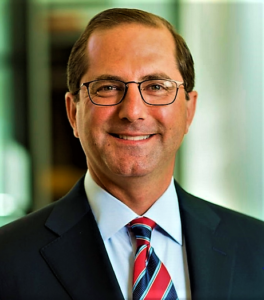
Alex Azar, Secretary of Health and Human Services,
While President Donald Trump has repeatedly expressed support for allowing the government to negotiate drug prices, his pick to head the U.S. Health and Human Services Department, Alex Azar, says he doesn't think it would be the magic bullet that would bring costs down..."Where we can do so that preserves innovation, that preserves access for patients, I want anything that's going to help us with drug pricing…I think that we should be looking at those approaches," said Azar..."If the government is the purchaser, let's say for instance, we are going to be buying (drugs) as part of the opioid crisis program, and we're directly buying that and supplying it out to states and first responders, there's absolutely nothing wrong with the government negotiating that,"...But when it comes to allowing the Medicare program to negotiate drug prices, that's where Azar splits with Trump. Under current law, private Medicare Part D drug plans administered by insurers do negotiate drug discounts, but the traditional Medicare program is prohibited from doing so...
- Pharmacy Week in Review: January 5, 2018 (pharmacytimes.com)

Nicole Crisano, PTNN. This weekly video program provides our readers with an in-depth review of the latest news, product approvals, FDA rulings and more.
- In Israel, Teva has become more than just a drug company. But its future is now in question (statnews.com)

A map showing Teva’s locations in Israel.
...the company (TEVA) is at a crossroads — one that is raising questions not only about the consequences for...across Israel but about its very identity...Last month, tens of billions of dollars in debt, Teva announced that it would undergo a massive restructuring, laying off a quarter of its workforce and closing plants all over the world. Faced with the prospect of 1,750 job cuts in Israel, protesters across the country took to the streets, burning tires and shutting down major roads in Jerusalem and Tel Aviv...Teva had said it might sell the plant in Kiryat Shmona, not shut it down, but workers here didn’t know if they would keep their jobs and, if so, how they might be affected....“It’s a combination of, you know, the disappearance of their largest product, Copaxone, [and a] broader erosion of the generics business,” said Ronny Gal, a financial analyst at Sanford Bernstein...He said that Teva’s financial situation also stems from its failure to adapt to the changing landscape...“The company is in a very challenging situation,”...detailing Teva’s tribulations. “I have found that our current business reality requires immediate and significant action to ensure the company’s future.”...That meant cutting 14,000 jobs around the world as well as shedding plants; in Israel that would include closing one facility in Jerusalem and trying to sell others...the company is at a crossroads — one that is raising questions not only about the consequences for this city and others across Israel but about its very identity...
- Pharma, under attack for drug prices, started an industry war (washingtonpost.com)

It’s not easy to get Americans mad at a behind-the-scenes industry they’ve barely even heard of, but pharmaceutical companies have spent most of this year trying...With national and state advertising campaigns, white papers and cartoon infographics, the powerful and well-funded drug-industry lobby spent 2017 working to redirect public anger about drug prices to pharmacy benefits managers: links in the supply chain that sits invisibly between the patient and the drugmaker — in the process bringing a long-simmering feud between two big health-industry players into the open...the drug companies’ fight with PBMs and insurers has helped thwart any real action — splintering the problem into a multi-industry echo chamber of accusations that’s hard to comprehend, much less solve...“This has been a year of finger-pointing,”...“They’re flooding the zone — with ‘they’ being pharma — with efforts to diffuse and deflect the focus on their role in drug pricing. Part of the policy challenge is they have a point.”
- Telepharmacy at rural hospitals provides big savings, quality improvements (healthcareitnews.com)

Grand River Hospital and Medical Center, a 13-bed critical access hospital in Western Colorado which sees an average of seven patients a day, has saved about $300,000 in staffing costs by using telehealth tools to establish a round-the-clock pharmacy...Telehealth products and services is on the rise among small and rural hospitals...for instance, NewYork-Presbyterian forged a pact to provide emergency physicians via Walgreens in-store kiosks...Cleveland Clinic inked an arrangement with CVS to use American Well’s telemedicine platform to make clinicians accessible for visits from CVS Minute Clinics in Ohio...Telepharmacy has become its own specialty among tech vendors, including CPS TELEpharmacy, eVisit, PipelineRx, ScriptPro Telepharmacy and TelePharm...Nancy McClew, PharmD, director of pharmacy at Grand River Hospital and Medical Center, said the investment in the telemedicine technology is well worth it compared with the cost of staffing the pharmacy 24/7...“Grand River also has generated savings through tele-pharmacist interventions, the majority of which are safety related – clarifications, QI, prevention, renal assessment, therapeutic,” McClew said. “In Q3 2017, pharmacists documented more than 350 interventions, representing more than $50,000 in cost savings.”
- Australia to permit medicinal cannabis exports in bid to capture lucrative market (reuters.com)

Australia said on Thursday it planned to become the fourth country in the world to legalise medicinal marijuana exports in a bid to score a piece of the estimated $55 billion global market...Cannabis cultivation in Australia is still relatively small, as recreational use remains illegal. But the government hopes domestic medicinal use, legalised last year, and exports will rapidly boost production...“Our goal is very clear: to give farmers and producers the best shot at being the world’s number one exporter of medicinal cannabis,” Health Minister Greg Hunt told reporters in Melbourne...Shares in the more than a dozen Australian cannabis producers listed on the local exchange soared after the announcement...The Australian government’s proposal needs to pass federal parliament when it returns to session in February. The country’s main opposition Labor Party has signalled it would support the move.
- Drugmakers raise 2018 U.S. prices, stick to self-imposed limits (reuters.com)
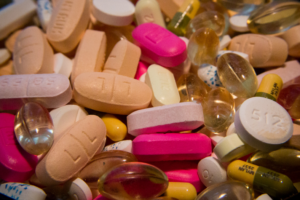
Drugmakers opened the new year by raising U.S. prices on dozens of medicines, but early data showed the increases generally remained within a 10 percent self-imposed limit in response to a backlash from consumers and politicians...“Drug price increases are somewhat more constrained in 2017 and 2018 than they have been previously,”...Allergan Inc raised prices on 18 different drugs...by 9.5 percent...Other drugmakers raising prices include Amgen Inc, Teva Pharmaceutical Industries Inc and Horizon Pharma...Drug price increases are coming under more scrutiny from states. California Governor Jerry Brown in October signed legislation requiring drug manufacturers to give 60-day notice if prices are raised more than 16 percent over a two-year period...
- Laughter: The Medicine That Has a ‘$0 Copay and Unlimited Refills’ at This Funny Man’s Pharmacy (pharmacytimes.com)What its like to be a pharmacist in a bad neighborhood (youtube.com)

Maurice Shaw is a pharmacist/comedian who sees the funny side of pharmacy life. A pharmacy manager, he attended Chicago State University College of Pharmacy, and completed a Community Pharmacy PGY1 residency with the University of Iowa Hospitals and Clinics. He also makes hilarious videos portraying what pharmacists go through every day, from complaining customers to disorderly technicians. Maurice was happy to talk to Pharmacy Times about his videos
- Philippines fines Sanofi, suspends clearance for Dengvaxia (reuters.com)Families target Philippine officials and Sanofi executives with request for criminal charges (fiercepharma.com)

The Philippines has fined Sanofi $2,000 and suspended clearance for the French drug maker’s controversial dengue vaccine Dengvaxia, citing violations on product registration and marketing, its health secretary said on Thursday...Concerns over the dengue immunization of nearly 734,000 children aged nine and above resulted in two Philippine congressional inquiries and a criminal investigation as to how the danger to public health came about...The country ordered Sanofi to stop the sale, distribution and marketing of Dengvaxia after the company last month warned the vaccine could worsen the disease in some cases...The Food and Drugs Administration of Philippines found Sanofi violating post-marketing surveillance requirements...
- The McGill Drug Store museum has been vandalized a second time – Letters to the Editor (elynews.com)
Dear Editor:
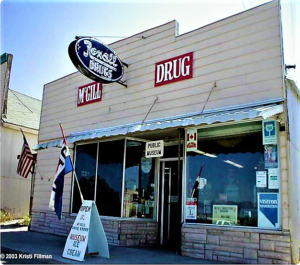
This saddens me to write this to you. The McGill Drug Store museum has been vandalized a second time and was discovered by Dan Braddock Saturday morning. Rocks the size of bowling balls have been thrown through the windows. There was also damage to some items in the interior.
Windows are something that are replaceable however damage to some items is irreplaceable. The cost of repairs and insurance increases are something that we are having to pull out of our budget when we have other repairs and projects that are more important.
All of us board members are volunteers and there is only one paid staff. We take time away from our families to help preserve items and information from our past. We ask that everyone be vigilant of your surroundings.
If you have any information on this criminal activity please contact the White Pine County Sheriff’s Office.
Thank you to Kirt Braun for boarding up the windows until the new windows get here.
Anyone who is interested in volunteering for the White Pine Public Museum in Ely or the McGill Drug Store museum please call the White Pine Public Museum at 775.289.4710 or stop by at 2000 Aultman Street.