
- Arizona accuses drugmaker Insys of fraudulent opioid marketing (reuters.com)

Arizona sued Insys Therapeutics Inc...accusing the drugmaker of engaging in a fraudulent marketing scheme aimed at increasing sales of a fentanyl-based cancer pain medicine called Subsys...The lawsuit by Arizona Attorney General Mark Brnovich in Maricopa County Superior Court in Phoenix comes during a series of federal and state investigations centered on Insys’ drug Subsys amid a national opioid addiction epidemic...The lawsuit accused Arizona-based Insys of paying doctors sham speaker fees in exchange for writing prescriptions of Subsys and of misleading insurers into believing patients who were prescribed the opioid had cancer when they actually did not...The lawsuit seeks an injunction, restitution for customers and the disgorgement of any illegally earned profits…
- Week in Review: September 1, 2017 (pharmacytimes.com)

Nicole Crisano, PTNN. This weekly video program provides our readers with an in-depth review of the latest news, product approvals, FDA rulings and more.
- Nevada earns D on nonprofit’s new health-care report card (reviewjournal.com)

A new nonprofit created by heavy hitters from Nevada’s business and medical communities gave the state a D grade on its first report card on the state’s health care system...The report card was released...by the Nevada Medical Center and is intended to focus attention on improving access to quality health care in the state...Larry Matheis, the NMC’s CEO, said the report card will help state leaders focus on the gaps that must be filled to improve Nevada’s medical standing. Currently, he said, the state’s medical system “resembles a series of isolated communities…due to the lack of collaboration among medical professionals and the dearth of thought given to enhancing our community’s reputation.”...The report card’s grades, based on analysis of data supplied by the Centers for Disease Control and Prevention and other government agencies, show how Nevada fares in the categories of health care access, chronic disease, nutrition and activity, mental health and substance abuse. The grades weren’t all bad, with the state receiving a passing “C” grade on chronic disease and a better-than-average “B” on nutrition and activity.
- Nevada has shortage of pediatricians (businesspress.vegas)

Clark County has just 317 of them (pediatric specialists and subspecialists), according to the state Medical Examiners Board. That’s about 4.5 pediatricians per a population of 100,000, far below the national average of 7 per 100,000, according to the health services research for the Office of Statewide Initiatives at the University of Nevada, Reno School of Medicine. The data ranked Nevada 47th in the country in its lack of pediatricians....Nevada isn’t the only state being impacted. Shortages are being felt across the country due to the largest overall physician shortage in our nation’s history...According to an Association of American Medical Colleges’ 2016 report, our nation is projected to have a shortage ranging between 61,700 and 94,700 physicians by 2025...Pediatric specialists and subspecialists are two significant areas affected by the shortage. Reasons for this deficit include one-third of current physicians are aging out of the profession, and the reduced number of medical students entering pediatric specialties...Nevada...averages below the national trend with a larger deficit of pediatric specialists and subspecialists...“We’re basically treading water,” said Tabor Griswold...Office of Statewide Initiatives at the University of Nevada...She estimates the area needs slightly under a 50 percent increase in pediatric specialists to meet the U.S. median...
- Herpes vaccine company backed by Peter Thiel vows future testing will follow FDA guidelines after offshore trial sparks ethics furor (cnbc.com)

The CEO of a herpes vaccine company at the center of a controversy over an offshore clinical trial,,,said that future testing of the drug will follow U.S. Food and Drug Administration oversight rules, as demanded by a new group of financial backers that includes venture capitalist Peter Thiel...In an impassioned interview, Rational Vaccines Chief Agustin Fernandez said he feared the great promise of the vaccine developed by the late university professor William Halford was being overshadowed by criticism over Halford's decision to test the drug using American patients on the West Indian nation of St. Kitts and Nevis without monitoring by the FDA or an institutional review board, as is traditional...Fernandez...said that he now understands it is necessary from now on to conduct further trials following FDA oversight standards if Rational Vaccines hopes to market the vaccine in the United States...
- New Oregon Law Lets Pharmacists Prescribe Formulary Drugs, Devices (ashp.org)

The Oregon State Capitol building in Salem
As early as January 1, Oregon pharmacists will be permitted to prescribe and dispense drugs and devices listed on a formulary to be established by the state board of pharmacy under a bill recently signed by Governor Katherine Brown...The formulary, according to the new law, may contain such "post-diagnostic" items as diabetic testing supplies, smoking-cessation aids, epinephrine autoinjectors, albuterol inhalers, rapid strep tests, and spacers for inhalers...Other possibilities mentioned in the law are discharge medications during transitions of care and emergency refills of insulin..."Nothing about this is new territory," said Michael E. Millard, cochair of the Oregon Society of Health-System Pharmacists...Legal and Regulatory Affairs Committee, in explaining why the prescribing bill passed the legislature on the first try...the bill builds on past legislation and advances pharmacy practice a step further...
- Heather Korbulic, Executive Director of the Silver State Health Exchange – Nevada NewsMakers (nevadanewsmakers.com)
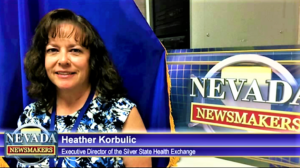
Nevada NewsMakers: Host: Sam Shad - Guest: Heather Korbulic, Executive Director of the Silver State Health Exchange
- This Week in Managed Care: September 1, 2017 (ajmc.com)
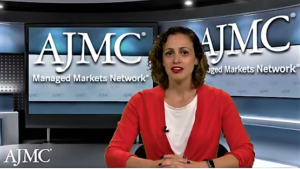
Laura Joszt, assistant managing editor at The American Journal of Managed Care. Welcome to This Week in Managed Care from the Managed Markets News Network
- First Gene-Transfer Therapy Approved for U.S. Market (ashp.org)Pioneering cancer drug, just approved, to cost $475,000 — and analysts say it’s a bargain (statnews.com)

FDA...announced the approval of tisagenlecleucel, a first-in-class chimeric antigen receptor (CAR) T-cell immunotherapy consisting of genetically modified autologous T cells, for the treatment of B-cell precursor acute lymphoblastic leukemia (ALL) in children and young adults...After modification in the laboratory and infusion back into the patient, the CAR T cells target and eliminate both normal and malignant CD19-expressing B cells. The genetic modification enhances the initiation of T-cell activation and the persistence of the transformed T cells...Novartis will market tisagenlecleucel as Kymriah. Labeling for the product states that it is indicated in patients up to age 25 years with ALL that is refractory or in second or later relapse...Tisagenlecleucel has an FDA-required risk evaluation and mitigation strategy (REMS) program that includes elements to assure safe use. The labeling states that the immunotherapy is available "only through a restricted program."...
- FDA steps up oversight of cell therapies (biopharmadive.com)

The Food and Drug Administration is stepping up its enforcement of the existing rules covering stem cell therapies in order to protect patients from unproven or potentially dangerous treatments...Under "a comprehensive policy framework" that will be put into place next quarter, individual providers and companies will be able to gain approval for products and procedures through a lower-cost and more streamlined process...A new working group will pursue unscrupulous clinics through legally enforceable means in order to protect public health...Patients desperately seeking solutions for potentially fatal diseases can get to a point that they will clutch at any solution offered...FDA Commissioner Scott Gottlieb's statement shows an awareness of the potential for "unscrupulous actors" in the field, and their impact both on vulnerable people and on the reputation of sound researchers and companies..."These dishonest actors exploit the sincere reports of the significant clinical potential of properly developed products as a way of deceiving patients and preying on the optimism of patients facing bad illnesses. This puts the entire field at risk. Products that are reliably and carefully developed will be harder to advance if bad actors are able to make hollow claims and market unsafe science. To make sure the agency is separating the promise from the unscrupulous hype, we are stepping up our enforcement activity in this area," said Gottlieb...