
- Sticker shock: Obamacare’s specialty drug customers faced big price hikes in 2017 (cnbc.com)

Many Obamacare customers who take specialty drugs had to personally pay anywhere from $262 to $1,762 more each month in 2017 than they did last year for those medications,,,The report, from the insurance comparison site HealthPocket.com, found that the average specialty drug coinsurance fee for the most popular type of Obamacare plans rose by five percentage points from 2016...That increase reflects a trend of insurance plans shifting the burden of directly paying for often-high priced specialty medication onto consumers..,And that burden can be heavy...The report underscored the relatively large change in cost burden on customers of so-called silver individual health plans who use specialty drugs...About 70 percent of all customers who purchase individual coverage through a government-run Obamacare marketplace are enrolled in silver plans. Those plans pay, on average, 70 percent of all of their customers' health costs, with enrollees being personally responsible for the remaining 30 percent...
- Roseman University gets $10M for budding medical school (reviewjournal.com)

Roseman University College of Medicine will be based at the Summerlin campus.
Roseman University College of Medicine...announced a $10 million pledge gift from the Engelstad Family Foundation, which will help advance the opening of the school...“This is really a very important moment for the history of Roseman,” said Dr. Mark Penn, founding dean for the medical school. “We don’t have state support, so we rely on other money, resources to support what we try to do. We’re thrilled they want to partner with us this way.”...The donation is the largest in the Henderson university’s history, and kicks off a $66 million fundraising campaign. The medical school will be in Summerlin, where the campus nursing school is...The money is needed to hire critical faculty and staff, an important step as the school continues through a new accreditation process…
- PhRMA and BIO Initiate Litigation to Challenge Unconstitutional Provisions of Nevada’s SB 539 (phrma.org)

Nevada State Capitol, Carson City
The Pharmaceutical Research and Manufacturers of America the Biotechnology Innovation Organization today initiated litigation in the United States District Court for the District of Nevada challenging provisions of SB 539, a Nevada law that would violate patent rights and negate trade secret protection for designated diabetes medicines in a way that would harm patients and chill future biomedical innovation...PhRMA and BIO seek a declaration from the Court that the challenged provisions of SB 539 are preempted by federal law and violate several provisions of the United States Constitution...also seek an injunction prohibiting the implementation or enforcement of these challenged provisions...The Complaint alleges that provisions of SB 539 violate the Constitution in at least four ways:
- by interfering with federal patent law;
- by interfering with federal trade secret law;
- by violating the Takings Clause of the Fifth Amendment of the United States Constitution which prohibits government from taking property without just compensation; and
- by violating the dormant Commerce Clause of the United States Constitution, which prohibits Nevada from impeding commerce in other states.
- Law firm drops suit alleging CVS gouged generic consumers, plans to refile (fiercepharma.com)
The plaintiff in a proposed class action lawsuit against CVS dropped her claims...After making a series of allegations that pharmacy giant CVS was gouging generic drug consumers who paid with insurance, the plaintiff in a proposed class action lawsuit dropped her claims...Megan Schulz alleged she paid more through insurance to get a generic drug than if she’d just paid cash. The suit also alleged pharmacy "copays" were really payments to pharmacy benefit managers, set up by confidential deals. CVS refuted the allegations and said in a statement...that it’s pleased the suit has been dismissed..."The complaint contained numerous demonstrably false assertions that a reasonable pre-filing investigation by the law firm would have discovered,"..."As such, we are pleased that the suit has been voluntarily dismissed.",,,"We plan to refile the lawsuit against CVS related to its generic drug pricing scheme promptly,"..."Our case against Walgreens was not dismissed and will remain on file until we achieve a just outcome for consumers."
- Why the Biosimilar Drug Revolution Hasn’t Arrived (bloomberg.com)

In a word: patents...The Biologics Price Competition and Innovation Act (2010) was...part of the Affordable Care Act. Its essential goal was to infuse competition and lower the prices of drugs that were made from living cells -- so-called biologics...Until the 2010 law, biologics had no fear of competition -- there was no legal way to introduce generic versions into the market -- so they were able to maintain their monopoly price even after their patents expired. The BPCIA was intended to establish mechanisms within the Food and Drug Administration, the Patent and Trademark Office, and the courts that would allow the introduction of "biosimilars." These drugs weren't exact replicas of biologics, but were similar enough, and safe enough, to be used instead of the brand-name drugs...Here we are seven years later. Guess how many biosimilars have made it to market?..Two...companies are forced to fight through thickets of patents to get a biosimilar to market, a law that was supposed to save the U.S. billions will continue to do just the opposite: make it easy for biologic makers to maintain unwarranted monopolies...
- This Week in Managed Care: September 8, 2017 (ajmc.com)
Laura Joszt, assistant managing editor at The American Journal of Managed Care. Welcome to This Week in Managed Care from the Managed Markets News Network
- Canada nears launch of national e-prescription service (chaindrugreview.com)

Canada is set to begin deploying a national electronic prescribing platform, called PrescribeIT...Canada Health Infoway, a federally funded, nonprofit digital health organization, said...that it has reached agreements to enable PrescribeIT in six provinces: Alberta, Ontario, Manitoba, Nova Scotia, New Brunswick and Newfoundland/Labrador. Those provinces represent 61% of the Canadian population...PrescribeIT will allow prescribers to securely transmit an prescription from an electronic medical record to the pharmacy management system at a patient’s pharmacy of choice...PrescribeIT’s features will include the ability to securely send e-scripts for all medications, including controlled substances; deliver a prescription to a patient’s pharmacy; send prescription renewal requests from a pharmacist to a prescriber; and cancel a transaction by the prescriber or pharmacist...PrescribeIT is expected to decrease patient wait times for their prescriptions, enhance patient safety by reducing the possibility of medication errors, improve medication management and patient health outcomes, reduce fraud and abuse by eliminating handwritten prescriptions, ensure data integrity for monitoring of controlled substances, and create a commercial-free prescribing and dispensing environment...
- Most U.S. Hospitals Use EHRs, CPOE Systems (drugtopics.modernmedicine.com)

The use of health IT has exploded in the last decade, and that means better health care...Electronic health records, computerized prescriber-order-entry systems, and barcode-assisted medication administration systems have now become almost universal in hospitals nationwide...According to the “ASHP National Survey of Pharmacy Practice in Hospital Settings: Prescribing and Transcribing — 2016,” nearly 100% of hospitals across the United States have adopted these technologies...Survey results reveal that the use of health IT by hospitals has led to a rapid increase in “paperless care.”... ASHP CEO, Paul W. Abramowitz, PharmD, said in a statement that, in addition to improving medication safety, the increased use of information technology shows great potential for pharmacists to spend more time providing comprehensive medication therapy management in and across all settings of patient care. “These positive findings move us closer to achieving ASHP’s vision that medication use will be optimal, safe, and effective for all people all of the time.” Abramowitz said.
- Week in Review: September 9, 2017 (pharmacytimes.com)

Nicole Crisano, PTNN. This weekly video program provides our readers with an in-depth review of the latest news, product approvals, FDA rulings and more.
- Execution in Nevada to use powerful opioid fentanyl (cnn.com)Death row inmate says no concerns about painful execution (elkodaily.com)
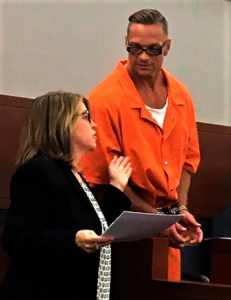
...the Nevada Department of Corrections is preparing to use fentanyl in a three-part drug combination for an upcoming execution....The combination includes the sedative diazepam...the muscle relaxant cisatracurium; and fentanyl...Nevada turned to fentanyl for an execution because the state had no other drugs to carry out a lethal injection after "pharmaceutical industry opposition to the use of their products in executions,"..This fentanyl drug combination is to be used in the execution of 46-year-old Scott Raymond Dozier on November 14 at Ely State Prison in Ely, Nevada...Dozier was sentenced to death after a first-degree murder conviction for the 2002 killing and dismemberment of Jeremiah Miller, 22...The concern is that this specific chemical cocktail that they have proposed has never been used in this way before. It's not like they can point to some success or result. This will be the first time...