
- UNLV School of Medicine invests $600,000 in virtual anatomy (businesspress.vegas)

Dr. Jeffrey Fahl
The UNLV School of Medicine is breaking with traditional teaching methods when the school’s 60 medical students start their anatomy class in November...Instead of using cadavers for dissections of the human body, the school invested $600,000 in the use of virtual technology. Students will learn anatomy by using virtual anatomy tables with large, interactive touch screens that are large, super high-resolution computer screens. They cost $100,000 each...The school describes them as body images in a wide variety of perspectives. They are primed with a library of images, such as X-rays, MRIs, CT scans and pathology slides...Students will be able dissect, rotate, slice, and reassemble organs and other anatomic structures as needed. They will download case studies of real patients and examine them. They also can explore the histology and histopathology of the organ systems studied… UNLV will be the first allopathic medical school to use virtual 3-D anatomy...This is a very innovative way of doing this...No one else in the country has attempted to do what we’re doing. We’re cutting-edge at this point...
- Pharmacy Week in Review: August 25, 2017 (pharmacytimes.com)
Nicole Crisano, PTNN. This weekly video program provides our readers with an in-depth review of the latest news, product approvals, FDA rulings and more.
- This Week in Managed Care: August 18, 2017 (ajmc.com)
Laura Joszt, assistant managing editor at The American Journal of Managed Care. Welcome to This Week in Managed Care from the Managed Markets News Network
- Could indication-based pricing really work? (biopharmadive.com)

Why should it cost more than 30 times as much for essentially the same drug just because it’s being used to treat an eye condition rather than cancer?...So-called indication-specific pricing may seem absurd to some observers but makes perfect sense to industry insiders. Drugs are often approved to treat several different diseases, often with varying patient population sizes. For example, Allergan plc's Botox (onabotulinumtoxin A) is approved to treat more than eight indications, including wrinkle reducing and migraines. While insurers may choose to cover these indications differently, indication-based could mean these two indications are priced at opposite ends of the pricing spectrum, for example, and could better align reimbursement with value...There are plenty of examples of drugs approved for wildly different patient populations. Yet, so far, indication-based pricing is not a reality in the U.S.
- Top 5 Highest Grossing Specialty Drugs of the Year (specialtypharmacytimes.com)
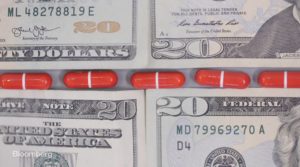
Prescription drug spending has skyrocketed over the past few years, with many Americans struggling to access proper treatment. Lawmakers have attempted to address this issue, but it is likely that the trend of escalating drug spending will continue as costly specialty drugs dominate the market...All of the drugs that had the highest sales in 2016 are for specialty conditions, including autoimmune disorders and hepatitis C virus; however, the emergence of biosimilars may threaten their revenue into the future...
- 5. Infliximab (Remicade) - Johnson & Johnson and Merck report a 10.6% decrease in revenue from 2015, with infliximab generating nearly $7.83 billion in 2016...
- 4. Rituximab (Rituxan) - Partners Roche and Biogen reported total revenue of $8.58 billion for rituximab in 2016, which is a 2.7% increase from 2015. The drug is approved to treat non-Hodgkin’s lymphoma, chronic lymphocytic leukemia, rheumatoid arthritis, and granulomatosis with polyangiitis...
- 3. Etanercept (Enbrel) - This autoimmune disease drug treats rheumatoid arthritis, plaque psoriasis, and psoriatic arthritis. Amgen and Pfizer reported $8.87 billion in total sales for etanercept in 2016.
- 2. Ledipasvir/sofosbuvir (Harvoni) - When this drug hit the shelves, many patients with HCV and healthcare providers experienced sticker shock. The high cost of the curative drug and the prevalence of HCV have driven the $9.08 billion sales for the drug, according to the article.
- 1. Adalimumab (Humira) - In 2016, adalimumab grossed $16.08 billion in sales, which is a 14.7% increase in revenue for AbbVie, according to the article. The drug is approved to treat several autoimmune conditions, including rheumatoid arthritis, ulcerative colitis, and psoriasis.
- FDA Details Plans for More Efficient Inspections, Facility Evaluations
The US Food and Drug Administration's Center for Drug Evaluation and Research and Office of Regulatory Affairs will soon launch an effort to streamline the two offices' inspection and facility evaluation efforts...CDER Director Janet Woodcock and Associate Commissioner for Regulatory Affairs Melinda Plaisier said it is vital that the two offices quickly implement the plan in order to meet commitments under the recently reauthorized user fee agreements, specifically citing the agency's promise to communicate final inspection classifications to generic drugmakers within 90 days of an inspection beginning in October 2018...We plan to operationalize the plan in the fall of 2017 for nearly all human drugs...FDA details the plan—which includes specific operating models for pre- and post-approval inspections, surveillance inspections and for-cause inspections—in a 20-page white paper obtained by Focus entitled Integration of FDA Facility Evaluation and Inspection Program for Human Drugs: A Concept of Operations...
- Pharmacy Week in Review: August 18, 2017 (pharmacytimes.com)
Nicole Crisano, PTNN. This weekly video program provides our readers with an in-depth review of the latest news, product approvals, FDA rulings and more.
- This Week in Managed Care: August 25, 2017 (ajmc.com)
Laura Joszt, assistant managing editor at The American Journal of Managed Care. Welcome to This Week in Managed Care from the Managed Markets News Network
- Weak patient admissions to bug hospital operators through 2018 (reuters.com)
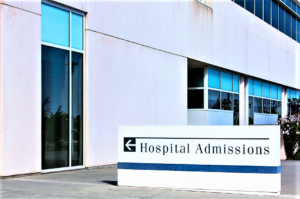
Weak patient admissions that plagued U.S. hospital operators in the June quarter are likely to persist through 2018, as patients fret about soaring out-of-pocket costs and the future of Obamacare remains uncertain...Companies including HCA Healthcare Inc, the largest for-profit hospital operator, and Tenet Healthcare Corp have reported dismal quarterly results and cut their forecasts for the year...High-deductible health plans - which shift initial medical costs to patients, but have lower monthly premiums - are becoming popular, resulting in patients pushing back non-emergency surgeries.
- Bill to allow imported drugs from Canada aims to create competition (mmm-online.com)

As lawmakers grapple with addressing sky-high drug prices, the debate around allowing importation of lower-priced versions of the same branded medications from Canada has again cropped up in policy circles…Sen. Bernie Sanders has been a major advocate...introducing the Affordable and Safe Prescription Drug Importation Act...bill would create a legal pathway for U.S. pharmacies to import lower-priced versions of branded medications from Canada and possibly other countries...The Congressional Budget Office has estimated that Sanders' bill would save the U.S. federal government nearly $7 billion over the next decade. But a number of influential stakeholders, including drugmakers and former FDA commissioners, have expressed concern about whether the legislation would increase safety risks...Sanders' bill...would require HHS to allow wholesalers, pharmacies, and individuals to import prescription drugs manufactured at FDA-inspected facilities that are operated by licensed companies in Canada. In the policy statement, the senator said that Canadian pharmaceutical manufacturing standards are comparable to U.S. regulations…