
- Mylan, U.S. finalize $465 million EpiPen settlement (reuters.com)Sen. Grassley says Mylan's $465 million Epi-Pen settlement 'shortchanges' taxpayers (cnbc.com)
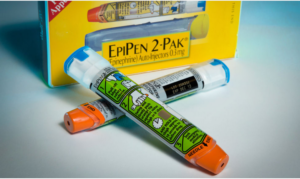
Mylan NV…has finalized a $465 million settlement resolving U.S. Justice Department claims it overcharged the government for its EpiPen emergency allergy treatment, which became the center of a firestorm over price increases...The U.S. Attorney's Office in Massachusetts...announced the accord, which was soon after criticized by some congressional members as being too easy on the drugmaker. It came 10 months after Mylan said it had reached a deal...The settlement resolved claims that Mylan avoided higher rebates to state Medicaid programs by misclassifying EpiPen as a generic product, even though it was marketed and priced as a brand-name product...Under the deal, Mylan did not admit wrongdoing. It will reclassify EpiPen and pay the rebate applicable to its new classification as of April 1, 2017...The deal followed a False Claims Act whistleblower lawsuit filed by French rival Sanofi SA in 2016, two years after it first raised the matter with authorities...Sanofi, which formerly marketed a rival product called Auvi-Q, will receive nearly $38.8 million as a reward from the government...
- 5 Trends influencing drug pricing (biopharmadive.com)

It started the same way many things have in recent memory, with a tweet...Hillary Clinton’s...Twitter account..."Price gouging like this in the specialty drug market is outrageous. Tomorrow I'll lay out a plan to take it on."...Recognizing the risks that such reforms would pose to drugmaker revenue, investors quickly sold off millions of shares in pharmaceutical companies. The iShares Nasdaq Biotechnology exchange-traded fund, which shows levels of biotech investments, sunk more than 6%…the biopharma industry could see just how much was at stake if it left pricing backlash unchecked. Still, the problem persisted...In response to the pushback, drugmakers have adopted a few key strategies...reactions to those initiatives have been mixed at best, with many viewing them as skin-deep remedies rather than the panacea needed to substantively solve drug pricing. Though a cure-all isn’t on the horizon, five key trends are currently shaping drug pricing decisions:
- Targeted legislation
- New models
- Rare disease and specialty drug development
- Negotiating power
- High-deductible insurance plans
- University Collaborating With Israeli Cancer Research Company (ktvn.com)

The University of Nevada, Reno, is collaborating with an international company who is in the business of cancer treatment. They will be investing millions of dollars in better equipment at the College of Science (Nevada Terawatt Facility in Stead)...a...new venture with Israeli company HIL Applied Medical who is pouring millions of dollars into bringing UNR's "cheetah laser" to its full potential. They hope to find new ways to deliver proton therapy for cancer patients that is smaller, more effective and less expensive...This might scale into small and medium size hospitals like the ones we have in our local community here...Less than 5 percent of patients around the world have access to proton-therapy cancer treatment because equipment can cost upwards of $100 million. With this collaboration, they think they could get costs down to $1 million so it's a feasible option for more hospitals...Researchers from HIL Applied Medical will visit Reno often to conduct tests alongside Terawatt Facility technicians. As they move forward, the company anticipates creating more jobs in Reno...
- Merck CEO Quits Trump Council as ‘Matter of Personal Conscience’ (bloomberg.com)Merck CEO quits Trump's manufacturing council over Charlottesville — and Trump immediately bashes him (businessinsider.com)

Merck & Co.’s CEO quit President Donald Trump’s council of manufacturing executives Monday, saying “America’s leaders must honor our fundamental values” by rejecting expressions of hatred, bigotry and group supremacy...He was almost immediately attacked by Trump on Twitter...Following a weekend of violence in Virginia involving white-supremacist groups that Trump has been criticized for not explicitly condemning, Merck Chief Executive Officer Ken Frazier said “as a matter of personal conscience, I feel a responsibility to take a stand against intolerance and extremism.”
- What should happen next on healthcare reform? Northern Nevada leaders weigh in (rgj.com)

- Repeal without solid replacement puts Nevada lives at risk - Tony Slonim, president and CEO of Renown Health
- Health care is about people not politics - Sharon Chamberlain, CEO of Northern Nevada HOPES
- Keep vaccines accessible and affordable - Heidi Parker, Executive Director of Immunize Nevada
- Protect Medicaid, seek single-payer long-term - Charles Duarte, CEO of Community Health Alliance
- Maintain funding so hospitals can serve everyone - Helen Lidholm, CEO of Saint Mary’s Health Network
- Flimsy evidence behind many FDA approvals (reuters.com)
Many drugs granted accelerated approval by the U.S. Food and Drug Administration lack clear evidence of safety and effectiveness, and the same is true for most high-risk medical devices, according to two new reports in the Journal of the American Medical Association...The Accelerated Approval pathway makes potentially promising investigational medicines available for use before the usual amount of data has been collected to confirm their effectiveness and safety…Drugs granted Accelerated Approval should be rigorously evaluated using convincing patient-centered clinical outcomes in rigorous studies...we have found numerous situations in which required confirmatory studies with rigorous designs and outcomes are not pursued or are not completed in a timely fashion, and in these cases, we are concerned that regulators appear to accept data that would not otherwise meet FDA standards...For standard approval, the FDA generally requires gold-standard randomized controlled trials that demonstrate a drug’s safety and effectiveness. Fourteen (out 22 analyzed) of these accelerated approvals, however, were exclusively based on less-rigorous trials.
- Pharmacists support real-time monitoring across Australia (psa.org.au)

New legislation to deliver a real-time prescription monitoring system in Victoria has been welcomed by the peak national body for pharmacists, the Pharmaceutical Society of Australia...Legislation introduced into the Victorian Parliament...will establish the legislative framework for a Victorian real-time monitoring system...PSA Victorian President Benjamin Marchant said PSA welcomed the long-overdue system, which will support clinical decision-making by prescribers and pharmacists to optimise use of medicines and save lives in Victoria...“The system will allow timely and relevant information to be shared among prescribers and pharmacists, ensuring potent medicines are used safely,” Mr Marchant said. “The system will identify people at risk of harm and provide referral pathways for pharmacists to support our patients...“PSA supports the Victorian legislation’s mandatory requirements for prescribers and pharmacists. The system should be integrated and streamlined for prescribing and dispensing software to ensure it is effective and useable.”...
- Nevada gets $1.2M grant to fight opioid problem (reviewjournal.com)

Nevada will get another $1.2 million in federal grants to fight the opioid epidemic in the state...Gov. Brian Sandoval announced the new funding...It comes on top of $8.24 million in previous opioid-related grants the state has received...The grants will help the state implement a new state law and the recommendations of last year’s Prescription Drug Abuse Summit. The law put in place prescribing protocols for health care providers for controlled substances that are painkillers...Grants awarded to Nevada:
- Centers for Disease Control and Prevention Prescription Drug Overdose: Prevention for States. The grant is focused on state-level interventions for preventing prescription drug abuse. The state Division of Public and Behavioral Health will get an additional $789,182 on Sept. 1. The state’s initial amount was $369,450.
- Centers for Disease Control and Prevention Enhanced State Surveillance of Opioid-Involved Morbidity and Mortality. This grant analyzes overdose morbidity and mortality data, with input from coroners and medical examiners. DPBH will receive $387,763.
- Substance Abuse and Mental Health Services Administration Strategic Prevention Framework – Partnerships for Success. The grant is aimed at preventing drug abuse among young people. Nevada will receive $2.2 million.
- Substance Abuse and Mental Health Services Administration State Targeted Response to the Opioid Crisis. Awarded in April, this provides $5.6 million to develop the infrastructure needed for treating residents.
- Centene to offer health coverage to all Nevada counties (kolotv.com)Rural Nevada residents will get health care coverage (kolotv.com)
Governor Brian Sandoval says health insurance company Centene will expand coverage on Nevada's health exchange for 2018, meaning all the state's rural counties will continue to have health coverage...An a news conference in Silver Springs, Sandoval announced the Missouri-based Centene Corporation, also known as Silver Summit in Nevada, will offer health insurance coverage to all Nevada residents including those living in Carson City, Churchill, Douglas, Elko, Esmeralda, Eureka, Humboldt, Lander, Lincoln, Lyon, Mineral, Pershing, Storey and White Pine on the Silver State Health Insurance Exchange...Today’s announcement will ensure that more than 8,000 Nevadans will have the ability to exercise their option to utilize Nevada’s online marketplace and secure coverage for their families,” said Governor Brian Sandoval. “This is a fantastic time to welcome SilverSummit to our healthcare market and express the state’s sincere gratitude for stepping up, partnering with Nevada’s own Hometown Health, and providing an insurance option for thousands of Nevadans.”...
- King Review leaves hospital pharmacists out in the cold (ajp.com.au)Review of Pharmacy Remuneration and Regulation – Interim Report – June 2017 (health.gov.au)Response to the Review of Pharmacy Remuneration and Regulation – Interim Report (shpa.org.au)

The King Review has failed to acknowledge the role of hospital pharmacists, says the SHPA...The interim report of the Review of Pharmacy Remuneration and Regulation’s failure to acknowledge or leverage the “pivotal” role of hospital pharmacists in ensuring Australians have appropriate and convenient access to medicines, the Society of Hospital Pharmacists of Australia says...In its formal response to the interim report, SHPA highlighted managing transitions of care between hospitals and the community and prioritising the development of HMRs (Home Medicine Reviews) as key aspects of the King Review...It also reaffirmed what it sees as the “crucial” value of including SHPA in Agreement negotiations and decisions...SHPA Chief Executive Kristin Michaels says SHPA’s response to the King Review was driven by the position of hospital pharmacists as progressive advocates for clinical excellence and committed to evidence-based practice...Ms Michaels says hospital pharmacists are equipped to influence a reduction in the 230,000 medicine-related hospital admissions per year in Australia, which cost the health budget $1.2bn annually...