
- Drugs approved with limited data aren’t always well-tested later (reuters.com)
New medicines that win U.S. marketing approval without conclusive evidence of their effectiveness aren't always proven to work after they go on sale, a recent research review suggests...Researchers focused on medicines approved for sale based on single pivotal trials or based on what's known as "surrogate markers," such as lab tests and signs of risk for disease such as cholesterol levels instead of true clinical outcomes like heart attacks or deaths. Many times no follow-up studies were published after these medicines went on sale, and when studies were published they often continued to rely on surrogate markers to suggest potential effectiveness...speeding up the approval process increases our collective uncertainty about drugs' benefits and safety...This exposes patients to risks - the risk that they are spending their resources on therapies that do not work as well as expected as well as the possibility that they are taking drugs that have underlying safety risks that have not yet been figured out… researchers examined published studies of 117 medicines approved for treating 123 medical conditions by the U.S. Food and Drug Administration...based on either a single pivotal trial or on trials that relied on surrogate endpoints...no follow-up studies were published for 43 of the 123 approved indications, or 35 percent...
- Pharmacy Week in Review: May 19, 2017 (pharmacytimes.com)

Mary Bridgeman, Clinical Associate Professor at Ernest Mario School of Pharmacy, Welcome to This Week in Managed Care from the Managed Markets News Network.
- CVS relies on personalization in its ExtraCare loyalty program (mmm-online.com)

When CVS Caremark rebranded as CVS Health in 2014, it pledged to help customers venture down the road to better health. But it looks like the pharmacy retailer could use a bit of a checkup...While the brand reported a 3% net revenue increase in Q1 2017, it also experienced a 3.8% decrease in retail and long-term care segment revenue, which it partially attributes to a 4.7% decrease in same-store sales...its net income decreased 16.9%, according to its quarterly results…Generating customer loyalty is crucial to CVS's business...generating repeat business can be difficult...the main differentiators for CVS are the brands that it carries in its stores — some of which are exclusive — and its customer shopping experience — an experience that it's able to personalize using data from its ExtraCare program.
- Personalization based on purchases...CVS is able to mine these members' purchase and demographic data and pair it with internal research to deliver personalized offers and marketing communications to its customers.
- In-store innovation...the brand revealed a new store design which includes the debut of "discovery zones." These designated setups allow customers to learn about new trends and be exposed to different products…
- Mobile moves...Mobile is a good way for CVS to bridge the digital and in-store shopping experiences. Customers can download the CVS app to manage their prescriptions, order photos, and see wait times for CVS's walk-in clinics, MinuteClinic, and hold their place in line. They can also scroll through their available coupons, filter them, and forward them to their ExtraCare card to be used at checkout. Furthermore, customers can forward ExtraBucks to their cards, and pay directly through the app.
- Keeping customers at the core...it's important for CVS to engage customers via their preferred channels…CVS's receipts as an example of how the brand does this...CVS has received media attention for the length of its receipts...the brand made it possible to digitize receipts if desired...customers can even opt to have their transaction history printed on a paper receipt and have their coupons emailed to them directly.
- Scottish government backs new integrated five-year pharmacy degree for 2020 (pharmaceutical-journal.com)

A five-year integrated pharmacy degree, leading to pharmacist registration, is set to be introduced throughout Scotland in three years’ time. However, the detail of how the workplace learning will fit into the degree timetable and which model to adopt, has not yet been decided...Shona Robison, the Scottish secretary for health and sport, is backing the proposal from the special advisory group that...published its report, ‘Five-year integrated initial education programme for pharmacists in Scotland’…"Given our current focus on workforce planning and development and the extending role of pharmacists within multidisciplinary teams, this report provides a real opportunity to better prepare our new pharmacists for practice in Scotland by ensuring they are able to practice in the evolving NHS health and social care landscape."...there is also a need for more "enhanced experiential learning in clinical practice" and a recognition of the benefits of workplace learning which can reinforce confidence and professional competence...The new degree also supports the Scottish government’s priorities to strengthen the primary care workforce and its desire for every GP practice to have access to a pharmacist with advanced skills...
- G20 health ministers agree to tackle antibiotics resistance (reuters.com)

Health ministers of the G20 leading economies…agreed to work together to tackle issues such as a growing resistance to antibiotics and to start implementing national action plans by the end of 2018...Germany...said it was an "important breakthrough" that all nations had agreed to address the problem and work towards obligatory prescriptions for antibiotics...Saying that globalisation caused infectious diseases to spread more quickly than previously, the 20 nations also pledged to strengthen health systems and improve their ability to react to pandemics and other health risks..."By putting global health on the agenda of the G20 we affirm our role in strengthening the political support for existing initiatives and working to address the economic aspects of global health issues,"...
- Biosimilars May Not Deliver Savings Due to Rebates on Biologics (managedhealthcareconnect.com)

A recent editorial published in JAMA explained that biosimilars may not deliver the savings payers and consumers had hoped as a consequence of large rebates negotiated by pharmacy benefit managers...The authors...suggested that due to something known as the "rebate trap,"—a flaw through which biosimilars are offered as low-tier options by payers and thus cost more money because reference products have larger negotiated rebates—biosimilars may fail to deliver significant cost savings...Biosimilars for chronic diseases, the largest category of biological therapies, are unlikely to yield widely expected cost savings...Rebate agreements between pharmaceutical companies, pharmacy benefit managers, and other payers create an incentive for payers to prefer more expensive branded biologics over biosimilars...
- This Week in Managed Care: May 12, 2017 (ajmc.com)

Laura Joszt, assistant managing editor at The American Journal of Managed Care. Welcome to This Week in Managed Care from the Managed Markets News Network
- This Week in Managed Care: May 19, 2017 (ajmc.com)

Laura Joszt, assistant managing editor at The American Journal of Managed Care. Welcome to This Week in Managed Care from the Managed Markets News Network
- Pharmacy Society of Wisconsin Teams with Attorney General to Reduce Pharmacy Armed Robbery (pharmacytimes.com)
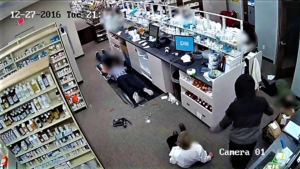
In 2015, the State of Wisconsin was third in the nation with 45 pharmacy armed robberies. In 2016, the state dropped to 31st in the nation with only 6 pharmacy robberies. That’s 39 fewer robberies than in the previous year or a 750% decrease..." Wisconsin AG Unveils New Effort to Prevent Pharmacy Robberies."...Wisconsin Attorney General, Brad Schimel, along with the Pharmacy Society of Wisconsin and law enforcement have formed a "comprehensive pharmacy robbery prevention and response training program."...Attorney General Schimel...told me, "we have a strong relationship with the Pharmacy Society of Wisconsin and have been working closely with them for the past 3 years. Certainly it was the high numbers (robberies) in 2014/2015 that concerned us. It’s probably been in the last 6 months that we have been working most intensively with them and this program."...the robbery program focuses on the following:
- Opening and closing practices at retail pharmacies
- Good in-store surveillance camera placement
- Time-delayed opening narcotic safes
- Phone etiquette
- Signage within a pharmacy (Time delayed safes, video equipment is use, etc.).
- Pharmacy Week in Review: May 12, 2017 (pharmacytimes.com)

Nicole Crisano, PTNN. This weekly video program provides our readers with an in-depth review of the latest news, product approvals, FDA rulings and more.