
- McKesson’s Pharmacy Optimization team identifies 5 key pharmacy trends headed into 2017 (drugstorenews.com)

...the McKesson Pharmacy Optimization team...has identified the top five trends that will impact hospital and health system pharmacies in 2017...McKesson's advisory team addressed these trends with health system pharmacy leaders at the American Society of Health-System Pharmacists Midyear Clinical Meeting 2016...The role of the clinical pharmacist is rapidly expanding to stay ahead of the changing dynamics brought upon by healthcare reform...The expanding scope of pharmacists’ service and increasing clinical collaboration illustrate key trends and opportunities facing health system pharmacies in the coming year...here are the five trends McKesson's pharmacy optimization team identified:
- Continued Growth in Specialty Market
- Leveraging Pharmacy Analytics to Make Strategic Business Decisions
- Health System Pharmacy Seen as a Revenue and Margin Generator
- Centralizing Pharmacy Operations and Improving Clinical Services
- Future Directions for Reform and the Affordable Care Act
- 5 plead guilty to federal charges for roles in drug ring (reviewjournal.com)

Five defendants pleaded guilty to federal charges for their roles in a drug ring that shipped crystal methamphetamine and oxycodone...Justin Lowe, Brandon Trivett, Lamar Skipper, Tanner Curd and Gary Childress, each pleaded guilty to one count of conspiring to distribute methamphetamine or oxycodone. Separately, Skipper pleaded guilty to one count of conspiring to commit money laundering. A federal investigation found that traffickers were shipping the drugs from Las Vegas to southwest Virginia and eastern Kentucky via package delivery companies like FedEx and the United States Parcel Service...The operation generated at least $1 million in drug proceeds and the money was transferred through bank accounts or wired...
- Some drug makers are better corporate citizens than others (statnews.com)

...a new nonprofit (JUST Capital) created by...hedge fund manager has ranked nearly 1,000 publicly traded companies to determine the extent to which they pursue "just" policies and practices. And leading the pack among drug makers is Amgen...The goal is to maintain an information clearinghouse that can be used to spur companies to make improvements while, at the same time, giving the public tools to make more informed decisions about purchasing, investing, and employment...40,000 Americans to gauge their views on "just" behavior by corporations...the team identified...nine categories...fair pay; the quality of employment benefits; workplace treatment; product attributes; customer satisfaction; leadership and ethics; supply chain standards; and environmental performance...Of the nearly two dozen publicly traded US drug makers, the biggest names largely dominate the rankings, although some smaller companies also ranked highly. After Amgen, the top 10 is rounded out by Biogen, Johnson & Johnson, Agilent Technologies, Eli Lilly, Bristol-Myers Squibb, Quintiles, United Therapeutics, BioMarin Pharmaceutical, and AbbVie...the rankings did incorporate fines and violations racked up by drug makers. And there have been many of those in recent years in which companies reached settlements for illegal marketing, paying kickbacks to doctors, and offering bribes to officials and health care providers in foreign countries
- Pharmacy Week in Review: December 1, 2016 (pharmacytimes.com)
Ed Cohen, Executive Vice President Pharmacy Advocacy, Pharmacy Times, This weekly video program highlights the latest in pharmacy news, product news, and more.
- Global prescription drug spend seen at $1.5 trillion in 2021: report (reuters.com)

Global spending on prescription medicines will reach nearly $1.5 trillion by 2021, although the annual rate of growth will decrease from recent years, according to a forecast by Quintiles IMS Holding…based on wholesale pricing, is up nearly $370 billion from estimated 2016 spending. The United States will account for up to $675 billion of the $1.5 trillion...Annual spending growth over the next five years is forecast at 4–7 percent, primarily driven by newer medicines for cancer, diabetes and autoimmune diseases in developed markets...The report projects a slowdown in U.S. branded drug price increases, possibly a result of rising political pressure. It sees annual wholesale price increases of 8 to 11 percent and net prices rising 2 to 5 percent...The report predicts an average of 45 new drug launches each year, a historically high rate. While many will be very expensive treatments, the report sees rising costs partially offset by a higher level of drugs going off patent than in the previous five years. That includes the anticipated effect of more biosimilars - cheaper versions of high-priced biotech medicines - entering the market.
- FDA finalizes quality guidelines for contract manufacturers (biopharmadive.com)
The Food and Drug Administration has finalized guidelines, three-and-a-half years in the making, suggesting what should go into quality agreements between pharmaceutical companies and outsourced contract manufacturers...The agency's recommendations come at a time when fully two-thirds of pharmaceutical manufacturing is outsourced, putting significant demand on contract manufacturing organizations (CMOs)…Current Good Manufacturing Practice requirements apply to all contract facilities, including analytical testing labs...FDA recommends that owners and contract facilities implement written quality agreements delineating manufacturing activities to facilitate compliance with CGMP. The agency suggests that quality contracts between companies and CMOs include the purpose and scope of contract manufacturing services to be provided; provisions on how to resolve disputes and how to change manufacturing processes, and contract revision policies...
- Mylan CEO accepts full responsibility for EpiPen price hikes, but offers little explanation (statnews.com)
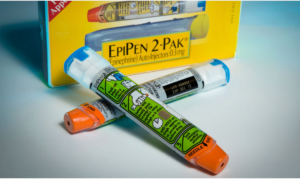
...Mylan Pharmaceuticals CEO Heather Bresch accepted "full responsibility"...for the price hikes that caused national outrage..."If EpiPen had to be the catalyst to show what hardworking families are facing, it will have been worth it," she said...referring to the upfront costs that many people encounter with high-deductible health plans. Mylan increased the price of an EpiPen two-pack nearly 550 percent to $608 over the past decade...Bresch reiterated remarks she made...at a congressional hearing...citing a lack of transparency in the pharmaceutical pricing system for the controversy surrounding the product. She justified the price increases by pointing to what she insisted were "investments" made to improve the device and patient access...the company has made plans to sell its own authorized generic version of EpiPen at roughly half the price. And...agreed to a $465 million settlement with the Department of Justice for shortchanging Medicaid over rebates...Meanwhile, the Federal Trade Commission was asked by various lawmakers to investigate whether Mylan violated antitrust laws because the contract for one option in the discounted school program, at one time, contained a clause forbidding school districts to buy rival products...
- What Is Bioinformatics and How Does It Relate to Health Care? (pharmacytimes.com)

Tracy Glauser, MD—associate director of Neurology, Cincinnati Children's Hospital Medical Center—discusses the role of bioinformatics in health care.
- Nanowear gains FDA approval for first-of-its-kind wearable: undergarment that tracks cardiac health (drugstorenews.com)
Nanowear, an early stage developer of cloth-based diagnostic monitoring nanosensor technology...announced that it has received FDA Class II 510(k) clearance for its first product, SimplECG, a remote cardiac monitoring undergarment...(it) collects continuous multi-channel ECG, heart rate and respiratory rate data from the garment and transfers it to a web-based portal for review by a physician, by way of a mobile application…it provides accreditation of the company's one-of-a-kind, cloth-based sensor technology as medical-grade...This is the first step and foundation of what we believe to be an extensive array of applications for our nanosensor technology – including numerous other electrical, biometric and biochemical signals that can be measured directly from the skin without conductive gels, adhesives or skin preparation. The market of applications for healthcare alone is a multi-billion-dollar opportunity, but as we look beyond to consumer, industrial, clinical research, military and public sector applications, the addressable market expands exponentially...
- This Week in Managed Care: December 2, 2016 (ajmc.com)
Sara Belanger with The American Journal of Managed Care. Welcome to This Week in Managed Care from the Managed Markets News Network