
- China healthcare costs forcing patients into crippling debt (reuters.com)

As China's medical bills rise steeply, outpacing government insurance provision, patients and their families are increasingly turning to loans to pay for healthcare, adding to the country's growing burden of consumer debt...While public health insurance reaches nearly all of China's 1.4 billion people, its coverage is basic, leaving patients liable for about half of total healthcare spending, with the proportion rising further for serious or chronic diseases such as cancer and diabetes...Medical loans are just part of China's debt mountain - consumer borrowing has tripled since 2010 to nearly 21 trillion yuan, and in eight years household debt relative to the economy has doubled to nearly 40 percent...
- Juno cancer study halted after patient deaths, shares slide 30 pct (reuters.com)

A Juno Therapeutics Inc trial of its experimental cancer therapy, known as JCAR015, was put on hold by U.S. regulators after the deaths last week of two leukemia patients…Shares of Juno fell 30 percent...in after-hours trading...A third trial patient died in May...All three patients were in their 20s, and the deaths were linked to swelling in the brain…JCAR015 is a chimeric antigen receptor T-Cell, or CAR-T, therapy, involving a complicated process of extracting immune system T cells from an individual patient, altering their DNA to sharpen their ability to spot and kill cancer cells, and infusing them back into the same patient...Juno said the deaths occurred after the chemotherapy agent fludarabine was added to the trial program. The company said it has proposed to the U.S. Food and Drug Administration that the trial be continued using JCAR015 with just cyclophosphamide as a "pre-conditioning agent."...the FDA asked that the company submit a revised patient consent form, investigator brochure, trial protocol, and a copy of the presentation made to the agency on Wednesday. Juno said it plans to submit the requested information to the FDA...
- Pfizer agrees to opioid marketing deal to escape a lawsuit by Chicago (statnews.com)
Pfizer reached an agreement with the city of Chicago to follow a code of conduct for marketing opioids that officials hope will become standard practice for other companies...The drug maker agreed last week to disclose in all promotional materials that opioids carry a risk of addiction and not to promote them for any unapproved uses...Pfizer must make clear that there is insufficient research about the effectiveness of opioids if used beyond 12 weeks…Some industry watchers, meanwhile, said that the four-year agreement, which does not pertain to any other city or state, largely requires Pfizer to adhere to existing laws and regulations governing drug marketing. For this reason, they said the agreement breaks little new ground in the battle against inappropriate or overprescribing of opioids..."This landmark agreement is a big step in the right direction to help protect and educate the public about the true risks and benefits of highly potent and highly addictive painkillers," said Chicago Mayor Rahm Emanuel in a statement...It’s in Pfizer’s interest to highlight the addictive properties of opioids because they have a competing product under development (tanezumab)...When a company comes out slamming a particular class of drugs, it’s generally because they have a competitor in the wings. Think of this as prelaunch marketing, which can start long before the launch...
- Q&A: Why the World Health Organization plans a fair pricing model for drugs (statnews.com)

...World Health Organization wants to develop a fair pricing model for pharmaceuticals...the agency plans to convene governments, patient groups, and drug makers to fashion the notion into something realistic. The trick is to find the right balance between access to affordable medicines and enticing companies to develop new and improved medicines, while also ensuring lower-cost generics remain available. We spoke with Suzanne Hill, the secretary to the WHO Expert Committee on the Selection and Use of Essential Medicines, about how the agency hopes to get this done…
Pharmalot: This seems rather lofty or at least complicated. How is this supposed to get done?
Hill: We want to get evidence together that looks at the price drivers — how manufacturers set prices and what we know and don’t know about that. And we need to understand the questions surrounding R&D costs. We also want to understand the strategies that countries, payers, and health systems are using to manage prices and which ones may be effective and which aren’t. We also want to understand the return on investment that manufacturers need to ensure that supplies of medicines are continued...
- Theranos dealt severe blow by CMS (drugstorenews.com)

Theranos Inc founder and CEO Elizabeth Holmes
Less than one month following Walgreens decision to terminate its relationship with Theranos, the blood-testing lab on Thursday announced that the Centers for Medicare & Medicaid Services has revoked the company's CLIA certificate, among other sanctions. The revocation of Theranos' CLIA certificate precludes the owners and operators of Theranos from owning, operating or directing a lab until at least July 2018...In addition to the revocation of Theranos' CLIA certificate, the full list of CMS sanctions include:
- Limitation of the laboratory’s CLIA certificate for the specialty of hematology;
- A civil money penalty;
- A directed portion of a plan of correction;
- Suspension of the laboratory’s approval to receive Medicare and Medicaid payments for any services performed for the specialty of hematology; and
- Cancellation of the laboratory’s approval to receive Medicare and Medicaid payments for all laboratory services.
- Alibaba Health Expands Into New Consumer Business After Setbacks (bloomberg.com)

Alibaba Health Information Technology Ltd…the subsidiary of China’s biggest e-commerce operator is attempting to revive its fortunes by tapping new areas of growth -- like consumer safety...China...scrapped plans to implement a compulsory drug coding system intended to identify counterfeit medicines that would have used a platform developed by Ali Health. The Alibaba Group Holding Ltd. subsidiary says it is now using the same technology to build a commercial tracking platform that will have wider applications beyond medicines...Ali Health’s new system could be used to track the origins of products such as baby formula, farm produce and even wine for Chinese consumers concerned about food safety…Ali Health is currently talking to partners to expand use of the technology, and continues to run the existing drug tracking system for the government while awaiting a final decision. The China Food & Drug Administration suspended the electronic coding system earlier this year for use in the drug industry as it made draft amendments to existing rules, allowing the use of other methods to track medicines back to their origin...
- Drug maker is warned over missing study about child opioids use (statnews.com)

...one drug maker has failed to provide the Food and Drug Administration with a required study about the effect its powerful painkiller might have on teenagers...At issue is Xartemis XR (oxycodone/acetaminophen), which Mallinckrodt Pharmaceuticals received regulatory approval to sell two years ago. At the time, the company was also required to conduct a so-called post marketing study to determine its safety in youngsters between 12 and 17 years old…as of June 24, the company blew past a March 31 deadline for submitting its pediatric assessment. The drug maker also failed to respond to an April 25 "noncompliance" letter for which the FDA provided a new 45-day deadline to either submit the data or request an extension...The assessment was required under the Pediatric Research Equity Act...What happens if the company fails to comply and submit the data to the FDA? According to federal law, the agency could determine that Xartemis XR is misbranded. That would not lead to a product withdrawal, but the FDA could pursue an injunction or seizure proceedings...
- Doctors turn militant over Venezuela’s health crisis (reuters.com)

A dozen doctors hold a hunger strike in the corridors of an Andean city hospital. In another provincial city, hundreds of protesting medics suspend appointments...With eight out of 10 medicines now scarce, according to the main pharmacy group, protesting doctors are demanding that President Nicolas Maduro's socialist government declare a national health crisis and allow foreign humanitarian aid...In June, Pino (Christian Pino, a surgeon at the Merida hospital) read a list of doctors' demands in Venezuela's National Assembly before the opposition-led legislature declared a state of medical emergency and approved channels for foreign humanitarian aid...But the...Supreme Court shot down the assembly's proposal. Government officials deny Venezuela is facing a humanitarian crisis and say there is no need for humanitarian assistance...Idabelias Arias, the head of the emergency ward at a pediatric hospital in Barquisimeto..."Doctors are doing war medicine here."
- Pharmacy Week in Review: July 8, 2016 (pharmacytimes.com)

Mike Glaicar, Business Development: Pharmacy Times...(PTNN) This weekly video program provides our readers with an in-depth review of the latest news, product approvals, FDA rulings and more.
- Nevada’s Attorney General sues insurer for failing to defend state, pay settlement (reviewjournal.com)
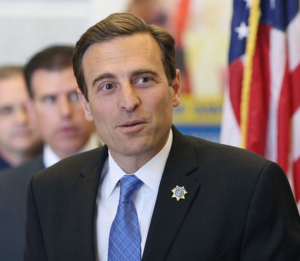
Attorney General Adam Laxalt is suing an insurance company alleging breach of contract and bad faith for failing to defend Nevada and pay its $400,000 settlement with the city of San Francisco over allegations of patient dumping...The lawsuit filed...against The Insurance Company of the State of Pennsylvania...seeks unspecified compensatory and punitive damages, along with costs and attorney’s fees...San Francisco sued Nevada in 2013 following an investigation by the Sacramento Bee into patients at Rawson-Neal Psychiatric Hospital in Las Vegas being provided bus tickets. The lawsuit claimed about 500 patients arrived in California and about two dozen were bused to San Francisco, many needing medical treatment and shelter. The city sought reimbursement for their care…Nevada settled the lawsuit in 2015...the action against the insurance company, alleges the carrier failed to investigate San Francisco’s claims against Nevada and invoked "inapplicable coverage exclusions" to escape its duty to defend and indemnify Nevada from San Francisco’s lawsuit...