
- Drug co-pay assistance programs facing increasing state, federal scrutiny (cnbc.com)
Charity-run funds to help patients pay high co-payments face new scrutiny by prosecutors in two states and increased federal oversight, amid increasing questions about how they mask high drug prices...Three drugmakers — Gilead Sciences, Jazz Pharmaceuticals and Biogen — disclosed subpoenas this spring related to their funding of co-pay assistance programs...The Department of Health and Human Services' office of the inspector general stepped up its oversight of patient groups' relationships with pharmaceutical companies beginning late last year by alerting patient groups to possible violations of Medicare's anti-kickback rules... patients not getting their drugs would drag down (pharmaceutical companies') entire pricing approach...So it's easily worth it to them to donate to a charity, even if it costs them a few million dollars...Drugmakers aren't allowed to directly cover patients' prescription co-payments for Medicare or Medicaid, but they can donate to patient charities as long as they are independent of the pharmaceutical companies...One of the issues some find troubling about both co-pay assistance and coupons is that neither are for the uninsured. Insurers say they use co-payments to steer patients to less expensive drugs that are equally effective. So when co-payments are subsidized, patients are insulated from the high cost of a drug and insurers and employers bear the brunt of the drug price, which then gets built into premiums paid by consumers...
- Southern Nevada Health District closing its Henderson location (reviewjournal.com)
The Southern Nevada Health District will close its Henderson location late this month as it searches for new sites in the area...The Henderson Public Health Center, at 520 E. Lake Mead Parkway, near Burkholder Boulevard, will shutter at the end of the business day June 24...Costing the district just over $800,000 a year in rent and fees, the Henderson facility has seen a decline in customers in recent years while the district’s main facility and East Las Vegas Public Health Center have experienced increases in customer visits..."We’re looking at how we utilize our resources in the district and want to make sure we’re efficient,"...(health district Director of Administration Andy Glass)
- Hope for Sarepta drug approval? FDA requests more data (statnews.com)
In the latest twist surrounding Sarepta Therapeutics and its rare disease drug (eteplirsen), the Food and Drug Administration has asked the company to provide additional data to review, a move some see as a sign that the agency is looking for ways to approve the treatment. Shares in Sarepta...jumped more than 25 percent...The request comes amid ongoing uncertainty over the fate of a medicine being developed to combat Duchenne muscular dystrophy, which destroys muscle fibers and eventually confines boys to wheelchairs before sending them to an early death...The controversy increasingly resembles the fracas over HIV drugs three decades ago...the FDA appears caught between its mandate to adhere to scientific standards for approving medicines and finding ways to appease the public and authorize treatments for unmet medical needs.
- Pharma Deals Reviewed at Much Higher Rates, BNA Study Finds (bloomberg.com)

Pharmaceuticals deals are being reviewed much more often than other mergers at the Federal Trade Commission, according to an analysis...from the FTC...Drug company acquisitions -- vilified as a key driver of price increases that hurt consumers -- were scrutinized twice as frequently as other mergers in 2013 and about four times more in 2014...they were reviewed at roughly three times the rate of other mergers in 2015. Most of the acquisitions ultimately won approval because the agency could assuage concerns with targeted asset sales...Pharmaceuticals is a narrow area with many sub-markets that each have a lot of consumer impact, prompting the frequent reviews. Any two companies are likely to have at least some overlap in an area that requires a more careful look than the boilerplate reporting information provides – including information about drugs in the pipeline that might compete in the near future...pharmaceutical industry has "experienced significant merger activity in recent years" and that the FTC ...continues to carefully review mergers between pharmaceutical manufacturers and require divestitures where necessary to maintain competition...The Commission is committed to enforcing the antitrust laws in pharmaceutical markets to promote competition and prevent conduct that is likely to harm consumer welfare...
- Valeant scrambles to restructure Walgreens deal (cnbc.com)
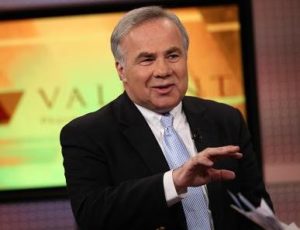
Valeant is attempting to restructure a deal with Walgreens after warning it is losing money on a large chunk of medicines sold through the chain of U.S. drugstores...The Canadian drugmaker will consider terminating the agreement within months unless the situation improves...Valeant...slashed its annual profit forecasts for the third time in six months, a move it blamed in part on its deal with Walgreens, which dispenses many of its best-selling medicines...Walgreens is filling prescriptions for some of the company's top drugs without first ensuring that the patient's health insurer will pay for them, resulting in losses for Valeant...Stefano Pessina...who runs Walgreens...negotiated a very favourable deal for Walgreens in exchange for supporting the drugmaker, which was reeling from the accounting irregularities, as well as a political outcry over the high price of its medicines...about a quarter of Valeant drugs sold through Walgreens are being dispensed without securing this "prior authorisation"...(Valeant)...would consider terminating the agreement with Walgreens unless things improve quickly, and believes that a "material adverse change" clause in the contract would provide legal cover...
- Troubled Teva plant in Hungary faces an FDA crackdown (statnews.com)

The latest broken link in the pharmaceutical supply chain has appeared in Hungary, where Teva Pharmaceuticals has suspended production at a plant following a crackdown by the US Food and Drug Administration...The drug maker voluntarily halted work at its Godollo facility, which makes sterile injectable medicines, as "a precautionary measure" shortly after FDA inspectors visited last January...The company is "working around the clock to restart manufacturing operations as soon as possible,"...The shutdown only came to light after Hungarian regulators late last week issued a notice in an attempt to address concerns about drug shortages...The disclosure by Hungary’s National Institute of Pharmacy...came several days after the FDA also issued a so-called import alert, which is a notice about products that are banned from entering the United States. The FDA alert cites issues with good manufacturing practices, a regulatory term for minimum standards, but specific problems were not disclosed...the episode underscores the ongoing challenges that even the largest drug makers face in maintaining their plants...
- Drug makers pay $67 million for misleading docs about cancer drug survival data (statnews.com)

Two drug makers — Roche’s Genentech and OSI Pharmaceuticals — announced a deal...to pay $67 million to resolve charges they made misleading statements about the effectiveness of the Tarceva drug to treat non-small cell lung cancer...between 2006 and 2011, the companies gave promotional materials to oncologists that included misleading and overstated survival data to influence prescribing. The drug was originally approved by the US Food and Drug Administration as a second-line or back-up treatment, but the inflated data prompted some doctors to use Tarceva as a first choice, which boosted usage...the feds contend the companies violated the False Claims Act, because federal health care programs, such as Medicare and Medicaid, overpaid for the medicine…The infractions came to light thanks to a whistleblower lawsuit that was filed by Brian Shields, a former Tarceva senior product manager. His 2011 lawsuit described an elaborate scheme that was used to bolster Tarceva prescriptions, including kickbacks purportedly paid to physicians...
- More doctors for northwest Las Vegas community is ultimate goal of MountainView Hospital residency program (reviewjournal.com)
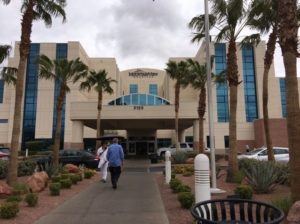
In September, MountainView Hospital received accreditation for its Internal Medicine Residency program..."We are very excited to reach this important milestone in the development of MountainView Hospital’s Graduate Medical Education program," said Dr. Ali Rahimi, director of the Internal Medicine Residency program at the hospital...The hospital was also accredited to add General Surgery and Obstetrics/Gynecology to the residency program..."...it was really about the commitment to primary care," said Chris Mowan, MountainView CEO. "... We were looking for a majority to...stay in Nevada...and practice primary care. Our goal was to find people who were passionate about primary care. Because that’s what we need; that’s our greatest shortage."
- Senators ask drug makers to explain prices for opioid overdose antidote (statnews.com)

In the latest attempt to combat prescription drug abuse, two US senators want several drug makers to explain their pricing for naloxone, a decades-old drug that is widely used to reverse the effect of opioid and heroin overdoses...The move comes amid ongoing reports that the cost of the treatment continues to rise, despite bitter complaints from public officials. At the same time, public health officials cite a growing number of overdose deaths…In identical letters to five drug makers...(Amphastar Pharmaceuticals, Mylan Laboratories, Kaleo, Adapt Pharmaceuticals, and Pfizer-Hospira)...the Senate Special Committee on Aging, wrote that they are concerned that rising prices...They asked what the companies are doing to ensure access to their treatments...
- 5 Things Pharmacists Should Know About Dabbing (pharmacytimes.com)

For some, dabbing is a dance popularized by pro athletes like Cam Newton and LeBron James...For others, it refers to using a potent marijuana extract...Here are 5 things pharmacists should know about the potentially less familiar form of dabbing that is increasingly a public health concern.
- The tetrahydrocannabinol (THC)-concentrated substance is yellow and looks like honey or butter.
- The concentrate can have THC levels anywhere between 40% and 80%.
- The marijuana concentrate is often placed in e-cigarettes or vaporizers.
- The long-term effects of dabbing are unknown.
- One method to manufacture marijuana concentrate can lead to explosions.