
- ACIP Approves 2016 Adult Immunization Schedule (physiciansbriefing.com)Advisory Committee on Immunization Practices Recommended Immunization Schedule for Adults Aged 19 Years or Older: United States, 2016* (annals.org)Adult Immunization Schedule, Full Version (color, 5 pages) (cdc.gov)

The Advisory Committee on Immunization Practices has approved the recommended adult immunization schedule for 2016. The recommendations are published as a clinical guideline in the Feb. 2 issue of the Annals of Internal Medicine...The researchers note that the major changes to the schedule relate to human papillomavirus, pneumococcal, and serogroup B meningococcal vaccines. The nine-valent HPV vaccine was added to the schedule, and can be used for routine vaccination against HPV for males and females. For immunocompetent adults aged 65 years and older, the vaccine interval for 13-valent pneumococcal conjugate vaccine followed by 23-valent pneumococcal polysaccharide vaccine was changed from "six to 12 months" to "at least one year." Immunocompromised adults, and those with anatomical or functional asplenia, cerebrospinal fluid leak, or cochlear implant, aged 19 years or older, should receive PPSV23 at least eight weeks after PCV13. All persons aged 10 years and older who are at increased risk for serogroup B meningococcal disease should have the MenB vaccine series.
- The Startup Tracking ‘Valuable’ Doctors for Big Pharma (bloomberg.com)

Physicians are worth billions of dollars to drugmakers, who see the prescription pad as a path to profits. But it’s growing harder for Big Pharma to get doctors’ appointments. Since 2010, Obamacare has slowly curbed the mass travel junkets and fancy meals that drug companies once used to sway the doctors most valuable to their efforts to sell products...Pharmaceutical companies are now searching for ways to refine their marketing efforts, to target the doctors most compatible with the medications they’re pitching. "You’re desperate for data to make those key decisions,"..."But while there’s lots of data out there, it’s really challenging to bring it together."...Zephyr Health...promising to help drugmakers identify key medical personnel and find ways to approach them…Zephyr builds digital dossiers on individual doctors. It starts with basic information on prescription patterns from data clearinghouses...Then its software...scours the Web for more details...Zephyr generates profiles that score each doctor’s influence and ability to drive sales on a scale of 1 to 10. The software’s slick, mobile-friendly interface lets a drug company search in broad or specialized disciplines and ranks each person’s influence in the chosen field. It also specifies whether a doctor appears to influence colleagues or simply writes a lot of scripts..."There’s nothing private anymore,"...While doctors may not be exactly psyched about Zephyr tracking their every move...even they should appreciate the company’s ability to narrow marketing campaigns. For a physician, "working with Pharma is akin to getting pecked to death by a flock of ducks," he says. "Do you want nine salespeople queued up to call on you?"
- Pharmacy Week in Review: February 5, 2016 (pharmacytimes.com)
Mike Glaicar, Business Development: Pharmacy Times...(PTNN)...This weekly video program provides our readers with an in-depth review of the latest news, product approvals, FDA rulings and more.
- Three Southern Nevada hospitals apply to become Level 3 trauma centers (reviewjournal.com)
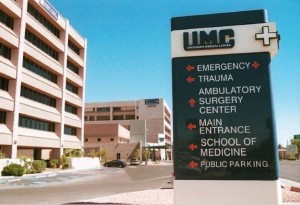
Three Southern Nevada hospitals have filed paperwork to become Level 3 trauma centers. But University Medical Center officials say the move could threaten their county-run hospital if the applications are approved simultaneously...Centennial Hills Hospital Medical Center, Mountain View Hospital, and Southern Hills Hospital and Medical Center applied in the fall to be designated Level 3 trauma centers, the lowest level recognized by the Southern Nevada Trauma System...St. Rose Dominican Hospital - Siena campus is so far the only Level 3 trauma center in Southern Nevada, Sunrise Hospital and Medical Center is the sole Level 2 and UMC functions as the lone level 1 facility. Trauma protocol dictates that patients with serious ailments be taken to designated trauma centers rather than standard emergency rooms...UMC sees about 12,000 patients at its Trauma Center annually. About 3,000 of those patients are moderately to severely injured. UMC advocates worry that creating three more Level 3 facilities would cause that number to dwindle, reducing the hospital's revenue and hurting its ability to train staff...Trauma center applications are first sent for review to the Southern Nevada Health District Trauma Advisory Board. Then, a recommendation is made to the Southern Nevada District Board of Health, which makes the final decision...
- FBI, DEA Release Documentary Film Addressing Heroin/Prescription Drug Abuse (dea.gov)

Acting DEA Administrator Chuck Rosenberg (left) and FBI Director James Comey
In an effort to combat the growing epidemic of prescription drug and heroin abuse, leaders of the FBI and DEA today unveiled a documentary aimed at educating students and young adults about the dangers of the addiction. "Chasing the Dragon" is a 45-minute documentary film that profiles the stories of several people who either abused opiates or had family members become addicts. It profiles the cycle of addiction and looks at the tragic consequences associated with opioid abuse. The documentary also features interviews with medical and law enforcement professionals discussing the effects of the addiction, and how this epidemic is unlike any this country has seen before...(Chasing the Dragon: The Life of an Opiate Addict - downloadable here)...
- Mercy Health saves $42 million by tying list of approved medications to EHR (healthcareitnews.com)

...Mercy Health has saved more than $42 million on drugs since 2010 by building a formulary within its electronic health record platform...The move...makes it easier for the system’s network of providers to order medications that are on its list and compliant with Mercy’s pharmaceutical contracts...It took Mercy Health’s pharmacy and therapeutics committee three years to create the formulary -- a comprehensive list of medicines that Mercy Health would prescribe...Mercy places drugs in one of four categories:
- on the formulary and available from order sets;
- on the formulary but not available from order sets;
- restricted to a specific disease state or provider type;
- neither on the formulary nor in order sets.
These categories correspond to Mercy’s “bullseye” -- a visual representation of each medication class that committee members use to review their decisions...We generate reports on non-formulary drugs -- how many times they were ordered, and what the cost savings would be if we were to use a formulary drug instead...Mercy Health now has an average formulary compliance of more than 98 percent...The formulary management is most effective with a single EHR across the health system because it enables the health system to make modifications as their contracts change and to monitor compliance...
- Shkreli’s attorney: He’s been unfairly vilified (video.cnbc.com)Valeant, Turing Slammed as Shkreli Calls Congress ‘Imbeciles’ (bloomberg.com)
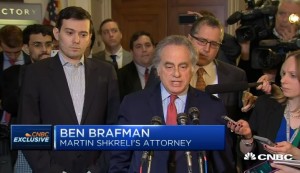
Former Turing Pharmaceuticals CEO Martin Shkreli was scheduled to testify to Congress today, but exercised his 5th Amendment right to not incriminate himself. Shkreli's lawyer...
- Insurers sued for denying access to hepatitis C drugs (statnews.com)

The ongoing outrage over the cost of hepatitis C treatments is, once again, prompting consumers to fight back against insurers that deny them access to the medicines. In the latest instance, a pair of lawsuits was filed that accuse two large insurers in the state of Washington of rationing...The lawsuits...seek class action status, charge that Group Health Cooperative and BridgeSpan restricted access to the medicines except to the "most severely ill" people, but not for a "clinical purpose." Instead, the consumers charge the insurers do so due to "financial concerns." And they want the insurers to provide coverage...BridgeSpan requires "infected individuals wait for treatment...until they demonstrate serious scarring or cirrhosis of the liver from hepatitis C infection," one lawsuit charges. Meanwhile, patients are "forced to live with…an increased risk of cancer or death."...The newest crop of hepatitis C medicines...boast cure rates exceeding 90 percent...Health care experts had predicted still more lawsuits would be filed while prices remain high. What remains to be seen is whether the arrival of a new Merck hepatitis C drug, which is priced at $54,600, will generate sufficient discounting so that insurers loosen restrictions.
- Could Preemptive Pharmacogenomic Testing Emerge as an MTM Best Practice? (pharmacytimes.com)
Modern technology is now making genomic testing possible for a fraction of the time and cost..Now pharmacists and physicians can use pharmacogenomic test results to help choose safer and more effective medications for their patients...Pharmacists are undoubtedly the pharmacokinetic experts and the most educated health care providers in regard to the cytochrome P450 system. Preemptive genotyping would make a nice addition to a pharmacy’s list of service offerings and point-of-care testing panel...A clinical consultant pharmacist could use pharmacogenomic testing to guide therapy decisions and decrease drug–drug interactions. This has the potential to save countless health care dollars lost to ineffective medication use, adverse drug events, and hospital readmissions...There are also financial benefits for the testing pharmacy. Looking at pharmacogenomic testing from a medication therapy management perspective, one can imagine the usefulness of integrating genomic testing into a patient’s comprehensive medication review...to make specific evidence-based recommendations to improve patient care.
- Proven cost savings in elderly patients
- Help in predicting and preventing adverse drug reactions
- Decreased hospitalizations due to treatment failure
- Prevention of “trial-and-error” prescribing
Pharmacists are the experts on medication safety and effectiveness, and should be ready to take on the role of personalized medication consultants...Innovation is essential if pharmacy wants to act on new clinical service opportunities and earn a seat at tomorrow’s health care table. We need to be proactive in seeking out new niches...
- 4 Strategies for Health-System Pharmacists to Optimize Care Delivery (pharmacytimes.com)

Health systems are under immense pressure to improve care quality while reducing costs under the pay-for-performance reimbursement model...The Pharmacy Forecast 2016-2020 published by the American Society of Health-System Pharmacists Foundation analyzed pharmacy trends and described strategies for health-system pharmacists to keep pace with their evolving scope of practice...Health systems and their pharmacists must plan for and react to trends in both value-based care and the pharmaceutical marketplace to ensure financial solvency and optimize patient outcomes...Here are 4 strategies for health-system pharmacists navigating new health care delivery trends:
- Pursue prescription data-sharing partnerships
- Ensure compliance with the 340B Drug Pricing Program
- Expand pharmacist services in ambulatory care clinics
- Manage the health-system’s formulary thoughtfully