
- Express Scripts sued by compounding pharmacies for alleged antitrust practices (statnews.com)

For the second time since Express Scripts began blocking coverage of hundreds of ingredients used to make compounded medicines, several compounding pharmacies have filed a lawsuit accusing the pharmacy benefits manager of using illegal tactics...In the latest instance, a half-dozen compounding pharmacies have charged Express Scripts with violating antitrust laws and is attempting to force them out of business...Express Scripts has taken “a series of unreasonable restrictions and rules that would make it impossible for [the compounding pharmacies] to fill prescriptions” for patients “and obtain reimbursements that would cover their costs,”...The company and the other benefits managers “employed tactics designed to ensure that the compounding pharmacy industry …cannot survive.”...The move to cut back on covered ingredients has riled compounding pharmacies...the Food and Drug Administration has cracked down on compounding pharmacies by increasing the number of inspections, and, in rare cases, taking legal action to halt allegedly unsafe practices. The justifiable emphasis on safety has forced many compounding pharmacies to enhance operations...The compounding pharmacies are striking back. In November 2014, three others filed a lawsuit claiming Express Scripts illegally blocked legitimate prescriptions and unfairly forced patients to seek more expensive medicines or simply not seek treatment. The pharmacies maintained the benefits manager violated federal law because it lacks authority to essentially alter terms of health plans.
- Pfizer looks to Russian partnership to produce some of its meds there, report says (fiercepharma.com)Pfizer to launch joint production with Russia’s Polysan in St. Petersburg — source (tass.ru)
Russia's economy has gotten ugly in the past few years, but that has not dampened the enthusiasm of Big Pharma, which continues to like the look of one of the world's largest emerging markets. Pfizer is reportedly the next up with plans for a partnership to produce some of its meds there...Pfizer is only days away from reporting plans to form a joint venture with Russian drugmaker Polysan to produce Pfizer meds in St. Petersburg...A spokesperson for Polysan would not comment directly but said its policy "is aimed at development of local pharmaceutical industry, including via cooperation with leading global pharma producers."Polysan has its own portfolio of four products that it produces at plants in St. Petersburg and Belgorod, as well as a neurological drug it produces with Germany's Stada...
- Samsung and Biogen win first EU approval for an Enbrel copycat (fiercebiotech.com)Samsung Bioepis Enters the European Biopharmaceutical Market with Benepali®, the First Fusion Protein Biosimilar Approved by the European Commission (finance.yahoo.com)

A joint venture between Biogen and South Korean giant Samsung won Europe's first approval for a lower-cost version of Amgen and Pfizer's blockbuster Enbrel, planning to launch its injection in the coming weeks...The two companies, doing business as Samsung Bioepis, convinced European regulators to clear their Benepali for all of Enbrel's approved indications, including rheumatoid arthritis, psoriatic arthritis, spondyloarthritis and plaque psoriasis…As for Amgen...believes its hold on Enbrel's U.S. rights will keep it safe from a biosimilar challenge in the coming years. In 2011, Amgen secured new patents related to the antibody that the company says will protect the treatment from competition through 2029. Novartis, leading the charge among Enbrel biosimilars developers in the U.S., is hoping to win approval for its version of the treatment this year while mounting a legal challenge on those patents.
- French drug trial disaster leaves patient dead amid a slew of unanswered questions (fiercebiotech.com)Scientists call for more details about drug used in deadly French clinical trial (statnews.com)

The patient left brain-dead in last week's botched drug trial has died, French authorities said, spurring more questions about how a routine Phase I study went awry and sent 6 volunteers to the hospital…The patient, dosed with an investigational drug from Portugal's Bial, died Sunday, about a week after the company's CRO halted the study in response to serious side effects. The 5 other hospitalized patients remain in stable condition…In the ensuing fallout, regulators and scientists are struggling to piece together what went wrong in the trial… investigators had yet to determine whether the problems were related to the drug's mechanism of action or the result of contaminated doses…"Together with all the relevant authorities, Bial is strongly committed to ensuring, first of all, the well-being of all participants in this trial and to determine thoroughly and exhaustively the causes which are at the origin of this situation," Bial said in a statement.
- Drug industry to fight superbugs together with governments (hosted.ap.org)Pharmaceutical Companies Sign Declaration to Combat Antimicrobial Resistance (pharmtech.com)
Dozens of makers of medicines and diagnostic tests have joined together in an unprecedented effort to tackle "superbugs" - infections that increasingly don't respond to drugs and threaten millions of people in countries rich and poor...74 drugmakers, 11 makers of diagnostic tests and nine industry groups have signed a groundbreaking agreement to work with governments and each other to prevent and improve treatment of drug-resistant infections...have signed the "Declaration on Combating Antimicrobial Resistance."...The declaration calls for steps including:
- governments committing funding to implement the World Health Organization's Global Action Plan to create programs ensuring that health systems use antibiotics appropriately, along with increasing use of fast diagnostic tests and boosting reimbursements for them to ensure patients get the correct treatment.
- better education of doctors and nurses on appropriate antibiotic use.
- improved infection control through better hygiene, vaccination and preventive treatments.
- reduced used of antibiotics in livestock.
- higher reimbursements for antibiotics and diagnostic tests in developed markets.
- more collaboration between researchers at drugmakers and those at universities and government.
- more access to antibiotics in countries around the world.
- Pharma’s December TV spending sags; Pfizer and BMS’ Eliquis rises to top (fiercepharmamarketing.com)

While pharma TV ad spending among the top 10 slowed overall in December, new brands and ongoing promotions still kept the airwaves humming with DTC ads. Spending for the top 10 was $107 million, down from $114 million in November, according to data gathered by real-time TV tracker iSpot.tv....Pfizer and Bristol-Myers Squibb anticoagulant Eliquis rose to the top spot, with the companies plunking down almost $16 million on two different TV spots for the drug...New additions included Pfizer's smoking cessation drug Chantix, which may have been a bid for New Year's resolution-makers, along with Type 2 diabetes meds Toujeo, from Sanofi, and Farxiga, from AstraZeneca. GlaxoSmithKline's respiratory drug Breo Ellipta also joined the top 10 at No. 8...
- Eliquis, Pfizer and Bristol-Myers Squibb anticoagulant, Est. spend: $15.9 million, “Turn Around Your Thinking”
- Prevnar 13, Pfizer pneumococcal pneumonia vaccine, Est. spend: $14.4 million, "One Step"
- Lyrica, Pfizer seizure and pain drug, Est. spend: $14.3 million, “Fibromyalgia Set Backs”
- Humira, AbbVie anti-inflammatory drug, Est. spend: $11.8 million, “Grocery Store”
- Chantix, Pfizer smoking cessation drug, Est. spend: $11.4 million, “Billy”
- Toujeo, Sanofi basal insulin for diabetes, Est. spend: $8.6 million, “Journal”
- Farxiga, AstraZeneca SGLT2 diabetes drug, Est. spend: $8.4 million, “Everyday People”
- Invokana, Johnson & Johnson SGLT2 diabetes drug, Est. spend: $8.2 million, “You're Not Alone”
- Breo Ellipta, GlaxoSmithKline respiratory treatment, $7.5 million, “Missing Piece”
- Xeljanz, Pfizer rheumatoid arthritis drug, $6.6 million, “Made for Better Things”
- Venezuela needs urgent foreign medical aid, pharma group says (reuters.com)

With scores of medicines in short supply due to a severe financial squeeze, Venezuela is suffering a "humanitarian crisis" and requires rapid international assistance, according to a major pharmaceutical association...The Venezuelan Pharmaceutical Federation (Federación Farmacéutica Venezolana) listed 150 medicines, from those for hypertension to cancer, as well as basics such as prophylactics and antibiotics, which are scarce in the OPEC nation of 29 million people..."The national government must accept we are in a humanitarian crisis in the health sector, with patients dying across our territory for lack of medicines," said association president...The health ministry did not respond to a request for comment on the pharmaceutical association's statement, but Venezuela's socialist government has bristled at criticism of its health system...It accuses local groups of exaggerating problems and says the widespread shortages in Venezuela - of food as well as medicines - are due to an "economic war" by foes...Long lines form daily outside pharmacies, and doctors and patients constantly complain of lack of medicines and equipment.
- Senate Panel Punts on Big Medical Bill (morningconsult.com)
The Senate will not put forth a comprehensive medical innovation bill that would be a companion measure to the House’s 21st Century Cures bill. Instead, lawmakers are opting to work on several smaller bills that have bipartisan support. In recent weeks, aides said committee members hit partisan snags when discussing a bigger bill...The Health, Education, Labor, and Pensions Committee will hold three separate markups, deliberating a few “easier” bills in February to “get our sea legs on working on bipartisan FDA/NIH bills,” according to a senior GOP committee aide. The overall goal of the committee’s work will be to accelerate the development and approval of new medical cures...The House passed its 21st Century Cures bill last summer. Energy and Commerce Chairman Fred Upton guided the bill to a 344-77 passage on the floor, but HELP Committee Chairman Lamar Alexander has long said the Senate would produce its own version...Both chambers’ goals overlap, including giving the National Institutes of Health additional funding and reforming drug approvals at the Food and Drug Administration.
- Junior doctors suspend industrial action (bma.org.uk)
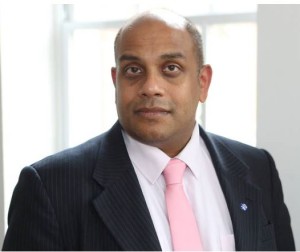
Johann Malawana, BMA junior doctors committee chair
The BMA today decided to suspend a second period of industrial action by junior doctors planned for next week...Tens of thousands of trainees in England were due to provide emergency care-only cover for 48 hours, beginning next Tuesday...the association decided to halt the action while conciliation talks between the BMA, NHS Employers and the Department of Health continue...BMA junior doctors committee chair Johann Malawana said while differences still existed between the two sides in the contracts dispute, the association’s focus was on building on the initial progress made...He added: ‘It is important to be clear, however, that differences still exist between the BMA and the Government on key areas, including the protection of patient safety and doctor’s working lives and the recognition of unsocial hours. Significant, concrete progress will need to be made if future action, currently planned for 10 February, is to be averted.’
- Supreme Court declines to hear J&J appeal of Children’s Motrin lawsuit (statnews.com)

In a setback to the pharmaceutical industry, the US Supreme Court declined on Tuesday to hear an appeal sought by Johnson & Johnson of a $63 million verdict that found the company failed to properly warn consumers about the risks of its Children’s Motrin painkiller...At issue was whether J&J should have upgraded its product labeling to reflect the risk that a patient may develop toxic epidermal necrolysis, which can lead to a rare disease called Stevens-Johnson syndrome...J&J sought to convince the Supreme Court that federal law preempted the state court verdict. In response to a citizen’s petition seeking upgraded labeling, the Food and Drug Administration had agreed that an increased warning about skin reactions — such as rashes and blisters — was warranted. But the agency did not agree to add the names of the skin diseases…the company maintained it would have violated federal law if the Motrin labeling was updated with the sort of specific language the family believed should have been used, according to its filing with the Supreme Court...J&J complained it was in an untenable bind…J&J, which now faces a $140 million payout when including interest...is “disappointed the Supreme Court declined to hear this case because we believe it raises important and unsettled preemption issues.”