
- Medical publishers eye new ad viewability rules (mmm-online.com)
The Association of Medical Media plans to hold a meeting to establish an industrywide viewability standard...A group of medical publishers will attempt to develop a new industry standard for digital advertising viewability, a much debated topic that has vexed the broader advertising industry...Viewability—how long is long enough for a user to have viewed a digital ad successfully—has cropped up in recent years as one of the more challenging media issues, and one that needs to be addressed as the business of digital advertising matures. In healthcare, experts say, it's no different..."There's more pressure to account for dollars,"...The group's perspective is that professional medical content differs from other online advertisers..."It is distinguished from general web content in many ways, including in its scarcity and its value to the end reader...industry experts have been saying that drugmakers will likely put more emphasis on digital advertising as brand marketing becomes more targeted to certain patient populations and manufacturers lose direct access to physicians and other prescribers. That could expose more advertisers to the vagueness of viewability and highlight the need to find a solution that makes sense given the nuances of medical advertising, notably content aimed at healthcare providers.
- FDA slaps Pfizer’s Hospira unit for ‘misleading’ YouTube ad (fiercepharma.com)
In the first enforcement action from the FDA's marketing police this year, the Office of Prescription Drug Promotion put Hospira in the hot seat over a YouTube video for its sedative Precedex (dexmedetomidine)...The OPDP sent an untitled letter dated Jan. 14 to the Pfizer-owned company, charging the video "omits risks and material facts" about the drug. The agency also rebuked Hospira for publishing the promotional video without submitting it to the OPDP for review...The letter orders Hospira to "cease violating the FD&C Act, as described," and submit a written response before Jan. 29. The response should include a plan for "discontinuing use of such violative materials," the letter states.
- U.S. government suspends enrollment in Cigna Medicare Advantage, drug plans (reuters.com)

U.S. government has suspended new enrollment in Cigna Corp's Medicare Advantage health plans for seniors and standalone Medicare prescription drug plans, citing noncompliance in its appeals and grievances procedures...Officials also found problems with the administration of its covered drug plans and compliance program, such as not properly handling prior authorization and exception requests... Centers for Medicare and Medicaid said Cigna's deficiencies posed "a serious threat to the health and safety of Medicare beneficiaries" and followed years of noncompliance….Sanctions will remain in place until they are corrected and will likely not recur...Cigna plans to be bought by Anthem Inc in a $45 billion deal that is under review by antitrust regulators.
- Pharma companies turn to LinkedIn to engage (mmm-online.com)
While the three granddaddy social networks, Facebook, Twitter and YouTube, have spent a decade publicly duking it out for share of human attention-span and commercial usefulness, LinkedIn has quietly and efficiently evolved to become an essential pillar of corporate practice, for individuals and organizations alike...LinkedIn has been something of an enigma and part of the reason has been the difficulty of pinpointing its core purpose. For a long time, it was seen as a professional advancement network, crudely dubbed “Facebook for jobs.” But while career advancement and recruitment is still a major function, over time LinkedIn has evolved into an effective publishing platform for professional content, which has had profound implications for corporate communications and marketing activities...A big part of LinkedIn's appeal lies in the high level of engagement of its members and the potential for precise targeting of content...In the healthcare space, membership encompasses all stakeholder groups: pharma companies, patients, healthcare professionals, marketing agencies, hospitals, investors and, of course, employees...The evolution of LinkedIn...to a publishing platform has had a profound effect on social-media responsibilities within pharma organizations...LinkedIn is now a fully fledged communications vehicle...Regulatory considerations are obviously paramount with any pharma-generated social-media activity...
- Levaquin users slap J&J with $800M RICO suit, claiming pharma giant hid serious side effects (fiercepharma.com)
Johnson & Johnson is facing yet another lawsuit over its antibiotic Levaquin from people who claim that the company hid serious side effects. The latest legal action comes a couple of months after an FDA panel flagged serious problems associated with the entire class of antibiotics and voted to change the meds' labels...Five plaintiffs allege in a new suit that J&J and its Janssen unit deliberately mislabeled and misbranded Levaquin (levofloxacin), playing down harmful side effects for its own financial gain. The plaintiffs sued J&J and others--including former FDA commissioner Margaret Hamburg--under the federal Racketeer Influenced and Corrupt Organizations act, a law typically used to prosecute organized crime. "These concerted efforts resulted in significant harm and/or death to consumers of Levaquin, including plaintiffs," according to the suit...The plaintiffs are seeking more than $120 million in compensatory damages and more than $750 million in punitive damages to drive home "the seriousness of their egregious conduct and to deter similar conduct in the future."...The latest suit marks another chapter in J&J's Levaquin saga. The company has encountered thousands of lawsuits over the past several years from plaintiffs claiming that it did not adequately warn patients about the drug's dangers.
- Sanofi layoffs expected as reorganization goes into effect (statnews.com)
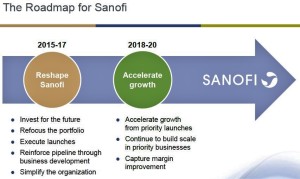
As part of a new "strategic roadmap" unveiled recently, Sanofi plans to announce layoffs that are being described as "sizable" and that will affect a broad swath of company operations in various locations. Some cuts are expected to be...in France, where the drug maker is headquartered, although extracting concessions from French labor unions is notoriously difficult. As a result, a disproportionate number of job losses may occur in the United States. A layoff notice, in any event, is expected to be filed shortly with state officials in New Jersey, where Sanofi maintains a large corporate campus...The drug maker...employs about 110,000 people worldwide, including roughly 17,000 people in the US...Sanofi encountered price discounting in the long-acting insulin market...This was thanks to its Lantus product, which generated about 18 percent of sales in the first half of last year, but faces pressure from payers seeking discounts...a follow-on product is not showing signs of generating needed replacement revenue and a biosimilar version of Lantus will become available at the end of this year. And a deal to sell the MannKind inhaled insulin product known as Afrezza was just ended due to terrible sales.
- Walgreens CEO Pessina Says Consumer Drug Prices Should Be Lower (bloomberg.com)

Walgreens Boots Alliance Inc. Chief Executive Officer Stefano Pessina said drug prices should be lower for consumers...Costs in the U.S. and other countries are exploding...“It should be lower prices to the end users,”...Pessina, a serial acquirer who built up his British drugstore company Alliance Boots through more than three decades of mergers before selling it to Walgreens, made the comments as drug increases are drawing political scrutiny in the U.S. The House Committee on Oversight and Government Reform is holding a Jan. 26 hearing on the issue, and has asked companies including Valeant Pharmaceuticals International Inc. for details on how they price their products.
- U.K. competition watchdog targets pharma for ‘substantial fines’ (fiercepharma.com)
Look out, pharma: Britain's competition watchdog is coming for you....The U.K.'s Competition and Markets Authority is planning to levy "substantial fines" this year, marking a "big step up in the scale and impact" of its enforcement activity, Alex Chisholm, head of the agency, told the Financial Times. And one of those fines will likely be directed at a pharma company...The CMA has been probing drugmakers including GlaxoSmithKline and Pfizer for alleged wrongdoing. "In high-value markets with big players, they should face big fines,"...For Pfizer, though, a resolution could still be a ways off. In August, the CMA accused the drugmaker and partner Flynn Pharma of running afoul of U.K. and European laws by jacking up costs for their epilepsy drug...The pair charged "excessive and unfair prices"...the CMA said at the time, raising costs by as much as 2,600%. Regulators plan to hand down a decision in the case in about three months..."While businesses are generally free to set prices as they see fit, those that hold a dominant position have a special responsibility to ensure that their conduct does not impair genuine competition and that their prices are not excessive and unfair,"...
- Pharmacy Week in Review: January 22, 2016 (pharmacytimes.com)

Mike Glaicar, Business Development: Pharmacy Times...(PTNN) This weekly video program highlights the latest in pharmacy news, product news, and more.
- 5 Accused of Stealing Drug Secrets From GlaxoSmithKline (nytimes.com)

Federal prosecutors in Philadelphia said on Wednesday that they had indicted five people, including two research scientists, on charges of stealing trade secrets about drugs to treat cancer and other diseases from GlaxoSmithKline...the two scientists, Yu Xue and Lucy Xi, worked at Glaxo’s research facility in Upper Merion, Pa., and emailed and downloaded confidential data about a dozen or more company products to associates who planned to sell and market the trade secrets through a company they set up in China, called Renopharma...to conceal their crime, Ms. Xue and two other associates, Tao Li and Yan Mei, agreed to put the proceeds in the name of Ms. Xue’s twin sister...who was also charged. Ms. Xi worked with Ms. Xue at Glaxo and was married to Mr. Mei...the defendants boasted that their company, based in Nanjing, had received some financial support and free laboratory space from the government and that its ultimate goal was to develop its own antibody drugs.