
- Critics continue pounding 21st Century Cures Act for threatening patient safety (fiercehealthcare.com)The last word: Will 21st Century Cures Act harm patient safety? (medicaleconomics.modernmedicine.com)21st Century Cures: What You Need to Know (energycommerce.house.gov)
Opponents argue that drugs, devices will be less safe if legislation eases FDA approval rules...Opponents of the 21st Century Cures Act, which is intended to accelerate the transfer of scientific advances in genetics into treatment for patients, say the legislation will threaten patient safety by easing FDA rules intended to protect patients from unproven therapies...Critics argue looser FDA rules will result in drug approvals without the level of rigorous testing currently required...new drugs and medical devices will be less safe and effective and cost more, and that the bill sacrifices long-term value to public health.
- 8 Interesting Pharmacy Facts (pharmacytimes.com)
 Are you familiar with the following interesting facts about pharmacy?
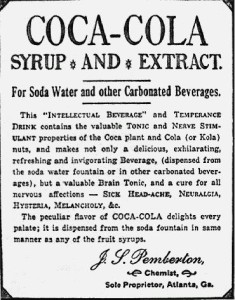
- Coca-Cola was invented by a pharmacist named John Pemberton. He carried the jug of the new product down the street to Jacob's Pharmacy where it was sampled and pronounced "excellent" and placed on sale for 5 cents a glass as a soda fountain drink...Another pharmacist, Charles Alderton, invented Dr. Pepper. Pepsi was also invented by a pharmacist, as was Vernor’s Ginger Ale by Detroit pharmacist James Vernor.
- The first licensed pharmacist set up shop in the French Quarter. Louis Dufilho Jr. of New Orleans became American’s first licensed pharmacist in the early 1800s. Prior to then, you did not need a license to become a pharmacist.
- The global pharmaceuticals market is worth $300 billion.
- Benjamin Franklin was a pharmacist, while Agatha Christie was a pharmacy technician.
- Lipitor is the best-selling drug of all time. It was introduced in 1997 and its patent expired in 2011, making about $125 billion.
- Insulin is one of the most common medications that cause adverse events.
- Hydrocodone/acetaminophen is the most commonly prescribed medication in the United States. Lisinopril is No. 2, as of 2014.
- The most expensive drug is Glybera (alipogene tiparvovec) at a wholesale cost of $1.21 million per year. It is a gene therapy that helps restore lipoprotein lipase enzyme activity in those with familial lipoprotein lipase deficiency. Only 1 million patients have this extremely rare condition.
- Banner Churchill to offer 3D mammography (bannerhealth.com)

Banner Churchill Community Hospital is expanding the imaging capabilities available within the community with the installation of a Hologic 3D Mammography Unit and Dexascan this month. These units will improve patient care and increase efficiency, while offering the convenience of having the scans done close to home...The nonprofit hospital has also upgraded its fluoroscopy machine, bringing state-of-the-art imaging technology for gastrointestinal, cancer and reproductive screenings...“We are pleased to be able to offer the latest technology here at Banner Churchill so patients in our community and the surrounding areas can access the best care without leaving home,” said Dee Towne, senior manager of Medical Imaging.
- Opinion: The AMA is wrong about banning drug ads (statnews.com)
...American Medical Association recently called for a ban on advertising prescription drugs and medical devices directly to consumers. The effort is largely symbolic...But doctors resent the increasing pressure the ads place on them to write prescriptions out of concern patients will switch physicians...they argue that many ads aimed at consumers promote more expensive medicines...and pushes patients to ask for products that either they may not need or is not right for them. This approach is, at best, misguided, and, at worst, ignores the benefits of direct-to-consumer advertising for patients...DTC advertising increases awareness of health problems and leads to a better informed and educated patient who can engage their physician in a dialogue rather than a monologue...So what’s really going on here?...insurers are taking more prescription writing power away from doctors. They first want patients to try generic medications which now make up 88 percent of all available prescription drugs. Second, higher patient copayments for office visits and insurance mean consumers are “shopping” for health care and health care treatments...This makes doctors very uncomfortable. Even with all these changes, research continually validates the notion that patients view their doctors as the gatekeepers to their prescription medicines...DTC advertising leads patients to their health care providers and, depending on the health condition, does not lead to high-priced unnecessary scripts. The AMA should reach out and work with pharma to improve DTC marketing, not request a ban on all DTC ads.
- Moving Pharmacy Forward, By Looking Back (aacp.org)
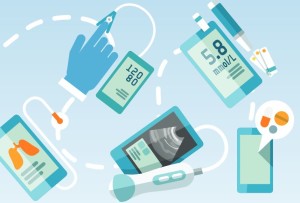
‘Pharmacy of the future’ redefines the relationship between the patient and pharmacist...Northeast Ohio Medical University and Ritzman Pharmacy are bridging the chasm between higher education and pharmacy practice, to create a “pharmacy of the future.”...Set in a healthcare ecosystem on the NEOMED campus, next to a medical fitness facility and primary care physician office, the pharmacy will use technology to engage the tech savvy— individuals wearing Fitbits or smartwatches, using social media or apps to track their fitness — and the use of these digital tools will open up time for pharmacists to cultivate relationships and engage with patients who are fond of vintage-inspired, face-to-face care...This...will allow the pharmacy to help with medication adherence or medication management, whether it’s on campus or in someone’s home...the heart of this innovative practice model rests small-town, vintage care. If you look back 30 or 40 years...Everyone knew their pharmacist and they were integral to patients’ care...I think we lost our way in pharmacy for awhile and became solely focused on the production of the prescription...What we’re trying to do is bring that philosophy back into the present...we call that pioneering vintage care...This innovative pharmacy will be using novel technologies to alleviate administrative burdens behind the counter, bringing the pharmacist back in front of the community.
- Smokers more likely to get antibiotics prescriptions than others (reuters.com)Abstract - Tobacco Smoking as a Risk Factor for Increased Antibiotic Prescription (sub. req.) (ajpmonline.org)

Doctors are more likely to give smokers antibiotics for an infection, a bad habit that may endanger public health by promoting antibiotic resistance...Smokers were 20 percent to 30 percent more likely than non-smokers to get an antibiotic prescription when they were diagnosed with infections...If smokers are being prescribed antibiotics...if not indicated, it’s going to contribute to that antibiotic resistance...and bacteria are going to become more and more resistant...You would think that the number of bacterial infections where antibiotics are clinically indicated should be evenly distributed among smokers and non-smokers...The study can't say why smokers are more likely to get antibiotics for infections...it may be due to an inaccurate belief among doctors that people who smoke are more susceptible to infections.
- WellCare makes CVS Health its pharmacy benefit manager (reuters.com)

Health insurer WellCare Health Plans said it would change its pharmacy benefit manager to CVS Health Corp from UnitedHealth Corp's Optum Rx, effective Jan. 1...About 3.8 million WellCare members enrolled under its Medicaid, Medicare and prescription drug plans will be able to access CVS' pharmacy network, WellCare said on Thursday...CVS is the second-largest U.S. pharmacy benefit manager and drugstore.
- How Platelet Aggregation Inhibitors Fit into the ACS Management Picture (pharmacytimes.com)
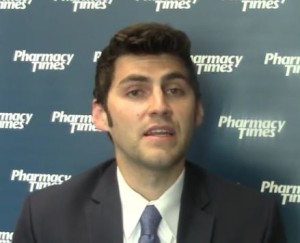
Alexander Kantorovich, PharmD, BCPS, clinical assistant professor of pharmacy practice at Chicago State University College of Pharmacy, discusses how platelet aggregation inhibitors fit into the acute coronary syndrome management picture.
- Commonwealth Fund releases its 2015 state-by-state health system scorecard (healthcareitnews.com)Aiming Higher - Results from a Scorecard on State Health System Performance (commonwealthfund.org)
 The good news? More states improved than worsened...The Commonwealth Fund has released "Aiming Higher," its 2015 scorecard measuring the performance of health systems state by state...Forty-two indicators are examined to arrive at the scores, measuring rates of children or adults who are uninsured, hospital patients who get information about how to handle their recovery at home, hospital admissions for children with asthma and breast and colorectal cancer deaths, among many others...The top states? Minnesota, Vermont, Hawaii, Massachusetts, Connecticut, New Hampshire and Rhode Island...Louisiana, Tennessee, Kentucky and Oklahoma ranked in the bottom quartiles, but they were among those that improved on the greatest number of indicators... key findings:
- There are wide variations in performance, with up to an eightfold difference between top- and bottom-ranked states.
- National attention may be encouraging better quality of care in hospitals and home health care settings and to more appropriate medication use in nursing homes and doctor's offices. However, declining rates of preventive care in several states signal the need for greater attention to prevention.
- Reductions in hospital readmissions accelerated in 2012, when the federal government began financially penalizing hospitals with high rates of readmissions. Rates of potentially preventable admissions to the hospital continued to fall in several states.
- Cadila Healthcare shares plunge after FDA warns of violations (reuters.com)

Cadila Healthcare Ltd (Zydus Cadila)has received a U.S. Food and Drug Administration warning letter for violating manufacturing standards at two of its production facilities, the latest in a series of Indian companies to face such action....The warning letter cites issues with Cadila's plants in Gujarat, including at the Moraiya facility, which makes up about 60 percent of the company's total sales in the United States, its largest market...Dozens of Indian drug plants have faced warnings and bans in recent years, as the FDA improved inspections of foreign facilities. More than 40 percent of the generic and over the counter medicines available in the United States comes from Indian facilities such as Cadila's Moraiya plant...Cadila Managing Director Pankaj Patel told analysts...the FDA, during an inspection of the Moraiya plant...found deficiencies with the way the company investigated market complaints about a medicine made there...The company is working on a response to the warning letter and will then ask the FDA to reinspect both facilities...It has 15 days to respond to the FDA, as per standard procedures, after which the FDA will decide its response including whether to impose an import ban.