
- Cancer database goes 3D to help drug design (upi.com)
The new imaging adds information on 3 million cavities on the surfaces of nearly 110,000 human molecules to the canSAR database...A large database used for cancer drug development has been improved to include three-dimensional structures...which scientists say could improve approaches to treating cancer...The...database...is used by more than 140,000 researchers around the world to research the effects of more than a million drugs on human proteins....Scientists need to find all the information there is about a faulty gene or protein to understand whether a new drug might work...These data are vast and scattered, but the canSAR database brings them together and adds value by identifying hidden links and presenting the key information easily...Finding new treatments for cancer can be a long and expensive process, so anything that cuts times and costs will help to bring the next generation of therapies to patients even sooner...
- California Set To Allow Birth-Control Pills Without Prescription (losangeles.cbslocal.com)California Law To Allow Pharmacists To Prescribe Birth Control (npr.org)
California is set to become one of the first states where women can get birth control from a pharmacist without a prescription with the goal of reducing unwanted pregnancies...Proponents of the new law say it will give younger women easier access...But doctors like gynecologist Kathleen Valenton have concerns...“I think that’s very dangerous,” she said, since pharmacists cannot perform health screenings, including STD checks...Many of the details of the law are still being worked out in Sacramento. It is set to take effect in March.
- Data Breaches In Healthcare Totaled Over 112 Million Records In 2015 (forbes.com)Top Pharmacy Chains Revealed as Repeat HIPAA Violators (pharmacytimes.com)
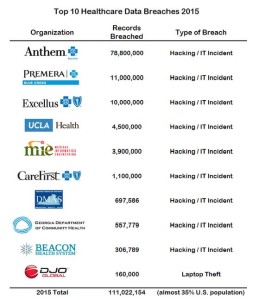
Healthcare’s “wall-of-shame” for 2015 officially ends tonight at midnight. It’s not really a “wall,” it’s just a website, but it’s the online mechanism for the Office of Civil Rights under Health and Human Services to publish data breaches as reported to them and required by HIPAA. The numbers this year are just staggering...According to OCR, there were 253 healthcare breaches that affected 500 individuals or more with a combined loss of over 112 million records...The Top 10 data breaches alone accounted for just over 111 million records that were lost, stolen or inappropriately disclosed...A recent data breach study estimates that breaches cost the healthcare industry about $5.6 billion annually. As healthcare moves toward connected care, the amount of data exchanged between organizations will only grow. So what does this mean? It means that in 2016, we’re going to see a huge movement towards encryption in hospitals and other healthcare facilities in order to protect EHRs and other vulnerable PHI...Healthcare IT security will continue to fall further and further behind the rest of the industry verticals despite the increase in spending on technology and human resources. The industry is focusing on functionality for patient care and security is an afterthought. Many organizations are also overly dependent on antiquated hardware and software...I wish we could look back on 2015 as the year that healthcare took data security and patient privacy more seriously...In a data-driven world, medical information is just too lucrative and too easy to steal at scale. As long as that’s the case...we should reasonably expect more of the same for 2016.
- Pharmacists should check hospital discharge letters for children after discrepancies found (pharmaceutical-journal.com)
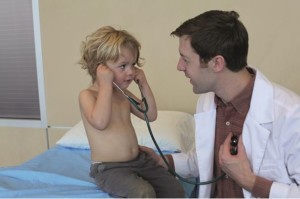
Medicines information contained in a third of hospital discharge letters for paediatric patients contained “discrepancies” that were picked up by a pharmacist, according to research...the study supports the role of pharmacists to routinely check discharge medication letters and carry out medicines reconciliation when children are sent home from hospital...Our study suggests that pharmacists’ screening and review of discharge medication letters prevents one in five potentially harmful discrepancies from leaving the hospital...researchers say their prospective study is the first to examine the accuracy of discharge letters in paediatric patients. They looked at electronically generated medication discharge orders written by hospital doctors that were then checked by a pharmacist... pharmacists, and preferably paediatric-trained pharmacists for paediatric patients, should routinely check discharge orders. “We pick up a lot of mistakes and clarify misleading instructions by doing so,”...“It is nice to have this backed up by evidence.”
- Baxalta in deal to expand immuno-oncology business (reuters.com)

Baxalta Inc has signed a deal with privately held Symphogen under which the companies will develop immuno-oncology drugs to treat rare cancers...The agreement holds a total potential value up to 1.4 billion euros ($1.6 billion) in option fees and milestones over the long term, in addition to royalties on worldwide sales...The deal with Symphogen comes as Baxalta approaches the final stages of negotiating a potential sale to rare diseases drugmaker Shire Pharmaceuticals....Baxalta and Symphogen said...they expect to conduct the first early-stage study in 2017...Immuno-oncology is a new field that uses the method of activating a patient's immune system against tumor growth. Both single and combined immuno-oncology therapies are likely to improve outcomes for a variety of cancers...
- 3 Undiscovered, Undervalued Health Care Stocks Poised to Outperform the Sector in 2016 (thestreet.com)
Small investment ideas can sometimes offer a powerful boost to your portfolio. While they may lack the glitz of the bigger players, these stocks can deliver a strong foundation and long-standing value. Here are three health care stocks that have largely zipped over the heads of Wall Street analysts. They might seem a little riskier in addition to being unknown, but we believe they've got great times ahead of them.
- PetMed Express is a nationwide pet pharmacy. The company markets prescription and nonprescription pet medications and other health products (for dogs, cats, and horses, among other animals) directly to the consumer.
- Meridian Bioscience is an integrated life science entity, involved in the complete diagnostic test kit product development lifecycle. The key applications are for certain strains of viral, respiratory, gastrointestinal and parasitic infectious diseases.
- Amphastar Pharmaceuticals is a specialty pharmaceutical company. It develops, manufactures, markets and sells generic and proprietary injectable and inhalation products. In 2014, the company commenced sales of insulin active pharmaceutical ingredient products.
- Your health records are supposed to be private. They aren’t. (washingtonpost.com)
The federal law that protects health information is violated often and easily, and it's hardly ever enforced...After spending the past year reporting on loopholes and lax enforcement of the Health Insurance Portability and Accountability Act, the federal patient-privacy law known as HIPAA, I’ve come to realize that it’s not just celebrity patients who are at risk. We all are...I’ve talked to hundreds of people who say their medical records were hacked, snooped in, shared or stolen...In each story, a common theme emerged: HIPAA wasn’t working the way we expect. And the agency charged with enforcing it, the HHS office for civil rights, wasn’t taking aggressive action against those who violated the law...We all know HIPAA... It’s what requires us to stand behind a line, away from other customers, at the pharmacy counter or when checking in at the doctor’s office...It is used to scare health-care workers, telling them that if they improperly disclose others’ information, they could pay a steep fine or even go to jail...But in reality, it is a toothless tiger...And even though the civil rights office can impose large fines, it rarely does: It received nearly 18,000 complaints in 2014 but took only six formal actions that year. A recent report from the HHS inspector general said the office wasn’t keeping track of repeat offenders, much less doing anything about them...Making matters worse, HIPAA does not allow patients to sue health providers for damages if they violate the law. So if the federal government doesn’t enforce the law, there are often no consequences for breaking it...Moreover, the government needs to write regulations to implement provisions of a 2009 law that would give patients whose privacy has been violated a share of the money HHS recovers. Finally, the government has yet to submit to Congress a report due in 2010 with recommendations for how to deal with the privacy of health information not covered by HIPAA.
- Oregon greenlights pharmacist-prescribed birth control (upi.com)How Oregon Pharmacists Are Prescribing Birth Control (pharmacytimes.com)

Pharmacists in Oregon are now permitted to prescribe birth control pills to qualifying women as part of a wave of new state laws for 2016...Oregon is the first U.S. state to put such a law into effect, with California reportedly looking to follow suit...A doctor's approval is no longer needed for a supply of pills, although experts urge women not to overlook preventative health care in the form of doctor visits...having birth control accessible through a pharmacist doesn't mean preventative health care isn't important...women over age 18 will still be required to fill out a health questionnaire trained pharmacists will use to determine whether to write a prescription. Pharmacists are reportedly still free to refuse prescriptions for religious reasons, but must refer a customer somewhere else.
- Drug approvals at 19-year high belie industry challenges (reuters.com)
2015 was a good year for innovation in medicine with the Food and Drug Administration approving 45 novel drugs, four more than in 2014 and the most since the all-time record of 53 set in 1996...the European Medicines Agency recommended 93 new products, including generics, up from 82 in 2014...the prospect for further progress in 2016, the pharmaceuticals industry faces challenges, with increased political focus on drug pricing having punctured both biotech and specialty pharma valuations in recent months...The rapid pace of new approvals reflects accelerated review times by regulators, who want to get life-saving treatments to patients, especially in cancer, as well as an improved scientific understanding of diseases...Full drug pipelines at many companies suggest the strong rate of new drug launches is likely to continue for a while yet, with IMS Health forecasting a total of 225 new drug approvals between 2016 and 2020.
- 18 must-follow Twitter accounts about health and medicine (statnews.com)
At this time of year, “best of” lists abound: the top-selling books; the highest-impact papers; the 10 biotech stocks that most exceeded expectations...This is not one of those lists...Here at STAT, we’ve compiled a list of Twitter feeds to follow for insights into the worlds of health, medicine, and science. These aren’t necessarily the biggest names in social media. Or even the most important voices. They are simply people whose tweets we value. (We’ve put all these names into a Twitter list you can follow. Please note, you must be logged into Twitter to see this list.)...It’s just that Twitter is an amazing smorgasbord. Here are some accounts to sample:
- The BS detector: @CaulfieldTim
- The Twitter scientist: @kejames
- The science sentinel: @greg_folkers
- The end-of-life guru: @DianeEMeier
- The health care insider: @kevinmd
- The connected patient: @epatientdave
- The DeathXpert: @drlindseyfitz
- The pharma watchdogs: @RxPricing
- The techie: @halletecco
- The Ignobel Mind: @MarcAbrahams
- The med school dean: @jflier
- The digital health evangelist: @EricTopol
- The patient’s friend: @vmontori
- The financier: @John_LaMattina
- The critical eye: @hmkyale
- The brain guy: @sapinker
- The hip-hop evolutionist: @DNLee5
- The zombie expert: @aetiology