
- 7 key ingredients in Celgene’s recipe for biopharma dealmaking (medcitynews.com)
Over the past seven years, Celgene has emerged as one of the most active and creative deal-makers in the biopharma industry...The Boston Consulting Group’s Biopharma Partnering Survey and Benchmarking analysis examines BD activity and perceptions across the industry...Celgene scored as the best partner on 78% of the partnering and culture metrics (7/9), as perceived by the sell-side biotechs...here are the “seven habits”, or more aptly just attributes, of Celgene’s...successful external R&D strategy, spanning their...leadership context and...culture:
- Exhibiting more David, less Goliath.
- Starting with a clean sheet of paper.
- Embracing risk, empowerment, and trust.
- Governing with unconventional out-of-the-box leadership.
- Inverting and resizing the talent model.
- Learning at every opportunity.
- Living better through (personal) chemistry.
- How A Pharmacy Can Differentiate Itself from Its Competition (pharmacytimes.com)
Liz Tiefenthaler, president of Pharm Fresh Media, talks about some ways a pharmacy can differentiate itself from its competition.
- Facing an anti-venom shortage, WHO tries to mobilise new suppliers (in-pharmatechnologist.com)

Sanofi said earlier this year...would stop making one of the most effective treatments for snakebite - FAV-Afrique - claiming low-cost alternatives from producers in India, Brazil and Mexico had made the product unprofitable...FAV-Afrique is a polyvalent product that counters the toxins of some of the world's most deadly venomous snakes...The WHO says that the prospect of FAV-Afrique stocks running out in 2016 is causing "dismay" among public health experts and advocates..,A recent editorial in the British Medical Journal...took a slightly different tack, however, saying that FAV-Afrique's withdrawal from the market will make little difference to most people in Africa...The high cost of the drug - around $540 per four vial treatment - meant that "the product simply never reached them in the first place", leaving many people in Africa reliant on treatment from traditional healers...Compounding the issue is that unscrupulous individuals have taken advantage of poor regulatory oversight in some countries and introduced unapproved and counterfeit anti-venoms into the market - with data...indicating that fatality rates rose after the use of these products...gaps in the supply of anti-venoms in the last few decades has "cumulatively cost millions of lives, maimed millions more, and contributed to the burden of poverty and disenfranchisement that lingers heavily.
- 7 largest data breaches of 2015 (healthcareitnews.com)

More than 720 data breaches occurred this year, and the top seven cyberattacks alone have left more than 193 million personal records open to fraud and identity theft...Of the seven, the healthcare industry has the dubious honor of three top spots, with the Anthem breach leading the pack...Our research indicates that cybercriminals are increasingly going after targets in the medical and healthcare verticals, which store valuable patient data that can't be reissued like a credit card...Each of the top seven data breaches compromised more than 5 million records, indicating that attackers are becoming stealthier, are employing more sophisticated techniques and are going after bigger and more lucrative targets...The top 7 breaches:
- Excellus BlueCross BlueShield
- Premera Blue Cross
- Vtech
- Experian/T-Mobile
- OPM
- Ashley Madison
- Anthem
- Should Pharmacy Students Be Required to Have a Bachelor’s? (pharmacytimes.com)Has The Time Come for a Bachelor’s Degree Prerequisite to Pharmacy School? (ajpe.org)Is It Time to Decrease Preprofessional Pharmacy Requirements? (ajpe.org)

…the question of whether students should obtain a bachelor’s degree as a prerequisite to pharmacy school…Kristopher Harrell, PharmD, from the University of Mississippi School of Pharmacy argues that it would be beneficial…now is not the time for us to reduce pre-professional requirements, but instead to augment them…4 reasons for this:
- Earning a bachelor’s degree is predictive of academic success in pharmacy school.
- The change would allow pharmacy students to be held to the same standards as other health care professions.
- The move would allow for new standards in pharmacy education related to enhanced personal and professional development skills.
- There would be more uniformity, which would mean less competition for admissions.
Despite all these reasons for requiring a bachelor’s degree, Dr. Harrell did recognize that “academic fatigue” and tuition costs were areas of concern for students…“Our profession needs more grit, and we need to strengthen and maintain a reputation of training that aligns with other health care professions,”…
- Unlocking my genome: Was it worth it? (cnbc.com)
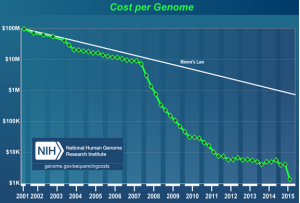
...I discovered, it was also unlikely I'd learn something particularly useful, or "actionable," as geneticists describe it, a dominant mutation that would predispose me to a treatable cancer or heart disease, for example...I learned, because we're still very much in the early days of interpreting our own genetic information...There is a great deal of debate about whether this is worth sequencing...because it hasn't been proven that you can change something and change their outcome…Our understanding of all the implications of our genetics hasn't caught up yet to the power of sequencing technology...I only had one result under "clinically significant findings" in the report...I carry one copy of a mutation called Factor V Leiden...your blood actually clots a little bit faster than people who do not have this mutation...my results included a pharmacogenomics report analyzing how my genes indicate I may react to 12 different drugs, from blood thinners like warfarin and Plavix to the cholesterol-lowering medication Zocor...Many believe this will be among the nearest-term applications of genome sequencing in medicine, using our genetic signatures to improve how we match the right drugs to the right patients...within eight to 10 years, it will be routine for healthy people to have their genome sequenced, and for that information to be a regular part of every medical encounter. Between now and then, costs are expected to continue to come down, reimbursement by insurers is expected to gain more clarity, and more proof is expected about how useful personal genome sequencing can be…For most of us, genes aren't our destiny. They're a blueprint for how we start out, and then life plays a major role.
- Drug maker challenges tribal court’s right to hear lawsuit (statnews.com)

Blackfeet Nation Flag
In an unusual move, Takeda Pharmaceuticals asked a federal appeals court to rule that a Native American tribal court does not have jurisdiction over a lawsuit which could expose the company to enormous liability...The effort marks the first time that a drug maker has taken such a step...underscores the risks facing the pharmaceutical industry amid a proliferation of lawsuits filed by patients who claim they were harmed by medicines...The case against...Takeda...was filed...by a member of the Blackfeet tribe who claims he developed bladder cancer after taking the Actos diabetes drug for several years...At issue is whether Native American tribal courts have jurisdiction over civil lawsuits filed against those who are not Native American. This matters to Takeda because in the US state and federal court system, a company that loses a case has the right to seek an appeal. But if a company loses a case in tribal court, it cannot appeal to a federal court. In other words, Takeda has no recourse if it loses the case…Indian tribes are independent sovereigns and not subject to federal court review, except on the huge question of whether they have legal jurisdiction in the first place...
- San Bernardino Shooter Had Pharmacy Degree (pharmacytimes.com)

The Faculty of Pharmacy, Bahauddin Zakariya University
The female shooter in the San Bernardino killings held a pharmacy degree from Pakistan, but wasn’t practicing in the United States at the time of the terrorist attack…Before coming to America, Tashfeen Malik studied pharmacy at Bahauddin Zakariya University in Multan, southern Punjab, her uncle told The Wall Street Journal. However, she didn’t appear to be working as a pharmacist in the United States, and the California State Board of Pharmacy said she isn’t licensed as a pharmacist in the state.
- Make Doctor’s Licenses Like Driver’s Licenses? Medical Groups Say No (realclearhealth.com)

A doctor licensed in one state who wants to practice in another still needs a license from the other state. That’s a costly and time-consuming process, especially in an era when many health plans and their employees operate across state lines and the use of telemedicine, in which patients and their providers interact from a distance, is growing...But the state licensing situation for doctors...is starting to change...Doctors...are creating their own multistate compact...it will provide an expedited application process to get licenses in other states...The main obstacle to portability for all the professions is that they are regulated by the states, each of which is free to demand its own qualifications — and collect its own fees — for licensing. To achieve portability, states either have to standardize their licensing requirements or agree to live with the differences, so long as there are some baseline qualifications accepted by all...doctors have created a compact that the Federation of State Medical Boards says will offer an expedited and cheaper process for getting a license to practice in member states. So far, 11 states have joined the compact, with nearly an equal number expected to join next year. Telemedicine advocates and doctors who use telemedicine say the doctors’ portability model, which still requires full licensure in every state, will impede the spread of telemedicine, particularly in rural areas that have a shortage of doctors.
- Pharmacy Week in Review: December 11, 2015 (pharmacytimes.com)

Mike Glaicar, Business Development: Pharmacy Times...(PTNN) This weekly video program highlights the latest in pharmacy news, product news, and more. (video)