- 2015’s Worst Clinical Failures (nasdaq.com)
It's always disappointing when drugmakers' best efforts fall short and, unfortunately, it happens far too often. Historically, 90% of drugs entering human clinical trials end up in the laboratory dustbin rather than on pharmacy shelves, so while disappointing, it's probably not too surprising that these high-profile medicines flopped in 2016.
- Marijuana can't conquer cancer pain...Sadly, patients with cancer continue to suffer from significant pain and efforts by GW Pharmaceuticals and its partner Otsuka to scientifically prove marijuana can help many of these patients fell flat in 2016.
- A high-cholesterol treatment trips on its way to the finish line...Despite statins being widely used in tens of millions of patients to lower bad cholesterol levels, more than 600,000 Americans still die from heart disease every year and that's got big pharmaceutical companies, such as Eli Lilly , plowing hundreds of millions of dollars into the development of next-generation cholesterol busters that work differently than statins..
- Doubts emerge for NASH treatment...Nonalcoholic steatohepatitis is a fast-growing cause of liver failure that is estimated to occur in 5% of patients and it could become the leading cause of liver transplant by 2020. In a bid to keep that from happening, Intercept Pharmaceuticals is developing obeticholic acid...but enthusiasm for NASH therapy has faded since...Intercept reported...that a phase 2 study of obeticholic acid...failed...
The sheer number of trial failures makes drugmakers some of the riskiest stocks to buy. Risk of trial failure can be lowered by diversifying across stocks and focusing on drugmakers with late-stage clinical trials underway, but...there's no guarantee or magic formula for success...Investors must be willing to accept the risk that is inherent in this industry if they want to benefit from potential rewards associated with successful, game-changing medicines.
- Drug approvals top 2014 high but R&D returns still struggle (reuters.com)
The number of new drugs approved in the United States this year has already topped last year's 18-year high, yet large pharmaceutical companies are still struggling to get a decent return on their research dollars...returns on research and development spending by the world’s top drugmakers have fallen to just 4.2 percent, or less than half the 10.1 percent recorded in 2010...The mismatch between the rising number of drug approvals and falling returns reflects the fact that each new medicine is expected to yield significantly lower average sales, while costs are continuing to rise...We are now seeing a trend for companies to return more money to shareholders through dividends and share buybacks than they are investing in the future through R&D, licensing and acquisitions...Many...new treatments...are targeted at niche patient populations and are designed for treating rare diseases or very specific sub-types of cancer, limiting their sales potential...the rapid pace of new drug launches is forecast to continue, with 225 new drugs expected to be approved between 2016 and 2020...
- Why a Pharmacy Degree Makes Sense Financially (pharmacytimes.com)
A new study examined the economic value of a pharmacy education and career, and the results were promising for students pursuing pharmacy...They found that pharmacy students earn $5.66 million to $6.29 million over their careers. This is about 3.15 times more than high school graduates, and around 1.6 times more than students who just receive a bachelor’s degree in biology or chemistry...“[N]et career earnings is only one factor to consider when selecting an occupation, or even when selecting a specific practice setting within pharmacy,” the researchers stated. “Thus, selecting a career path should be driven by one’s passion, skill sets, competencies, and recognition of what choice will result in general life and work satisfaction.”...The Pharmacist Aggregate Demand Index also suggests a favorable future for new pharmacists...“Nevertheless, the findings demonstrate investment in a pharmacy education yields favorable financial return,” the study authors concluded.
- Pharmacy Robber Sentenced to 141 Months for Conviction on Federal Hobbs Act, Drug Trafficking and Firearms Charges (dea.gov)
Victor Hurtado, 21, of Albuquerque, N.M., was sentenced...in federal court to 141 months in federal prison for his conviction...arising out of a pharmacy robbery...Hurtado will be on supervised release for five years after completing his prison sentence...The indictment...alleged...
- violated the Hobbs Act by interfering with interstate commerce by robbery and violence;
- brandished a firearm during a crime of violence;
- violated the Controlled Substance Registrant Act by robbery involving controlled substance;
- violated the Safe Doses Act by theft of medical products; and
- possessed Oxycodone with intent to distribute.
The charges...arose from...armed robbery of the Smith’s Pharmacy...Albuquerque...Hurtado...jumped over the counter while brandishing a firearm, and ordered the pharmacist to open the safe where controlled substances were kept...admitted pointing the firearm at the pharmacy employees to gain their compliance, and stealing bottles of Oxycodone and other drugs from the pharmacy’s inventory.
- The untold story of TV’s first prescription drug ad (statnews.com)
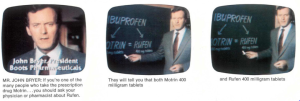
On May 19, 1983, Boots aired the first broadcast television commercial in the United States for a prescription drug, the pain reliever Rufen...Within 48 hours of the ad’s airing, the federal government told the company to take it down. And more than 30 years later, the fight over marketing prescription drugs directly to the public is still raging...Now, the American Medical Association, the largest doctors group in the United States, wants to stop direct-to-consumer advertising for prescription drugs in the belief that the ads encourage patients to seek medicines unnecessarily. But the effort to have drug ads banned alongside tobacco ads will face plenty of obstacles, none bigger than the First Amendment. Perhaps the most unusual thing about this decades-long saga is that it’s an issue at all...The United States is one of only two countries in the world to allow these ads. How did this little-noted example of American exceptionalism come to be?...It started with Boots.
- 26 Ways Pharmacists Can Make Extra Income in 2016 – Pharmacy Podcast (pharmacypodcast.com)

Pharmacy Podcast guest hosts Alex Barker, PharmD., and Blair Green Thielemier, PharmD discuss interesting, creative, and resourceful ideas for pharmacists to generate additional income in 2016...No matter where you are on your pharmacy career path, having extra cash on hand is a nice safety net, and a great way to pay off your pharmacy school loans more quickly...The challenge is holding a side job while balancing your current job and personal responsibilities. Although a second pharmacy job is achievable (especially weekend shifts), these 26 ways to make extra cash won’t take up as much of your valuable time—and the payoff may still be high. (podcast 43:54 min)
- FDA MedWatch warns of bad lots of baclofen from Taizhou Xinyou Pharma API plant (fiercepharmamanufacturing.com)
The FDA is warning compounders to be on the alert for batches of baclofen APIs manufactured at the Taizhou Xinyou Pharmaceutical and Chemical plant in China because of the risk of contamination with particulates...The FDA MedWatch alert said the products shouldn't be used to compound sterile injectable drugs and asks that health professionals in the fields of anesthesiology, pain management, neurology and pharmacy to be on the alert for any such batches made at the plant based in Taishou City, Zhejiang Province...last month, it was reported the FDA cited a Pfizer plant in China while U.K. regulators recently found shortcomings at a GlaxoSmithKline plant there. About 40 facilities in China are currently on the regulatory agency's import ban list.
- Reckitt Benckiser misled consumers on Nurofen painkillers: Australian court (reuters.com)
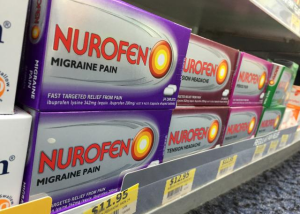
An Australian court ordered Reckitt Benckiser to pull several of its Nurofen pain relief products from the market, saying...the British firm had misled consumers by marketing identical products for different types of pain...The Federal Court ruled that the Nurofen Back Pain, Period Pain, Migraine Pain and Tension Headache products were identical and that Reckitt Benckiser had "engaged in misleading conduct" by labeling them for different ailments...We have known for years that they are all the same,"..."We have been advising our customers to go for the standard painkiller which is cheaper."...Nurofen specific-pain relief products were sold at almost double the price of Nurofen's standard painkiller...Patty O'Hayer, a spokeswoman for Nurofen's UK-based parent Reckitt Benckiser, said had agreed to amend its Australian packaging to show the specific-pain relief products were effective against other types of pain as well, adding this was to prevent any confusion over dosing...
- Cardinal Health introduces Generation Rx Medication Disposal Grant Program (drugstorenews.com)
To help support education and awareness of community drug disposal programs, non-profit organizations...are invited to apply for grant funding from the Cardinal Health Foundation...The Generation Rx Medication Disposal Grant Program helps support our communities...The grant program is intended to reduce the misuse of prescription medications through properly disposing of expired or unused medications by supporting new or existing initiatives that seek to:
- Increase awareness of the disposal program and increase participation of community members in the program;
- Increase awareness of how to prevent prescription medication misuse, and the importance of disposing of unused/expired medications in preventing misuse; and
- Involve both youth and pharmacists or student pharmacists in the disposal program.
Interested applicants can find complete grant program criteria, as well as apply for grant funding on the Generation Rx page. The deadline for applications is Jan. 22, 2016
- HHS partners with pharmacies to enroll more people in ObamaCare (pharmacist.com)HHS partners with nation’s largest pharmacies to promote Health Insurance Marketplace (hhs.gov)
Partners represent more than 38,000 pharmacies across the country...Department of Health & Human Services announced that it is partnering with pharmacies across the United States in an effort to sign up more individuals for ObamaCare health coverage for 2016 as the deadline fast approaches...Participating pharmacies, including CVS Health, Good Neighbor Pharmacy, Thrifty White, Rite Aid, and Walgreens, will make people aware of health insurance options through the online health insurance marketplace...Participating pharmacies will have trained enrollment personnel available to work directly with consumers in the stores. Pharmacies will also host local enrollment events and distribute educational resources about their health insurance options through the online marketplace...