
- Week in Review: September 15, 2017 (pharmacytimes.com)
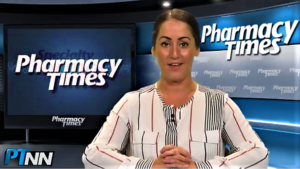
Nicole Crisano, PTNN. This weekly video program provides our readers with an in-depth review of the latest news, product approvals, FDA rulings and more.
- Martin Shkreli’s new jailhouse home is ‘not where you want to be’: Defense lawyer (cnbc.com)
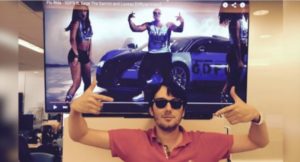
Shkreli is expected to be locked up...for four months...Martin Shkreli's new home in a Brooklyn, New York, federal jail is definitely not the kind of place "where you want to be,"…Metropolitan Detention Center Brooklyn...Shkreli...was thrown into the MDC...after a Brooklyn federal court judge revoked his $5 million release bond...Judge Kiyo Matsumoto ruled that Shkreli represented a danger to the community because of a bizarre $5,000 bounty he offered to Facebook followers who grabbed samples of Hillary Clinton's hair for him...Shkreli, who previously ran two pharmaceutical companies and several hedge funds...A jury convicted him in August of three securities fraud charges...
- How to Protect a Drug Patent? Give it to a Native American Tribe (nytimes.com)Allergan and Saint Regis Mohawk Tribe Announce Agreements Regarding RESTASIS® Patents (srmt-nsn.gov)Mylan says Allergan misusing tribal sovereignty in patent dispute (reuters.com)Prevnar 13 among blockbusters industry watchers peg as tribal licensing candidates (fiercepharma.com)
Saint Regis Mohawk Tribe
The drugmaker Allergan announced...that it had transferred its patents on a best-selling eye drug to the Saint Regis Mohawk Tribe in upstate New York — an unusual gambit to protect the drug from a patent dispute...Under the deal, which involves the dry-eye drug Restasis, Allergan will pay the tribe $13.75 million. In exchange, the tribe will claim sovereign immunity as grounds to dismiss a patent challenge through a unit of the United States Patent and Trademark Office. The tribe will lease the patents back to Allergan, and will receive $15 million in annual royalties as long as the patents remain valid...The surprising legal move rippled quickly through the pharmaceutical world...setting off speculation about whether other drug companies would soon follow suit in order to protect their patents from challenges through a patent-review process that the industry despises...If Allergan succeeds in holding onto its patents, “we will probably see multiple branded companies housing their patents with Indian tribes...
- Half of Americans Tested Misused Prescription Medications, Lab Tests Show (ptcommunity.com)
Quest Analysis of 3.4 million tests shows evidence of dangerous drug combinations...A majority of test results from patients taking prescription medications show signs of drug misuse—including potentially dangerous drug combinations...The Quest Diagnostics Health Trends study is based on analysis of the company's de-identified laboratory data, believed to be one of the largest nationally representative datasets of objective laboratory information of patients prescribed opioids and other commonly abused medications. Physicians order laboratory services to aid their ability to monitor patients for signs of prescription or illicit drug misuse or abuse...(The report, "Prescription Drug Misuse in America: Diagnostic Insights in the Growing Drug Epidemic")
- evidence of misuse has declined in recent years, 52% of test results showed evidence of potential misuse in 2016, suggesting a majority of patients took their prescribed drugs in ways that were inconsistent with their physician's instruction...
- disturbing patterns of concurrent drug use. Among more than 33,000 specimens tested for opioids, benzodiazepines, and alcohol in 2016, more than 20% were positive for both opioids and benzodiazepines, more than 10% were positive for both opioids and alcohol, and 3% were positive for all three...
- 19% of specimens positive for heroin in 2016 were also positive for nonprescribed fentanyl...
- drug misuse rates were high among most age groups and both genders. However, adolescents (10 to 17 years of age) showed a striking improvement, with the rate dropping from 70% to 29% between 2011 and 2016...
- Misuse rates were higher for men and women of reproductive age (58%) than in the general study population (52%)
- Challenge of Allergan tribal patent deal in uncharted legal territory (reuters.com)
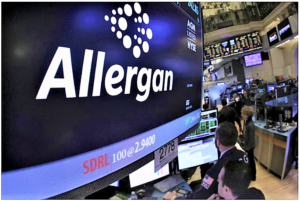
As generic drug manufacturers are gearing up to argue that a deal Allergan Plc made with a Native American tribe to shield patents from administrative review is a sham, some experts say the generic companies are in uncharted legal territory...Last week, Allergan announced it would transfer the patent rights to its Restasis dry-eye treatment to the Saint Regis Mohawk Tribe, which will license them back to the company in exchange for ongoing payments...Richard Torczon, a lawyer for generic drug company Mylan NV, said the tribe is abusing the defense of sovereign immunity, which he said is intended to shield tribes that get dragged into court without their consent...“The tribe here has not been dragged into this proceeding against its will,” Torczon said during a hearing...before three judges from the patent board. “It has deliberately by its own admission targeted these proceedings for exactly this kind of revenue-generating opportunity,”
- Discrepancy between trial goals, results may mask treatment risks (reuters.com)Association of Trial Registration With Reporting of Primary Outcomes in Protocols and Publications (jamanetwork.com)
Scientists often fail to publicly register plans for clinical trials or to publish the results, and the outcomes they do share may mask instances when new treatments are unsafe or ineffective, a small study suggests...One goal of asking scientists to register clinical trial plans in public research databases is to highlight the main objective of experiments and make it easy to see whether a tested treatment achieved this goal when results are published, the study authors note in JAMA...But more than one-third of the 113 clinical trials researchers examined for the study were never registered. Only 64 of the trials, or 57 percent, were published...One in five trials didn’t define a primary outcome, or clear protocols for determining if the tested treatment had achieved its main goal...Doctors rely on published evidence to guide patient care decisions, while researchers use the published literature to guide which promising areas of inquiry to pursue...Unpublished trials tend to be the ones that found treatments didn’t work or weren’t safe...Published results, meanwhile, tend to highlight successful experiments...
- Gottlieb vows to shake up the FDA, backing a trend toward faster drug development (endpts.com)
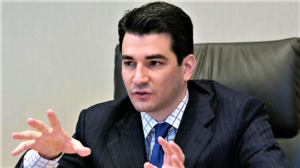
FDA commissioner Scott Gottlieb has sounded a crystal clear warning over the high — and growing — cost of drug development. And in a speech to regulatory execs...Gottlieb committed the FDA to backing up more efficient drug development programs with new measures to clear the regulatory path for developers barreling ahead to relatively swift pivotal data in search of an accelerated OK...Gottlieb started by outlining a bleak picture in drug R&D, noting that the economic model for drug development is broken. It costs too much to develop a drug so it can be approved for marketing. And costs are swelling fast at the discovery end of the business, which will help swamp a system that already doesn’t work particularly well...Gottlieb held up some of the rapid-fire clinical trials we’ve been seeing in the cancer field as a model for what can work, paving the way to the accelerated approval pathway at the FDA. And he believes...that moving drug development into the fast lane can reduce R&D costs and thereby allow biopharma companies to pass on savings to patients through lower costs.
- The FDA just approved the first app for treating substance abuse (cnbc.com)
Federal regulators...approved the first mobile app to help treat substance use disorders...The app, developed by a start-up called Pear Therapeutics, is designed to be prescribed by clinician and used alongside counseling...Pear's technology digitizes a form of talk therapy called cognitive behavioral therapy, or CBT, which focuses on "examining the relationships between thoughts, feelings and behaviors...Pear Therapeutics is part of a burgeoning category of health start-ups known as digital therapeutics. The idea is that software can improve a person's health, without the same cost and side effects of medical treatment...Pear's app has not been approved to treat opioid dependence, but...the company has developed a version of the software that is currently under submission. It's designed to be used alongside opioid replacement therapies.
- Allergan recruits Deion Sanders to get men to use Botox (mmm-online.com)
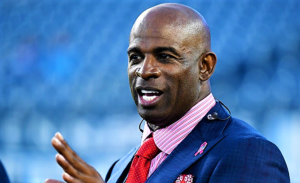
Allergan has enlisted football legend Deion Sanders to encourage men to use Botox. The drugmaker announced...that Sanders would be the brand ambassador for the wrinkle-erasing injection, specifically targeting men with moderate-to-severe frown lines and crow's feet...Allergan developed two videos with Sanders, one in which he discusses how turning 50 prompted him to seek a cosmetic answer to the crow's feet forming around his eyes. In the other, two men at a bar see Sanders sitting behind them and attempt to take a selfie with Sanders in the background. After looking at the picture they've taken, one man notices the crow's feet forming around his eyes. Deion then approaches them and tells them he has used Botox...Allergan has not shied away from using high-profile celebrities to promote its products in the in the past. In the last two years alone, the company developed partnerships with actors Lea Michele and Kate Bosworth, and reality-TV personality Khloé Kardashian. Michele worked with Allergan on its women's health campaign Actually She Can, while Kardashian kicked off the Live Chin Up campaign for Kybella, a chin-fat injection. Bosworth helped promote acne treatment Aczone.
- 7 Medical Conditions That Will Be Lining Big Pharma’s Pockets by 2020 (fool.com)
Big pharma stands to make hundreds of billions of dollars from a handful of medical conditions.
- No. 7: Viral hepatitis - $45 billion and $55 billion will be spent globally on drugs that treat viral hepatitis by 2022...around 257 million have chronic hepatitis B virus infection and 71 million people have chronic hepatitis C virus infection.
- No. 6: Respiratory diseases - treating respiratory diseases are expected to generate between $53 billion and $56 billion in sales by 2020. The most common respiratory diseases include asthma, allergies, and chronic obstructive pulmonary disease.
- No. 5: Autoimmune diseases - Autoimmune disease medications could make big pharma companies between $55 billion and $65 billion by 2020
- No. 4: Cardiovascular diseases - cardiovascular disease drugs will rack up sales between $73 billion and $76 billion by 2020...Cardiovascular drugs include treatments for hypertension, heart disease, and cholesterol.
- No. 3: Pain - Pain medications are projected to be the third-biggest moneymaker by 2020, with sales of $82 billion to $85 billion...drugs includes treatments for musculoskeletal pain, arthritis, anesthesia, analgesics (both narcotic and non-narcotic), and migraine.
- No. 2: Diabetes - diabetes drugs are expected to be near the top in spending, with projected global sales between $107 billion and $113 billion by 2020
- No. 1: Cancer - The top medical condition that will likely line big pharma's pockets by 2020 is cancer…sales of cancer drugs will be between $100 billion and $120 billion