
- Pharmacies front and center as Florida preps for Hurricane Irma (pharmacist.com)

The pharmacy community is working to make sure Florida residents are prepared as Hurricane Irma bears down on the state. Gov. Rick Scott authorized pharmacies to dispense up to 30-day emergency prescription refills to patients...In addition, CVS Pharmacy and Walgreens are emphasizing the importance being prepared by keeping prescriptions stocked, or at least on-hand. "Prescription preparedness is one of the most important steps individuals and families can take in the lead up to potentially severe weather, and CVS Pharmacy is working to ensure that our patients have the medications they need in advance of the storm," says CVS Health EVP retail pharmacy and supply chain Kevin Hourican. Walgreens is reminding patients to follow evacuation orders and get to a safe location before refilling their prescriptions, noting that all locations can access a patient's records and that the Walgreens app can be used to refill prescriptions and pick them up nearby.
- Novartis charged much more in the U.S. for some drugs than in other countries (statnews.com)

An axiom in the overheated debate about prescription drug pricing is that Americans are often charged more than what is paid by people in other countries...the pharmaceutical industry argues that prices are set to fund research for discovering and developing new medicines. This makes sense, of course. But as Americans increasingly complain about rising prices, there has been accompanying angst about the extent to which higher prices in the U.S. are used to essentially subsidize what people pay elsewhere...the U.S. has a hodgepodge of government agencies and private insurers negotiating for medicines, and government health care systems are required to cover so many drugs. In most other countries, the central government is the primary gatekeeper for cost-conscious coverage decisions, which concentrates purchasing and often forces drug makers to lower prices...higher prices may not necessarily reflect higher costs...A higher price doesn’t mean the company had more expenses in the U.S. It will be the rationale they give, but it doesn’t mean they have the cost accounting to back it up."..."Their internal transfer prices are same as the wholesale acquisition cost, or list price, and are based on the amount of revenue they expect to get in each country. These prices tell me that this is what they’re using internally to charge (country) units, but the price isn’t driven by cost to make it in the factory. It’s what they know they can get in that market…This just reflects the U.S. does not have an effective market for evaluating and buying drugs, because when you have a drug that is required to be covered, you don’t have leverage to negotiate."...
- Why the Biosimilar Drug Revolution Hasn’t Arrived (bloomberg.com)

In a word: patents...The Biologics Price Competition and Innovation Act (2010) was...part of the Affordable Care Act. Its essential goal was to infuse competition and lower the prices of drugs that were made from living cells -- so-called biologics...Until the 2010 law, biologics had no fear of competition -- there was no legal way to introduce generic versions into the market -- so they were able to maintain their monopoly price even after their patents expired. The BPCIA was intended to establish mechanisms within the Food and Drug Administration, the Patent and Trademark Office, and the courts that would allow the introduction of "biosimilars." These drugs weren't exact replicas of biologics, but were similar enough, and safe enough, to be used instead of the brand-name drugs...Here we are seven years later. Guess how many biosimilars have made it to market?..Two...companies are forced to fight through thickets of patents to get a biosimilar to market, a law that was supposed to save the U.S. billions will continue to do just the opposite: make it easy for biologic makers to maintain unwarranted monopolies...
- Week in Review: September 9, 2017 (pharmacytimes.com)
Nicole Crisano, PTNN. This weekly video program provides our readers with an in-depth review of the latest news, product approvals, FDA rulings and more.
- The Provider Status Impact – Cardinal Health RBC 2017 – Pharmacy Podcast Episode 464 (pharmacypodcast.com)
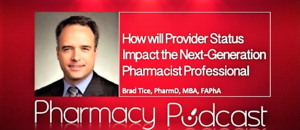
Pharmacists in Washington State got SB 5557 passed in early 2015—a bill requiring commercial or private health care plans regulated by Washington State to enroll pharmacists into their provider networks, and it mandates that these plans pay pharmacists for services provided if they are within a pharmacist’s scope of practice...With more than 10,000 active collaborative practice agreements in existence for pharmacists in Washington State, Rochon said they wanted to “push the bar” even further and make sure pharmacists were compensated for their services. The process was long and involved and passage of the bill was achieved largely through several partnerships with stakeholders ranging from legislators to patient advocacy groups. Part of the process also involved legal maneuvering with an existing Washington State law having to do with providers and health care plans...Brad Tice, PharmD, MBA, FAPhA, Director, Product Strategy & Commercialization at Cardinal Health (22:11)
- IBM pitched its Watson supercomputer as a revolution in cancer care. It’s nowhere close (statnews.com)

It was an audacious undertaking, even for one of the most storied American companies: With a single machine, IBM would tackle humanity’s most vexing diseases and revolutionize medicine...promoting its signature brand — Watson — IBM sought to capture the world’s imagination, and it quickly zeroed in on a high-profile target: cancer...But three years after IBM began selling Watson to recommend the best cancer treatments to doctors around the world, a STAT investigation has found that the supercomputer isn’t living up to the lofty expectations IBM created for it. It is still struggling with the basic step of learning about different forms of cancer. Only a few dozen hospitals have adopted the system, which is a long way from IBM’s goal of establishing dominance in a multibillion-dollar market...While it has emphatically marketed Watson for cancer care, IBM hasn’t published any scientific papers demonstrating how the technology affects physicians and patients. As a result, its flaws are getting exposed on the front lines of care by doctors and researchers who say that the system, while promising in some respects, remains undeveloped...
- Most U.S. Hospitals Use EHRs, CPOE Systems (drugtopics.modernmedicine.com)

The use of health IT has exploded in the last decade, and that means better health care...Electronic health records, computerized prescriber-order-entry systems, and barcode-assisted medication administration systems have now become almost universal in hospitals nationwide...According to the “ASHP National Survey of Pharmacy Practice in Hospital Settings: Prescribing and Transcribing — 2016,” nearly 100% of hospitals across the United States have adopted these technologies...Survey results reveal that the use of health IT by hospitals has led to a rapid increase in “paperless care.”... ASHP CEO, Paul W. Abramowitz, PharmD, said in a statement that, in addition to improving medication safety, the increased use of information technology shows great potential for pharmacists to spend more time providing comprehensive medication therapy management in and across all settings of patient care. “These positive findings move us closer to achieving ASHP’s vision that medication use will be optimal, safe, and effective for all people all of the time.” Abramowitz said.
- F.D.A. Accuses EpiPen Maker of Failing to Investigate Malfunctions (nytimes.com)
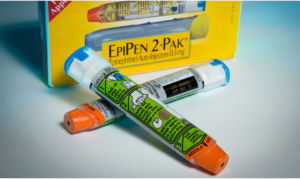
The Food and Drug Administration...accused the drugmaker Pfizer of failing to properly investigate reports of malfunctioning EpiPens, including incidents when patients died or became severely ill after the device failed to work. Pfizer manufactures the EpiPen, which treats allergic reactions, for the drugmaker Mylan...In a warning letter...the agency said Meridian Medical Technologies, which is a unit of Pfizer, did not adequately look into problems with a crucial component of the EpiPen — the mechanism on the device that insures that it fires and delivers the proper dose of epinephrine, which stops an allergic reaction... the company failed to conduct a proper investigation even though it received numerous complaints about problems with activating the device. "Our own data show that you received hundreds of complaints that your EpiPen products failed to operate during life-threatening emergencies, including some situations in which patients subsequently died...
- Sticker shock: Obamacare’s specialty drug customers faced big price hikes in 2017 (cnbc.com)

Many Obamacare customers who take specialty drugs had to personally pay anywhere from $262 to $1,762 more each month in 2017 than they did last year for those medications,,,The report, from the insurance comparison site HealthPocket.com, found that the average specialty drug coinsurance fee for the most popular type of Obamacare plans rose by five percentage points from 2016...That increase reflects a trend of insurance plans shifting the burden of directly paying for often-high priced specialty medication onto consumers..,And that burden can be heavy...The report underscored the relatively large change in cost burden on customers of so-called silver individual health plans who use specialty drugs...About 70 percent of all customers who purchase individual coverage through a government-run Obamacare marketplace are enrolled in silver plans. Those plans pay, on average, 70 percent of all of their customers' health costs, with enrollees being personally responsible for the remaining 30 percent...
- This Week in Managed Care: September 8, 2017 (ajmc.com)
Laura Joszt, assistant managing editor at The American Journal of Managed Care. Welcome to This Week in Managed Care from the Managed Markets News Network