
- Weak patient admissions to bug hospital operators through 2018 (reuters.com)

Weak patient admissions that plagued U.S. hospital operators in the June quarter are likely to persist through 2018, as patients fret about soaring out-of-pocket costs and the future of Obamacare remains uncertain...Companies including HCA Healthcare Inc, the largest for-profit hospital operator, and Tenet Healthcare Corp have reported dismal quarterly results and cut their forecasts for the year...High-deductible health plans - which shift initial medical costs to patients, but have lower monthly premiums - are becoming popular, resulting in patients pushing back non-emergency surgeries.
- Bill to allow imported drugs from Canada aims to create competition (mmm-online.com)

As lawmakers grapple with addressing sky-high drug prices, the debate around allowing importation of lower-priced versions of the same branded medications from Canada has again cropped up in policy circles…Sen. Bernie Sanders has been a major advocate...introducing the Affordable and Safe Prescription Drug Importation Act...bill would create a legal pathway for U.S. pharmacies to import lower-priced versions of branded medications from Canada and possibly other countries...The Congressional Budget Office has estimated that Sanders' bill would save the U.S. federal government nearly $7 billion over the next decade. But a number of influential stakeholders, including drugmakers and former FDA commissioners, have expressed concern about whether the legislation would increase safety risks...Sanders' bill...would require HHS to allow wholesalers, pharmacies, and individuals to import prescription drugs manufactured at FDA-inspected facilities that are operated by licensed companies in Canada. In the policy statement, the senator said that Canadian pharmaceutical manufacturing standards are comparable to U.S. regulations…
- 5 Trends influencing drug pricing (biopharmadive.com)

It started the same way many things have in recent memory, with a tweet...Hillary Clinton’s...Twitter account..."Price gouging like this in the specialty drug market is outrageous. Tomorrow I'll lay out a plan to take it on."...Recognizing the risks that such reforms would pose to drugmaker revenue, investors quickly sold off millions of shares in pharmaceutical companies. The iShares Nasdaq Biotechnology exchange-traded fund, which shows levels of biotech investments, sunk more than 6%…the biopharma industry could see just how much was at stake if it left pricing backlash unchecked. Still, the problem persisted...In response to the pushback, drugmakers have adopted a few key strategies...reactions to those initiatives have been mixed at best, with many viewing them as skin-deep remedies rather than the panacea needed to substantively solve drug pricing. Though a cure-all isn’t on the horizon, five key trends are currently shaping drug pricing decisions:
- Targeted legislation
- New models
- Rare disease and specialty drug development
- Negotiating power
- High-deductible insurance plans
- King Review leaves hospital pharmacists out in the cold (ajp.com.au)Review of Pharmacy Remuneration and Regulation – Interim Report – June 2017 (health.gov.au)Response to the Review of Pharmacy Remuneration and Regulation – Interim Report (shpa.org.au)

The King Review has failed to acknowledge the role of hospital pharmacists, says the SHPA...The interim report of the Review of Pharmacy Remuneration and Regulation’s failure to acknowledge or leverage the “pivotal” role of hospital pharmacists in ensuring Australians have appropriate and convenient access to medicines, the Society of Hospital Pharmacists of Australia says...In its formal response to the interim report, SHPA highlighted managing transitions of care between hospitals and the community and prioritising the development of HMRs (Home Medicine Reviews) as key aspects of the King Review...It also reaffirmed what it sees as the “crucial” value of including SHPA in Agreement negotiations and decisions...SHPA Chief Executive Kristin Michaels says SHPA’s response to the King Review was driven by the position of hospital pharmacists as progressive advocates for clinical excellence and committed to evidence-based practice...Ms Michaels says hospital pharmacists are equipped to influence a reduction in the 230,000 medicine-related hospital admissions per year in Australia, which cost the health budget $1.2bn annually...
- This Week in Managed Care: August 18, 2017 (ajmc.com)

Laura Joszt, assistant managing editor at The American Journal of Managed Care. Welcome to This Week in Managed Care from the Managed Markets News Network
- Could indication-based pricing really work? (biopharmadive.com)

Why should it cost more than 30 times as much for essentially the same drug just because it’s being used to treat an eye condition rather than cancer?...So-called indication-specific pricing may seem absurd to some observers but makes perfect sense to industry insiders. Drugs are often approved to treat several different diseases, often with varying patient population sizes. For example, Allergan plc's Botox (onabotulinumtoxin A) is approved to treat more than eight indications, including wrinkle reducing and migraines. While insurers may choose to cover these indications differently, indication-based could mean these two indications are priced at opposite ends of the pricing spectrum, for example, and could better align reimbursement with value...There are plenty of examples of drugs approved for wildly different patient populations. Yet, so far, indication-based pricing is not a reality in the U.S.
- Flimsy evidence behind many FDA approvals (reuters.com)
Many drugs granted accelerated approval by the U.S. Food and Drug Administration lack clear evidence of safety and effectiveness, and the same is true for most high-risk medical devices, according to two new reports in the Journal of the American Medical Association...The Accelerated Approval pathway makes potentially promising investigational medicines available for use before the usual amount of data has been collected to confirm their effectiveness and safety…Drugs granted Accelerated Approval should be rigorously evaluated using convincing patient-centered clinical outcomes in rigorous studies...we have found numerous situations in which required confirmatory studies with rigorous designs and outcomes are not pursued or are not completed in a timely fashion, and in these cases, we are concerned that regulators appear to accept data that would not otherwise meet FDA standards...For standard approval, the FDA generally requires gold-standard randomized controlled trials that demonstrate a drug’s safety and effectiveness. Fourteen (out 22 analyzed) of these accelerated approvals, however, were exclusively based on less-rigorous trials.
- Pharmacy Week in Review: August 18, 2017 (pharmacytimes.com)

Nicole Crisano, PTNN. This weekly video program provides our readers with an in-depth review of the latest news, product approvals, FDA rulings and more.
- Mylan, U.S. finalize $465 million EpiPen settlement (reuters.com)Sen. Grassley says Mylan's $465 million Epi-Pen settlement 'shortchanges' taxpayers (cnbc.com)
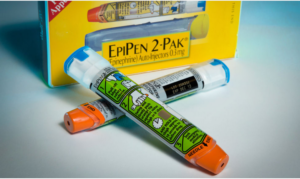
Mylan NV…has finalized a $465 million settlement resolving U.S. Justice Department claims it overcharged the government for its EpiPen emergency allergy treatment, which became the center of a firestorm over price increases...The U.S. Attorney's Office in Massachusetts...announced the accord, which was soon after criticized by some congressional members as being too easy on the drugmaker. It came 10 months after Mylan said it had reached a deal...The settlement resolved claims that Mylan avoided higher rebates to state Medicaid programs by misclassifying EpiPen as a generic product, even though it was marketed and priced as a brand-name product...Under the deal, Mylan did not admit wrongdoing. It will reclassify EpiPen and pay the rebate applicable to its new classification as of April 1, 2017...The deal followed a False Claims Act whistleblower lawsuit filed by French rival Sanofi SA in 2016, two years after it first raised the matter with authorities...Sanofi, which formerly marketed a rival product called Auvi-Q, will receive nearly $38.8 million as a reward from the government...
- Pharmacists support real-time monitoring across Australia (psa.org.au)

New legislation to deliver a real-time prescription monitoring system in Victoria has been welcomed by the peak national body for pharmacists, the Pharmaceutical Society of Australia...Legislation introduced into the Victorian Parliament...will establish the legislative framework for a Victorian real-time monitoring system...PSA Victorian President Benjamin Marchant said PSA welcomed the long-overdue system, which will support clinical decision-making by prescribers and pharmacists to optimise use of medicines and save lives in Victoria...“The system will allow timely and relevant information to be shared among prescribers and pharmacists, ensuring potent medicines are used safely,” Mr Marchant said. “The system will identify people at risk of harm and provide referral pathways for pharmacists to support our patients...“PSA supports the Victorian legislation’s mandatory requirements for prescribers and pharmacists. The system should be integrated and streamlined for prescribing and dispensing software to ensure it is effective and useable.”...