
- Merck CEO Quits Trump Council as ‘Matter of Personal Conscience’ (bloomberg.com)Merck CEO quits Trump's manufacturing council over Charlottesville — and Trump immediately bashes him (businessinsider.com)
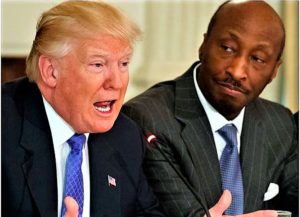
Merck & Co.’s CEO quit President Donald Trump’s council of manufacturing executives Monday, saying “America’s leaders must honor our fundamental values” by rejecting expressions of hatred, bigotry and group supremacy...He was almost immediately attacked by Trump on Twitter...Following a weekend of violence in Virginia involving white-supremacist groups that Trump has been criticized for not explicitly condemning, Merck Chief Executive Officer Ken Frazier said “as a matter of personal conscience, I feel a responsibility to take a stand against intolerance and extremism.”
- Pharmacy Week in Review: August 11, 2017 (pharmacytimes.com)
Nicole Crisano, PTNN. This weekly video program provides our readers with an in-depth review of the latest news, product approvals, FDA rulings and more.
- How do you get lower cost drugs? Give the FDA a bigger stick (thehill.com)
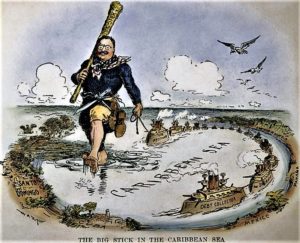
Regulation can be a tool to strengthen competition and address important health and safety concerns, but it can also be abused to limit access to the market...lawmakers and regulators must regulate wisely and be careful of unintended consequences...what happens when important safety regulations can be gamed by bad actors seeking to preserve their monopoly profits?...This has been happening in the market for generic drugs, where some dominant brand name pharmaceutical companies are trying to shut out low cost generic competitors by manipulating the regulations originally designed to keep people safe. And this is not a small problem, either…The problem comes from a conflict that arises between...Risk Evaluation and Mitigation Strategy, and the approval process a generic company needs to go through to enter the market once a drug patent expires. Generics must get a sample of the brand name drug they want to compete with to prove to the FDA that their product is exactly the same...the REMS program greatly restricts access of certain drugs unless proper safety protocols, unique to each drug, are met. This can leave generic companies with no choice but to ask for samples directly from the manufacturer...It is not surprising that these drug makers are denying generics access to these samples. However, the FDA currently does not have the tools necessary to discipline these bad actors and force the distribution of samples to generic companies...Congress is now paying attention...
- Senate reauthorizes FDA to collect fees from drugmakers (reuters.com)FDA Reauthorization Act heads to Trump’s desk after Senate passage (drugstorenews.com)
The Senate...passed a bill allowing the Food and Drug Administration to continue collecting fees from drug companies to review new product applications...The FDA Reauthorization Act renews an existing law that expires on Sept. 30 and which provides the majority of FDA funds used to review pharmaceuticals and determine whether they are safe and effective. The Senate passed the bill by a vote of 94-1...It was passed last month in the House of Representatives.
- CVS Health sets sights on recruiting older workers (drugstorenews.com)
In an effort to differentiate itself, CVS Health is looking to tap into the 24.8% of the workplace the Bureau of Labor Statistics projects will be aged 55 years and older by 2024. The company — which currently has a workforce that is 24% older than 50 years of age — has announced that it’s actively recruiting older employees...Mature workers play an integral role in the culture at CVS Health by providing increased experience, dependability and a desire to learn new skills...the company’s efforts around mature workers is its Talent Is Ageless initiative, which was created to recruit and retain employees aged 50 years and older by cultivating public and private partnerships...9% of Americans aged 65 and older are using at least one prescription drug a month, and 40% use at least five...we see the baby boomer generation age, having colleagues across the company who can personally relate to these customers and patients is a differentiator for us...
- CVS Health Is Sued Over ‘Clawbacks’ of Prescription Drug Co-Pays (bloomberg.com)

CVS Health Corp. and Walgreens Boots Alliance Inc. were sued by California customers who accused the drugstore operators of charging co-payments for certain prescription drugs that exceed the cost of medicines...CVS...overbilled consumers who used insurance to pay for some generic drugs and wrongfully hid the fact that the medicines’ cash price was cheaper...Walgreens...used the same clawback tactic...The lawsuits follow at least 16 other cases...targeting drugstore chains’ alleged co-pay clawback practices. The clawback occurs when patients hand over co-payments set by a pharmacy benefit manager that exceed the actual cash cost of the drug. The benefit managers pocket the difference…Most patients never realize there’s a cheaper cash price because of clauses in contracts between pharmacies and benefit managers that bar the drugstore from telling people there’s a lower-cost way to pay...Schultz (Megan Schultz v. CVS Health Corporation, 17-cv-359, U.S. District Court for the District of Rhode Island)...contends that CVS’s clawback agreements with benefit managers such as Express Scripts, CVS Caremark and OptumRx violate federal racketeering and insurance laws and works to artificially inflate prescription costs...
- New Hampshire sues Purdue Pharma over opioid marketing practices (reuters.com)
New Hampshire sued...Purdue Pharma LP...joining several state and local governments in accusing the drugmaker of engaging in deceptive marketing practices that have helped fuel a national opioid addiction epidemic...The lawsuit filed...claimed that Purdue Pharma significantly downplayed the risk of addiction posed by OxyContin and engaged in marketing practices that "opened the floodgates" to opioid use and abuse...The lawsuit came after the state's top court in June overturned a ruling that barred the enforcement of subpoenas against Purdue and four other drugmakers because of the use of a private law firm by the office of the attorney general...The complaint said...the...company had spent hundreds of millions of dollars since the 1990s on misleading marketing that overstated the benefits of opioids for treating chronic, rather than short-term, pain.
- Generic Drug Prices Are Falling, but Are Consumers Benefiting? (nytimes.com)
Not all drug prices are going up...the prices of generic drugs have been falling, raising fears about the profitability of major generic manufacturers...Teva Pharmaceuticals reported that it had missed analysts’ earnings estimates in the second quarter and planned to lay off 7,000 workers. Its share price plummeted 24 percent in one day...Share prices of other generic drugmakers also declined, as did those of wholesalers, which profit from the sales of generic drugs and have said they expect prices to continue declining...This may seem like good news for consumers, but it’s unclear how much they will save...Why are generic prices falling?
- How much would you pay to live pain-free? (washingtonpost.com)
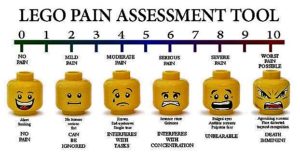
What's the dollar value of pain?...That's the question posed by a team of Icelandic and American economists in a working paper published this week by the National Bureau of Economic Research...how far would we go to avoid pain?...if you're an economist, answering that question is surprisingly difficult. You can't simply flat-out ask people how much they'd pay to avoid pain. Most people aren't used to thinking of their suffering in dollar terms. People who haven't experienced severe or chronic pain are likely to underestimate the value of being pain-free...researchers used a technique that's been used to study the implicit "cost" of a number of different ailments...They analyzed data from over 22,000 Americans over the age of 50 who had taken part in the Health and Retirement Study...As the study's authors put it, you get an implicit answer to this question without having to actually pose it to people: "Consider your overall satisfaction with life being often troubled by pain, what would you be willing to pay to be just as happy but without pain?"...The answer: between $56 and $145. A day. Which works out to between $20,000 and $53,000 a year. Recall that the median household income is about $56,000, and the trade-off becomes stark: Some people would theoretically be willing to give up their entire livelihoods to be pain-free.
- Wal-Mart, Walgreens, CVS turn up the heat on generic drugmaker deals (reuters.com)
The largest U.S. retail pharmacies, including Wal-Mart Stores Inc and Walgreens Boots Alliance Inc, are wielding more leverage when buying generic drugs, accelerating a decline in prices likely to affect drug companies for some time...That pressure is exacerbated by efforts from U.S. health regulators to speed approval of copycat drugs...The extent of the shift became clearer this week, when wholesale drug distributors Cardinal Health Inc and AmerisourceBergen Corp, as well as top global generic drugmaker Teva Pharmaceutical Industries Ltd, warned of generic price declines of as much as 9 percent through the end of the year…Walgreens formed a drug-buying partnership with AmerisourceBergen in 2013, and earlier this year partnered with pharmacy benefit manager Express Scripts Holdings Co. Retailer CVS Health Corp has tied up with Cardinal Health and, more recently, Wal-Mart has joined with McKesson Corp to source generic drugs. Industry analysts said the alliances took some time to become effective, but their power over negotiations is becoming clear.