
- Pharmacy exec seeks new trial over role in deadly U.S. meningitis outbreak (reuters.com)

Barry Cadden, co-founder of New England Compounding
Lawyers for a Massachusetts pharmacy executive convicted of fraud for his role in a 2012 U.S. meningitis outbreak that killed 64 people asked a judge to order a new trial, charging that prosecutors misbehaved in providing evidence to the jury...Barry Cadden, co-founder of the now-defunct New England Compounding Center, was cleared of second-degree murder charges but was found guilty in March of racketeering and fraud for his role in shipping injectible steroids tainted with fungus linked to the deadly outbreak that also sickened 753 people in 20 states...Cadden's attorneys argued that prosecutors overreached in the number and severity of criminal charges that they filed against him. The attorneys said the prosecutors misled the jury by providing them a binder filled with laboratory tests showing that vials of steroids shipped by NECC were tainted but not providing comparable reports submitted by defense attorneys showing the vials were sterile.
- The latest ADA skinny, with hot CV data from J&J, plus Lilly, Novo, and BI (fiercepharma.com)
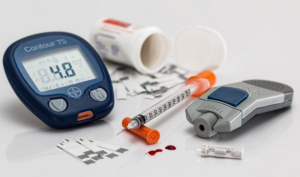
At the American Diabetes Association Scientific Sessions in San Diego, drugmakers have been rolling out studies that illustrate how competitive every class in the diabetes field has become. For instance, partners Merck & Co. and Pfizer, Eli Lilly and Boehringer Ingelheim, and solo flyer AstraZeneca all unveiled SGLT2 drug studies, with more to come...we’ve gathered the top stories here…
- Johnson & Johnson's Invokana outcomes study makes it the second heart-helping SGLT2 on the block.
- Novo Nordisk and its long-acting insulin Tresiba have a tough task: going up against Sanofi's blockbuster insulin Lantus.
- Lilly and Boehringer have reason to believe their SGLT2 inhibitor, Jardiance, may improve outcomes for chronic kidney disease patients—so they’re putting the med to the test.
- Sanofi’s Toujeo has plenty of competition in the basal insulin market, but new real-world data shows it may outdo its peers at cutting the risk of hypoglycemia for older patients.
- Sanofi and Regeneron still have months to wait for final data from a key cardiovascular outcomes study of their PCSK9 therapy Praluent, which is in a heated battle with Amgen’s Repatha.
- Novo Nordisk is in a tough market race against Sanofi with combo product Xultophy, which hit the market after the French drugmaker’s similar Soliqua.
- Boehringer and Lilly still don’t know what’s responsible for the dramatic reduction in cardiovascular death risk that Jardiance (empagliflozin) posted in the Empa-Reg outcomes trial.
- Merck and Pfizer last year rolled out positive results from two phase 3 studies they hoped would buoy SGLT2 candidate ertugliflozin once it got to market.
- Cancer drug prices are so high that doctors will test cutting doses (washingtonpost.com)

A group of prominent cancer doctors is planning a novel assault on high drug costs, using clinical trials to show that many oncology medications could be taken at lower doses or for shorter periods without hurting their effectiveness...they point to their pilot study involving a widely prescribed drug for advanced prostate cancer. Cutting the standard dose of Zytiga by three-quarters was as effective as taking the full amount…Szmulewitz (University of Chicago oncologist) and others now want to run full trials to see whether the doses of other oral oncology drugs can be ratcheted back because of the “food effect,” which can alter how a medication is absorbed. They also plan to explore whether the duration of some prescriptions can be shortened and whether some cheaper non-cancer drugs can be substituted for expensive cancer ones. They recently created a nonprofit organization, the Value in Cancer Care consortium, to organize their work...
- ASCO 2017: What you missed (biopharmadive.com)

Loxo Oncology opened this past weekend's annual conference of the American Society for Clinical Oncology with compelling data showing its drug's efficacy across an array of 17 different cancers...the results were unquestionably positive for Loxo, larotrectinib's performance also marks another step forward in the lofty and still yet unrealized goal of precision oncology...Merck's flagship immunotherapy Keytruda (pembrolizumab) won a landmark approval from the Food and Drug Administraiton for tumors with a specific biomarker...Treating cancer based on solely on the genetic profile of a patient's cancer has been a long-talked about objective, and progress from Merck, Loxo and others show what's possible beyond the molecularly targeted therapies that have advanced clinical care in the past decades...improving precision could also be seen in data presented by Bluebird Bio and Nanjing Legend Biotech, which showed the broader potential for CAR-T therapy outside of leukemia and lymphoma. While checkpoint inhibitors have transformed oncology by broadly unlocking the immune system, CAR-Ts specifically engineer patient's T-cells to seek out specific targets expressed by different cancer types...for a round-up of some of the biggest developments from oncology's biggest conference.
- CAR-Ts steal the show - Impressive data from Bluebird Bio and Nanjing Legend Biotech point to CAR-T's relevance outside of leukemias and lymphomas.
- Roche's Perjeta cuts risk in Aphinity, but is it enough? - The large Phase 3 study has been closely watched as potentially practice changing but the modest benefit could limit its impact in adjuvant treatment of breast cancer.
- Loxo shows promise of biomarker approach to cancer - Clinical data presented Saturday showed treatment with Loxo Oncology's larotrectinib shrank tumors in three-quarters of patients with a range of 17 different advanced cancers.
- Juno marks progress with second-gen CAR-T - Updated results for JCAR017 looked competitive in lymphoma as Juno hopes to recover from its earlier safety setbacks with its now shuttered JCAR015 program.
- J&J seeks label expansion for Zytiga - The pharma's prostate cancer drug was a big winner at ASCO, with data showing a 38% reduction in the chance of death for high-risk patients when adding Zytiga to standard hormonal therapy.
- Incyte pads its IDO numbers - IDO inhibitors have been pegged as the next step in immuno-oncology combinations, but Incyte's rising market value prompts questions over what that's worth.
- Roche's Alecensa bests Xalkori in lung study - The ALK inhibitor from the Swiss pharma dramatically improved progression-free survival over Xalkori, potentially positioning itself as the new standard of care.
- AstraZeneca's Lynparza stays step ahead of PARP rivals - Data showing a 42% risk reduction in disease worsening compared to chemo in breast cancer patients should help build Lynparza's profile outside of ovarian cancer.
- Merck touts Keytruda bladder benefit post Tecentriq failure - Data announced for Keytruda in bladder cancer raises questions about the differences in checkpoint inhibitors after Roche's recent failure in the space.
- Chi-Med, Lilly tout cancer med's efficacy in the colorectal setting - Median overall survival was about three months longer for patients receiving fruquintinib versus those on placebo.
- It’s time to make it legal for Americans to order prescription drugs from abroad (statnews.com)

Every day, countless people across America order prescription drugs from pharmacies in other countries as they hunt for something increasingly elusive — affordable medications...Under most circumstances, importing medicines is illegal...And it is time to scrap this prohibition, unless Congress finds another way to drive down drug costs...Sixty percent of Americans say lower drug costs should be a top priority, and a whopping 72 percent support the idea of importing medicines from Canada, according to a recent Kaiser Family Foundation poll...8 percent of adults surveyed reported that they or someone in their household have already bought prescription drugs from outside the U.S...Meanwhile, the cost of 20 widely used drugs is three times cheaper in Canadian than in New York pharmacies...
- Top 10 complaints about working in Biopharma (worldofdtcmarketing.com)

Most professional consulting groups have all commented about the serious shortfall of working for a biopharma company...the most common complaints about working in marketing for pharma.
- 1ne: Too many damn meetings! By far this is the top complaint we have heard.
- 2wo: Takes too long to implement programs.
- 3hree: Too many “lifers”. A lifer is someone who goes from pharma company to company with outdated ideas.
- 4our: Our CEO is too far removed from our business and is too concerned about Wall Street rather than Main Street.
- 5ive: Good job, but you’re being laid off. Too many pharma companies still lay off the wrong people when one of their products comes off patent or sales decline.
- 6ix: No work/life balance.
- 7even: Benefits have become more expensive.
- 8ight: Open office concepts.
- 9ine: Too heavy a workload.
- 10en: Finally, there is the annual team building events which seem to install a belief that you’re building a cohesive team.
- Korea issues third set of punishments in Novartis bribery case (fiercepharma.com)
South Korean authorities aren’t letting Novartis off the hook easily in an ongoing bribery controversy. After a separate agency fined the drugmaker nearly $50 million over kickback payments in April, antitrust authorities in the country have just issued a new fine and complaint against the Swiss drug giant...South Korea’s Fair Trade Commission fined Novartis 500 million won ($445,000) and filed a new complaint over payments the company offered doctors between March 2011 and August 2016, according to the Korea Times...The developments come shortly after the country’s Ministry of Health & Welfare fined Novartis 55 billion Korean won—approximately $50 million—and suspended reimbursement of Exelon and Zometa for three months, alleging the company’s employees provided approximately $2.3 million in unlawful kickbacks…
- Pfizer, Roche cancer drug pricing under investigation in South Africa (fiercepharma.com)

Tembinkosi Bonakele (left)
Two of the world’s top drug companies and a local pharma are in the hot seat in South Africa as competition officials launched a probe into "excessive pricing" on lifesaving cancer meds...South Africa’s competition commissioner Tembinkosi Bonakele announced...that his agency would probe pricing on cancer drugs from Roche, Pfizer and Aspen Pharmacare, according to the Competition Commission of South Africa’s official Twitter account...Roche is under investigation for breast cancer drug pricing, according to the commission, while Pfizer’s lung cancer drug pricing is included in the inquiry...Aspen said the probe is for "suspected abuse of dominance" in the cancer drug market...In announcing the probe, the South African commissioner pointed to patents as a driver of high drug prices…Under South African law, the Department of Health "establishes a universal fixed price" for pharma products...Commissioner Bonakele said the probe will "look at patents and how they get abused,"..."A perpetual monopoly aided by patents is unlawful,"…
- Supreme Court speeds copycat biologic drugs to market (reuters.com)

The decision has major implications for the pharmaceutical industry because it will dictate how long brand-name makers of biologic drugs can keep near-copies, called biosimilars, off the market. Even the six months at issue in the case can mean hundreds of millions of dollars in sales...Health insurers expect biosimilars to be cheaper than original brands, like generics, saving consumers billions of dollars each year...Novartis said in a statement that the ruling "will help expedite patient access to life-enhancing treatments."...Amgen spokeswoman Kelley Davenport said the company was disappointed but "will continue to seek to enforce our intellectual property against those parties that infringe upon our rights."...The companies disagreed on how to apply that law's requirement that a biosimilar drug maker give the brand-name manufacturer 180 days notice before launching its copycat version...In July 2015, the appeals court ruled that the 180-day notice must be given after FDA approval, a ruling the Supreme Court reversed...Writing for the court, Justice Clarence Thomas said that the decision was not based on policy arguments, but rather, the "plain language" of the biosimilar law itself...
- NACDS urges Congress to pass provider status legislation (drugstorenews.com)
The National Association of Chain Drug Stores this week shared with the House Ways and Means Committee the important role pharmacy plays in the nation’s healthcare system in an effort to encourage passage of legislation giving pharmacists provider status under Medicare Part B...The Pharmacy and Medically Underserved Areas Enhancement Act has been introduced in both the House and Senate, and NACDS’ statement looked to drum up support by outlining the work pharmacists do for patients, particularly in medically underserved areas..."We urge you to increase access to much-needed services for underserved Medicare beneficiaries by supporting H.R. 592/S. 109, the Pharmacy and Medically Underserved Areas Enhancement Act, which will allow Medicare Part B to utilize pharmacists to their full capability by providing those underserved beneficiaries with services, subject to state scope of practice laws, not currently reaching them," NACDS said...