
- Pharmaceutical packaging: where should drug companies focus their efforts? (pharmaceutical-technology.com)
The future of pharmaceutical packaging operations is far from straightforward. The Association for Packaging and Processing Technologies (PMMI) reveals where drug companies should be focusing their efforts. ...last year, the Association for Packaging and Processing Technologies released a comprehensive research report on the trends and opportunities in pharmaceutical and medical device packaging operations. The road ahead for drug companies certainly won’t be an easy one...Not only are companies scrambling to meet looming serialisation deadlines...they’re also being asked to manufacture more products for less money without sacrificing quality, and come up with innovative solutions for the pharmaceuticals of the future, which will be increasingly individualised, long-lasting and easy to self-administer. On top of that, mergers and acquisitions remain rife and generic drugs continue to gain market share...With both the pharmaceutical and medical device industries facing many of the same challenges and market realities, the two are also starting to converge, as they address new government regulations, often by purchasing new equipment, learn to produce more for less and work together on the combination products of the future.
- Serialisation
- Outsourcing
- New products, new packaging
- European Regulatory Roundup: EMA Drafts Guidelines on Controlling False Positives in Clinical Trials (raps.org)

The European Medicines Agency has released draft guidelines about multiplicity in clinical trials. The text deals with how to mitigate the risk of false positives arising when clinical trials look at multiple treatment groups and endpoints...EMA’s guideline is applicable to most clinical trials. Once a study design expands beyond having two treatment groups, one predefined null hypothesis and a single primary variable — or adds an interim analysis — its sponsor needs to control for false positives. EMA cites the example of a trial that analyzes five subgroups independently. If each subgroup has a significance level of 2.5%, the likelihood of the study finding a statistically significant false positive hits 12%. As biotechs are under pressure to succeed, there is a risk they will seize on anomalies as evidence a drug works...To ensure trial designs diminish the risk of this happening, EMA has released a 15-page guideline. The draft runs through the situations in which it is necessary to adjust for multiplicity, when it is possible to draw reliable conclusions from subgroup analyses, when success against secondary endpoints can form the basis for additional claims and how to handle composite endpoints.
- Blame Game Over High Drug Prices Escalates With New Ad (bloomberg.com)

New punches were thrown in the blame game over U.S. drug prices...Broadening its efforts to defuse outrage over skyrocketing prices, Pharmaceutical Research and Manufacturers of America...started an advertising campaign urging insurers to share with customers more of the benefits of rebates they’ve negotiated. In response, the main health-insurance lobby pushed the blame back on drugmakers: "Enough with the distractions."...Meanwhile, the head of one of the largest pharmacy benefit managers, who are often criticized by drugmakers for their lack of transparency, said his industry helps save money and manufacturers should stop faulting the middlemen...The new ad from PhRMA...is another step in its endeavor to demonstrate that other parts of the health-care industry are responsible for the costs faced by patients. In January, the group started a major initiative, including TV, radio and digital ads.
- Opaque System
- Price Negotiations
- ‘Losing Strategy’
- Pharmacy Week in Review: April 7, 2017 (pharmacytimes.com)
Nicole Crisano, PTNN. This weekly video program provides our readers with an in-depth review of the latest news, product approvals, FDA rulings and more.
- IBM receives patent that could accelerate discovery of more effective and safer drugs (drugstorenews.com)

IBM...announced its scientists have been granted a patent ("Method and system for exploring the associations between drug side-effects and therapeutic indications") on machine learning models to predict therapeutic indications and side effects from various drug information sources, which could accelerate discovery of more effective and safer drugs...IBM Research has implemented a cognitive association engine to identify significant linkages between predicted therapeutic indications and side effects, and a visual analytics system to support the interactive exploration of these associations...this approach could help researchers in pharmaceutical companies to generate hypotheses for drug discovery...strongly correlated disease-side-effect pairs identified by the patented invention could be beneficial for drug discovery in many ways. One could use the side-effect information to repurpose existing treatments (e.g. drugs causing postural hypotension could be potential candidates for treating hypertension). If a new drug is being designed for a disease that is strongly correlated with severe side effects, then special attention could be paid to controlling the formulation and dosing of the drug in the clinical trials to prevent serious safety issues...Lack of efficacy and adverse side effects are two of the primary reasons a drug fails clinical trials, each accounting for around 30% of failures...Computational models and machine learning methods that can derive useful insights from large amounts of data on drugs and diseases from various sources hold great promise for...improving the drug discovery process.
- Ex-New York assemblyman, doctors charged in illegal opioid prescription scheme: officials (reuters.com)

A former New York assemblyman and a dozen pain clinic workers were arrested on Friday, accused of operating some of the largest "pill mills" in the northeastern United States and illegally prescribing more than 6 million opioid pills...Alec Brook-Krasny, who served in the New York State Assembly from 2006 to 2015 representing South Brooklyn, was charged with conspiracy and scheming to defraud by unlawfully selling prescriptions…Also arrested in the sweep of three pain clinics were at least one nurse practitioner, three physician's assistants, and two doctors including Dr. Lazar Feygin, who owned two of the clinics...They were accused of over-prescribing oxycodone...to clinic patients who showed signs of selling pills or abusing other narcotics...in exchange for oxycodone, the defendants also pressured patients to undergo unnecessary medical tests and procedures, then billed Medicare and Medicaid for millions of dollars...
- The government’s struggle to hold opioid manufacturers accountable (washingtonpost.com)
Sixty-six percent of all oxycodone sold in Florida came from this company. But the DEA’s case against it faltered...Mallinckrodt’s blue 30-milligram oxycodone tablets became so popular among drug users and dealers that they acquired a street name — "M’s," for the company’s distinctive block-letter logo…the Drug Enforcement Administration trained its sights in 2011 on Mallinckrodt Pharmaceuticals, one of the nation’s largest manufacturers of the highly addictive generic painkiller oxycodone. ..It was the first time the DEA had targeted a manufacturer of opioids for alleged violations of laws designed to prevent diversion of legal narcotics to the black market. And it would become the largest prescription-drug case the agency has pursued…But six years later, after four investigations that spanned five states, the government has taken no legal action against Mallinckrodt. Instead, the company has reached a tentative settlement with federal prosecutors…Under the proposal…Mallinckrodt would agree to pay a $35 million fine and admit no wrongdoing.
- The First CAR-T Drugs Have Left the Gate (fool.com)
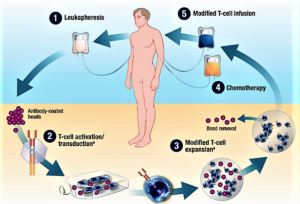
Investors should keep an eye on this promising way to treat cancer...For all the talk about biotechs being nimble, it's a big pharma that looks like it'll be the first company to launch a chimeric antigen receptor T-cell (CAR-T) product...Novartis announced last week that the Food and Drug Administration accepted its application to market tisagenlecleucel-T...in patients with B-cell acute lymphoblastic leukemia who are relapsed and refractory to other therapies...A few days later, Kite Pharma completed its application for axicabtagene ciloleucel...Kite's application could be accepted early, putting it less than two months behind Novartis…Since CAR-T therapies are personalized treatments that have to be made individually for each patient, they're likely to be expensive to produce and therefore require a premium price. The first company to get a CAR-T therapy approved will set the price, which later companies may have to match unless they can justify a higher price with higher efficacy...With prices that will probably exceed those of current cancer treatments, investors should expect some pushback from insurers. One way Novarits and Kite can get around the cost issue is by offering money-back guarantees...Kite's and Novartis' CAR-T therapies are just the tip of the iceberg for this new way to treat cancer...
- This Week in Managed Care: April 7, 2017 (ajmc.com)
Laura Joszt, assistant managing editor at The American Journal of Managed Care. Welcome to This Week in Managed Care from the Managed Markets News Network
- Uruguay gives pharmacies green light to start selling marijuana (reuters.com)

Uruguay's three-year process of legalizing recreational cannabis consumption reached its final stage...when the government said it would authorize pharmacies to begin selling the substance as of July...Sixteen pharmacies have registered with the government of the tiny South American country to be able to sell marijuana for recreational purposes. That number is expected to increase to 30 in the coming months, said Juan Roballo, head of the National Drug Board...The government hopes the formalization process will "guarantee the quality and the purity of the product" citizens consume, Roballo said. The cannabis sold in pharmacies will be grown by producers licensed by the state...The process will be heavily regulated by the government...Interested Uruguayans 18 or older must enroll in a government registry...and are limited to purchasing 40 grams per month…