
- AP Exclusive: Drugs vanish at some VA hospitals (bigstory.ap.org)

Federal authorities are stepping up investigations at Department of Veterans Affairs medical centers due to a sharp increase in opioid theft, missing prescriptions or unauthorized drug use by VA employees since 2009…Doctors, nurses or pharmacy staff at federal hospitals — the vast majority within the VA system — siphoned away controlled substances for their own use or street sales, or drugs intended for patients simply disappeared...Aggravating the problem is that some VA hospitals have been lax in tracking drug supplies...Reported incidents of drug losses or theft at federal hospitals jumped from 272 in 2009 to 2,926 in 2015, before dipping to 2,457 last year, according to DEA data...The GAO review...found the most missed inspections at VA's hospital in Washington, D.C...Monthly checks were missed there more than 40 percent of the time, mostly in critical patient care areas, such as the operating room and intensive care units…Responding to the findings, the House Veterans Affairs Committee planned a hearing on the inspection issue. Its chairman, Rep. Phil Roe, a physician, said failing to follow protocol is serious and "should not be tolerated within VA."
- Harvard Pilgrim bets on value-based drug payments with new deals (biopharmadive.com)
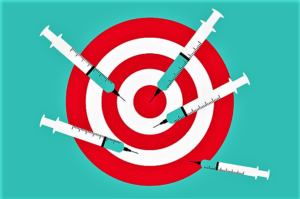
As high pharmaceutical prices strain budgets of payers and patients alike, Harvard Pilgrim is betting so-called pay-for-performance deals will help lower drug costs and improve patient outcomes...The...health insurer announced...it had inked two separate agreements with Amgen and Eli Lilly that tie the costs of Amgen's Enbrel (etanercept) and Lilly's Forteo (teriparatide) with either performance or patient adherence...a number of large drugmakers have begun pushing value- or outcomes-based payments as a potential solution to blowback on rising drug prices. Under these types of deals, insurers and other payers would pay less for drugs that fail to meet specified benchmarks. Drugmakers, on the other hand, would be rewarded for innovative medicines that improve outcomes.
- Trump is promising big changes at the FDA — here’s how drugs are approved today (businessinsider.com)
At least one of President Trump's possible picks to head the Food and Drug Administration has a radical idea for when drugs should come to market...Jim O'Neill, managing director at Mithril Capital, has said that he is in favor of approving drugs that are proven to be safe, even before they're shown to be actually effective...Regardless of who Trump picks in the end, his interest in cutting regulation at the FDA is clear..."We're going to be cutting regulations at a level that nobody's ever seen before," Trump said in a meeting with pharma executives...As it exists right now, the FDA approval process can be a long and expensive…
- Cheaper drugs from Canada? Pharma despises the idea, but top senators are pushing HHS chief to try it (fiercepharma.com)

Instead of being gouged on the prices for old drugs, Americans could import certain meds from Canada if a bipartisan group of senators get their way...Sens. Klobuchar, Chuck Grassley, and John McCain...are pushing President Donald Trump’s new Department of Health and Human Services Secretary, Tom Price, to authorize cheap drug imports under strict circumstances...Their bill, the Safe and Affordable Drugs from Canada Act, would require the FDA to set up a “personal importation program” to allow individuals to import 90-day supplies of their meds from Canadian pharmacies...To qualify for importation, the senators' proposal would require products to be off patent or no longer marketed in the U.S. by the original developer. They'd need to be free of direct competition and to have seen a “significant, unexplained” price hike. The imported product would also need to be produced by a reputable company. The bill additionally calls for fast-track FDA reviews of competing drugs...Imported drugs wouldn’t “be subject to the U.S. Food and Drug Administration’s robust safety requirements, and there would be no way to trace the country of origin for the imported products...
- China updates national drug list, adding some blockbuster Western meds (fiercepharma.com)

China has updated its list of medicines covered by national medical insurance, adding some new drugs with a focus on pediatrics and major illnesses such as cancer, hepatitis, and renal and cardiovascular diseases…The overhaul, the first since late 2009, saw the number of "Western-style" and traditional Chinese medicines included in the list grow by 15% to 2,535, among which 1,297 are Western-style meds, an 11% increase...The additions include some blockbuster meds like tenofovir, an antiviral drug to treat hepatitis B and HIV...and cancer drug gefitinib...China’s own non-small cell lung cancer med icotinib…The ministry (Ministry of Human Resources and Social Security) also put 45 drugs on a “to-be-negotiated” list, half of which are targeted cancer therapies...inclusions of new drugs would reduce the financial burden on patients and help support innovations in China's pharmaceutical market...The National Reimbursement Drug List names all the drugs covered by the insurance program, some in full and others partially. Patients must pay the full price out of pocket for those drugs outside the list, which means a huge financial burden, especially when new but more effective drugs are not covered..
- Gilead snaps up Sarepta’s priority review voucher for $125M (biopharmadive.com)

Hoping to speed up future regulatory review for its drug candidates, Gilead has agreed to buy a priority review voucher from Sarepta Therapeutics for $125 million...Sarepta had obtained the voucher — a transferrable credit designed to speed review by the Food and Drug Administration by four months — for winning approval of its disease-modifying treatment for Duchenne muscular dystrophy last year...Sale of the voucher, albeit for a lower price than some had expected, will bolster Sarepta's cash position and help fund clinical development of Sarepta's pipeline and manufacturing scale-up…For Gilead, the voucher could be used to speed review for one of its several late-stage candidates. The $125 million is a relative bargain as well, compared to both the recent prices paid by Sanofi and AbbVie as well as to Gilead's large cash hoard.
- A Call For The FDA To Raise The Bar For Clinical Trials Is Flawed (forbes.com)

As the new Trump administration begins to take shape, there are concerns that new leadership at the FDA will call for less bureaucracy and red tape, thereby lowering the bar for new drug approvals. The view is that onerous regulations are preventing life-saving medications from getting to those who most need them. Lowering the standards for drug approvals may indeed allow for earlier patient access to drugs but...liberalization of current regulations would be a mistake. Such actions will unleash drugs that will ultimately prove to be ineffective and, in some cases, harmful rather than beneficial...the specter of deregulation, comes a call to increase the requirements for allowing early clinical trials of exploratory new medicines...Trials of ineffective therapies place burdens on society...Drug development soaks up financial and research resources...expenses wasted on ineffective therapies are often passed on to healthcare systems in the form of higher drug prices. The biopharmaceutical industry is testing “duds” and wasting precious resources because of unreasonable hope for a major commercial payoff...The biopharmaceutical industry is already heavily regulated. Current standards shouldn’t be lowered...
- This Week in Managed Care: February 24, 2017 (ajmc.com)
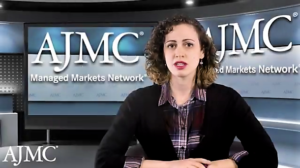
Laura Joszt, assistant managing editor at The American Journal of Managed Care. Welcome to This Week in Managed Care from the Managed Markets News Network
- Pharmacy Week in Review: February 24, 2017 (pharmacytimes.com)
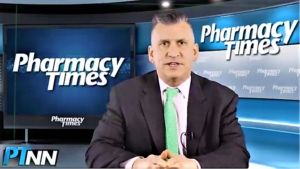
Brian Haug, President of Pharmacy and Managed Markets, Pharmacy Times (PTNN) This weekly video program highlights the latest in pharmacy news, product news, and more.
- DNA computer brings ‘intelligent drugs’ a step closer (worldpharmanews.com)

Researchers at Eindhoven University of Technology present a new method that should enable controlled drug delivery into the bloodstream using DNA computers. In the journal Nature Communications the team...describes how it has developed the first DNA computer capable of detecting several antibodies in the blood and performing subsequent calculations based on this input. This is an important step towards the development of smart, 'intelligent' drugs that may allow better control of the medication for rheumatism and Crohn's disease, for example, with fewer side-effects and at lower cost...An analogy for the method presented…is a security system that opens the door depending on the person standing in front of it. If the camera recognizes the person, the door unlocks, but if the person is unknown, the door remains locked. "Research into diagnostic tests tends to focus on the 'recognition', but what is special about this system is that it can think and that it can be connected to actuation such as drug delivery...