
- 7 takeover targets to look out for in 2017 (biopharmadive.com)

A promising drug candidate, an innovative technology, a great business model or just a bunch of venture funding. Any one of those factors can prime a biopharma for success, yet is also likely to attract attention from industry peers and competitors...While 2016 wasn't a groundbreaking year for M&A, industry followers believe next year might see an uptick amid a new tax plan under president-elect Trump, continued loss of patent protections for top-tier branded drugs and strong growth projections for promising fields such as gene editing and immuno-oncology...With that in mind, here's a crop of takeover targets likely to make their way into the spotlight in 2017…
- Spark
- Tesaro
- Axovant
- Biogen
- BioMarin
- Vanda
- Actelion
- NHS England announces extra £112m for expansion of GP-based pharmacist scheme (pharmaceutical-journal.com)
The roll out of the pilot will see a further 1,500 pharmacists working in general practice by 2020-2021...NHS (National Health Service) England has announced an additional £112m ($137m) investment to roll out a pilot scheme embedding clinical pharmacists in GP surgeries...a commitment set out in the ‘General practice forward view’...The expansion...follows a “successful” pilot that involved 490 clinical pharmacists working in approximately 650 general practices across 90 sites...The goal of the scheme is to ease pressure on the NHS by increasing capacity in general practice, which will free up GP time as well as ensure safer prescribing by offering specialist advice and support for patients with chronic diseases…The success of the initial pilots has shown the benefits of having more clinical pharmacists in general practice, reducing GP workload and helping ensure patients are seen by the right professional in a more convenient and timely way...the scheme was welcomed by the Royal Pharmaceutical Society, which says it is a “significant step” towards its shared vision with the RCGP ( Royal College of General Practitioners) that every GP practice should have access to the expertise of a pharmacist...
- Healthcare fraud: A look back at a pivotal year (fiercehealthcare.com)

From a healthcare fraud enforcement perspective, 2016 was nothing short of a dynamic year...It was punctuated by the arrival of several important trends within the addiction treatment, post-acute care and compound pharmaceutical industries…It also featured a Supreme Court ruling on a False Claims Act legal theory, and a changing enforcement landscape in the aftermath of the Yates memo...As 2016 comes to a close, let's look back at some of the fraud trends that emerged—or in some cases intensified—over the last 12 months.
- Impact of the Yates memo
- Government targets post-acute care providers
- Big healthcare fraud busts continue
- Compound pharmacies under fire
- OxyContin marketing concerns revisited
- Addiction treatment gains ground, raises concerns
- Data continues to influence fraud detection
- EpiPen price hikes lead to overpayment settlement
- Medicare Advantage overbilling resurgence
- Supreme Court rules on implied certification
- NICE and FDA join forces to improve medtech access (pharmaphorum.com)
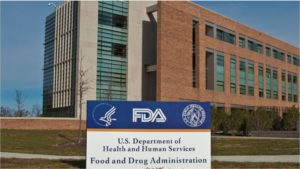
The UK’s cost effectiveness body is to work with the US regulator to speed up patient access to medtech innovations...NICE’s Scientific Advice programme team and the FDA’s Payer Communication Taskforce are now looking at how best to help developers of medical devices, diagnostics and other medtech technologies gather the best evidence to demonstrate their product’s effectiveness...In their efforts to get a product to market, companies can get caught out...To win regulatory approval in the US, companies give the FDA data on the safety and efficacy of their devices. But although they often do enough to win FDA approval, they need additional evidence to prove to the organisations who would actually pay for those devices that they are cost-effective and clinically-effective...NICE and the FDA’s collaboration is the latest effort to help clarify the pathway that new medtech innovations have to navigate to reach patients
- FDA Warns Wockhardt for Destroying CGMP Documents, Other Violations (raps.org)

...Indian drug manufacturer Wockhardt is in trouble again with the US Food and Drug Administration, this time for destroying current good manufacturing practice documents, among a list of other major violations...FDA sent a warning letter to the company following an eight-day inspection...of its Ankleshwar...manufacturing site that uncovered “torn and shredded equipment maintenance documents, raw material labels, and change control work orders” in the site’s scrap yard awaiting incineration...The site was banned from shipping products to the US in August...This is the latest in a series of failures by Wockhardt to meet the standards of not just FDA but other regulators...
- Similar branding partly blamed for ‘devastating’ dispensing error (pharmaceutical-journal.com)
Community pharmacist sentenced for dispensing the wrong medicine spoke of ‘cramped working’ conditions and problem of similar packaging...An “overworked” community pharmacist, who pleaded guilty to dispensing the wrong drug to a patient who later died, has been sentenced to four months imprisonment suspended for two years...Martin White of Belfast Road, Muckamore in Northern Ireland, mistakenly dispensed propranolol instead of prednisolone, having told investigators that the two packages were “side by side on the shelf and have similar branding”...White admitted at an earlier hearing...to an offence under section 64 of the Medicines Act 1968, that he had “supplied a medicinal product in pursuance of a prescription given by a practitioner, which was not of the nature or quality specified”, to the prejudice of Ethna Walsh...(her) death has had a devastating effect on her family and said the damage and injury caused by the pharmacist could not be higher...The pharmacist’s degree of culpability was the result of “poor professional performance, but not professional misconduct”...adding that there was “no evidence of intentional negligence”...given the cumulated effect of White’s guilty plea, previous good character, loss of reputation and career and permanent financial loss, (Judge Gordon Kerr) said he did not feel an immediate custodial sentence was necessary...
- E.U. Agency in Limbo as Hidden Costs of ‘Brexit’ Continue to Mount (nytimes.com)

When it switched offices in London not long ago, the European Medicines Agency signed a 25-year lease on a shiny new building in the east of the city...Just two years later, the organization is preparing to relocate again, but this time its likely move has sent tremors through Britain’s pharmaceutical industry and raised fears over public safety...the European Medicines Agency...will almost certainly have to leave Britain, just one of the many unanticipated consequences of the vote that is forcing the country to unscramble 40 years of European integration...cities...are scrambling to lure its team of experts, who license drugs and monitor their use for safety...Most worrisome is an internal assessment suggesting that relocating the agency might mean losing up to half its personnel...With a full workload of applications in the pipeline, the organization is already close to the breaking point…If it loses more than 15 percent of its experts….the agency will probably not be able to maintain current schedules for licensing new drugs and monitoring existing ones...
- Life-extending capacity of new cancer drugs varies widely (reuters.com)

Drugs recently approved around the world to fight cancer increased patients' overall survival, but benefits vary depending on the drug, a new study shows...Researchers looked at the 62 cancer drugs approved in the U.S. and Europe between 2003 and 2013 and found they extended survival by an average of about 3.5 months...a third of the drugs lacked evidence to suggest they increased survival when compared to alternative treatments...results point to the notion that new cancer treatments may not always provide patients with greater clinical benefits, or lower risks, over existing treatments...The risk-benefit ratio of new drugs is especially important if people are concerned, for example, about whether the cost of a drug would make it difficult for a person to complete the treatment regimen...
- Top 10 Focus stories from 2016 (pharmacist.com)In order, these are the stories that interested readers the most in 2016
- FDA announces major change in pharmacy inspections - In July, FDA issued a notice announcing that they are changing procedures for inspections of human drug compounders. FDA only gave about a month from the announcement—August 1—for the notice to be effective. APhA government affairs identified troubling language in the notice as follows: FDA will still undertake inspections of 503A facilities, rather than complying with current statute; FDA still intends to include CGMPs on Form FDA-483s, potentially for 503A pharmacies.
- New sleep recommendations for most age groups - Good sleep is a must. In March, the National Sleep Foundation revised all recommended sleep ranges, which are age-specific and based on a systematic review of the current scientific literature. Overall, wider appropriate sleep ranges for most age groups are recommended by NSF.
- CDC releases updated vaccine recommendations for 2016–17 influenza season - Updated vaccine recommendations for the 2016–17 influenza season included the continuation to have everyone aged 6 months and older without any contraindications receive a routine annual influenza vaccine. In addition, only injectable inactivated influenza vaccine and recombinant influenza vaccine should be used. In the recommendations, two new influenza vaccines were approved since last season and finally, a few of the recommendations for administering influenza vaccine in those with a history of egg allergy have been modified.
- Zika virus disease: Frequently asked questions for pharmacists and their patients - Zika virus disease was on everyone’s minds this year, including pharmacists. Here were some frequently asked questions from February as the disease was beginning to emerge.
- Newer antihistamines can cause adverse reactions in children - In a study published in the Archives of Disease in Childhood, Dutch researchers found that adverse reactions from second-generation antihistamines can occur in children—a finding that gave many pause since these second-generation antihistamines were developed in an attempt to decrease adverse effects from first-generation antihistamines.
- FDA: Antibacterial soaps should be avoided - In October, FDA put out a striking announcement to ban 19 active ingredients in antibacterial soaps and body washes, including triclosan and triclocarban—the two most commonly used ingredients. The reason: These active ingredients have little science to back up their effectiveness and could actually do more harm than good.
- New federal overtime rules likely to have implications for pharmacy residents - The Department of Labor issued a final rule that took effect on December 1. It stated that employers must increase minimum salary for certain employees to keep them exempt from wage regulations, such as those related to overtime pay. The final rule does not exempt pharmacy residents, meaning they could see a bigger paycheck going forward.
- FDA approves brand-name change for vortioxetine - FDA decided to change the brand name for vortioxetine. Starting in June, Brintillex switched its labeling to Trintellix in order to avoid errors associated with the similar-sounding name of the medication Brilinta.
- CDC issues health advisory on beginning of severe flu season - Back in February when flu season was just beginning to hit, CDC issued a health advisory stating that severe influenza illnesses were reported. They also took the opportunity to encourage clinicians to continue with efforts to vaccinate patients against the influenza virus.
- With Obama’s signature, expansive opioid policies become law - President Barack Obama signed legislation in July to provide a much-needed framework for opioid abuse prevention and treatment. The legislation, called the Comprehensive Addiction and Recovery Act of 2016, also recognized pharmacists as key players in the fight against the opioid epidemic.
- Collins, McCaskill Release Committee Report of Bipartisan Drug Pricing Investigation (aging.senate.gov)
 Senator Susan Collins...Chairman... of the Senate Aging Committee, released a report on drug pricing...titled, “Sudden Price Spikes in Off-Patent Prescription Drugs: The Monopoly Business Model that Harms Patients, Taxpayers, and the U.S. Health Care System.” The comprehensive report details the findings stemming from the Committee’s bipartisan investigation into abrupt and dramatic price increases for prescription drugs whose patents expired long ago. Through close examination of the monopoly business model used by four pharmaceutical companies to exploit market failures, the report examines how companies acquired decades-old, off-patent, and previously affordable drugs and then raised the prices suddenly and astronomically at the expense of patients. The report provides case studies of the four companies; explores the influence of investors; assesses the impacts of price hikes on patients, payers, providers, hospitals, and the government; and discusses potential policy responses.
- Enact the Increasing Competition in Pharmaceuticals Act...to incentivize competition to address regulatory uncertainty, small market size, and other factors that serve as limitations to generic entry;
- Encourage generic competition by ensuring the right to obtain samples and simplifying Risk Evaluation and Mitigation Strategies;
- Consider allowing highly targeted, temporary prescription drug importation to provide prompt price relief for major price increases in off-patent drugs;
- Take steps to prevent the misuse of patient assistance programs and copay coupons;
- Reinvigorate the Federal Trade Commission to take greater enforcement action on drug company mergers, operations, and drug market dynamics; and
- Improve transparency in the health care system.