
- Some drug makers are better corporate citizens than others (statnews.com)

...a new nonprofit (JUST Capital) created by...hedge fund manager has ranked nearly 1,000 publicly traded companies to determine the extent to which they pursue "just" policies and practices. And leading the pack among drug makers is Amgen...The goal is to maintain an information clearinghouse that can be used to spur companies to make improvements while, at the same time, giving the public tools to make more informed decisions about purchasing, investing, and employment...40,000 Americans to gauge their views on "just" behavior by corporations...the team identified...nine categories...fair pay; the quality of employment benefits; workplace treatment; product attributes; customer satisfaction; leadership and ethics; supply chain standards; and environmental performance...Of the nearly two dozen publicly traded US drug makers, the biggest names largely dominate the rankings, although some smaller companies also ranked highly. After Amgen, the top 10 is rounded out by Biogen, Johnson & Johnson, Agilent Technologies, Eli Lilly, Bristol-Myers Squibb, Quintiles, United Therapeutics, BioMarin Pharmaceutical, and AbbVie...the rankings did incorporate fines and violations racked up by drug makers. And there have been many of those in recent years in which companies reached settlements for illegal marketing, paying kickbacks to doctors, and offering bribes to officials and health care providers in foreign countries
- Pharmacy Week in Review: December 1, 2016 (pharmacytimes.com)
Ed Cohen, Executive Vice President Pharmacy Advocacy, Pharmacy Times, This weekly video program highlights the latest in pharmacy news, product news, and more.
- Patients give Hy-Vee’s Amber Pharmacy high marks (chaindrugreview.com)
Hy-Vee Inc. subsidiary Amber Pharmacy ranked the highest out of all U.S. specialty pharmacies in patient satisfaction with pharmacy staff in a survey conducted by Zitter Health Insights...Fielding responses from more than 3,000 patients across 38 U.S. specialty pharmacies, the...survey assessed a range of aspects of patient satisfaction. Amber said that its pharmacists, nurses, pharmacy technicians and billing department scored 100%, and its customer service representatives scored 95%...A key component of the survey was the Net Promoter Score, an index of 1 to 100 that gauges patients’ willingness to recommend their pharmacy to others. Amber said its NPS across all categories was 74, the second-highest score of all pharmacies assessed...The...survey also assessed patient satisfaction in therapeutic categories...Amber led the transplant category with an NPS of 83 and was among the top two pharmacies in the oncology and rheumatoid arthritis categories.
- Teva inks trailblazing cannabis pact with Israel’s Syqe Medical (fiercepharma.com)

Teva has struck a new marketing agreement, and it’s one that’ll help the Israeli drugmaker blaze a new trail in the drug industry...The pharma has inked a pact that will make it the only distributor in Israel of local company Syqe Medical’s cannabis inhaler, the companies...without disclosing any financial data on the agreement. Teva will also help Syqe set up a support and instruction team of nurses for patients and healthcare providers...Israel boasted about 26,000 medical cannabis consumption licenses—a figure that’s expected to double by 2018...And with licensed patients spending an average $100 per month on cannabis, the revenue potential is there for Teva if the company can get the inhaler selling.
- Mylan CEO accepts full responsibility for EpiPen price hikes, but offers little explanation (statnews.com)
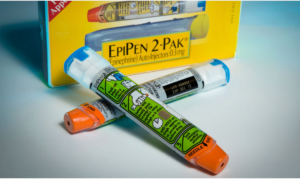
...Mylan Pharmaceuticals CEO Heather Bresch accepted "full responsibility"...for the price hikes that caused national outrage..."If EpiPen had to be the catalyst to show what hardworking families are facing, it will have been worth it," she said...referring to the upfront costs that many people encounter with high-deductible health plans. Mylan increased the price of an EpiPen two-pack nearly 550 percent to $608 over the past decade...Bresch reiterated remarks she made...at a congressional hearing...citing a lack of transparency in the pharmaceutical pricing system for the controversy surrounding the product. She justified the price increases by pointing to what she insisted were "investments" made to improve the device and patient access...the company has made plans to sell its own authorized generic version of EpiPen at roughly half the price. And...agreed to a $465 million settlement with the Department of Justice for shortchanging Medicaid over rebates...Meanwhile, the Federal Trade Commission was asked by various lawmakers to investigate whether Mylan violated antitrust laws because the contract for one option in the discounted school program, at one time, contained a clause forbidding school districts to buy rival products...
- What the Surgeon General Gets Wrong About Addiction (realclearhealth.com)

The Surgeon General's new report, "Facing Addiction in America," is the first time the office has explicitly addressed addiction to illicit drugs...the report is timely...(it) provides a solid summary of established findings, the Surgeon General perpetuates key misconceptions that have come to dominate the field of addiction.
- The first dubious claim is that addiction is a "brain disease."...the point of medicalizing addiction is well-intentioned: obtaining more funding for addiction research and treatment, combatting the "shame and stigma"...and softening criminal and other punitive approaches...over-medicalizing addiction shortchanges the crucial role of motivation in recovery. At the same time, it hypes the promise of medication...
- ...another logical lapse in the report, the Surgeon General presents a choice: "It’s time to change how we view addiction,"..."Not as a moral failing but as a chronic illness that must be treated with skill, urgency and compassion."...This may sound benign, and we of course support treating addiction with skill, urgency, and compassion. At the same time, the Surgeon General’s proposed choice is a false one.
- ...the Surgeon General subscribes to what we call the "shame narrative," the idea that people with drug problems are too ashamed to ask for help...has made people with substance use disorders less likely to come forward and seek help."...this sounds reassuring…Why insulate individuals from the adverse consequences of their behavior when those very consequences often motivate them to seek help?...Stigmatization is a normal dimension of human interaction; it can exert a civilizing effect on communities, and it is often the basis of the anti-drug messages we give to children...
- House Just Passed the Biggest Health Reform Bill Since Obamacare (fortune.com)

The House of Representatives on Wednesday night overwhelmingly passed wide-ranging legislation meant to overhaul the drug approval process, boost biomedical research, and many other significant health-related policies. The so-called 21st Century Cures Act was approved on a 392-26 vote and will head to the Senate for consideration next week...The bill aims to speed up the approval for drugs and medical devices through a variety of tweaks to the Food and Drug Administration. But it also encompasses a host of other big initiatives, including more than $5 billion in funding for the National Institutes of Health and money to help the FDA; $1 billion for tackling the opioid epidemic; and provisions that are meant to help pair Americans who suffer from serious mental illnesses with available psychiatric beds...
- This Week in Managed Care: December 2, 2016 (ajmc.com)
Sara Belanger with The American Journal of Managed Care. Welcome to This Week in Managed Care from the Managed Markets News Network
- Implementing cloud marketing technology (pharmaphorum.com)

Sanofi Pasteur MSD’s journey to digital has helped sales rep engagement, as well as compliant content creation and distribution...Nearly three years ago, Sanofi Pasteur MSD1 was preparing to launch three new products and decided to take the opportunity to incorporate new, digital channels for better customer engagement… we proposed to reframe our commercial strategy with new technology…The company chose to standardise globally on a cloud-based multichannel CRM solution. Armed with new digital capabilities fully integrated across email, face-to-face, and web, the company’s sales representatives immediately began sending compliant emails directly from the system to customers and personally engaging with healthcare professionals via self-directed, interactive web presentations...The company tripled the expected adoption rates six months ahead of forecasts...To improve the speed of content development and distribution, Sanofi Pasteur MSD took a two-pronged approach...First, it sought to consolidate its agency partners globally, to harmonise content development and increase content reuse across the company...Second, the company looked to streamline content production by adopting a cloud-based commercial content management solution with a critical digital asset management component...The results were transformational, with content production centralised, but with local regions still able to adapt content to meet specific regulatory or cultural needs. And, as it was a cloud-based solution, global agencies now had easy access to promotional assets.
- Drug regulation: 27 medicines sold by top firms ‘fail’ quality tests in seven states (indianexpress.com)

In a major crackdown...the drug regulators of seven states have alleged that 27 medicines — sold by 18 major drug companies in India including Abbott India, GSK India, Sun Pharma, Cipla and Glenmark Pharma — are of "substandard" quality, citing grounds such as false labelling, wrong quantity of ingredients, discolouration, moisture formation, failing dissolution test and failing disintegration test...These include key drug brands of eight top-tier companies, which are the leaders in their respective molecule categories with a market share ranging from 47 per cent to 92 per cent. Of the 18 companies, only two said they had stopped sale of the affected drug batches and just one said the affected batch had been recalled from the market...Only eight companies responded to specific queries sent by The Indian Express on the findings of the regulators. Among the reasons they cited were: drug batches were picked up for testing from an "unofficial distributor"; no "labelling requirement" as drug batch was meant for the World Health Organisation; a batch of "counterfeit" drugs were picked up for testing; test conducted on the drug was "not necessary"; testing methodology "incorrect"; the company was doing contract manufacturing for someone else; "inappropriate storage" and "handling" in the marketplace (retailer).