
- AstraZeneca to pay $5.52 million to resolve US SEC foreign bribery case (cnbc.com)

U.S. regulators said...that AstraZeneca will pay $5.52 million to resolve a foreign bribery probe into improper payments by its sales and marketing staff to state-employed healthcare officials in China and Russia...The U.S. Securities and Exchange Commission detailed the settlement with the London-based drug company in an order instituting an administrative proceeding arising out of violations of provisions in the Foreign Corrupt Practices Act...AstraZeneca, which cooperated with the probe, neither admitted nor denied wrongdoing…SEC said that AstraZeneca through at least 2010 failed to devise and maintain a system of internal accounting controls relating to its subsidiaries' interactions with Chinese and Russian government officials...Sales and marketing staff in those countries...provided gifts, conference support, travel, cash and other benefits to the state-employed healthcare providers to buy or prescribe the company's products...
- Walgreens to partner with pharmacy benefit manager Prime Therapeutics (reuters.com)

Walgreens Boots Alliance Inc said it would partner with pharmacy benefit manager Prime Therapeutics to reduce drug procurement costs...The companies will combine their central specialty pharmacy and mail order service businesses and introduce a new retail pharmacy network that will give Prime Therapeutics' customers access to Walgreens' pharmacy network...Walgreens...already has partnerships with PBMs such as Express Scripts Holding Co...and UnitedHealth Group Inc's OptumRx...Walgreens is also in talks to acquire Rite Aid Corp, which will give it ownership of Rite Aid's PBM, EnvisionRx...
- The co-pay card debate simmers, as payers push back (mmm-online.com)

Any program that puts more greenbacks in patients' pockets in this post-recession economy has to be viewed as a good one, right? Alas, it depends on the person you ask...Devised to shoulder some of the cost burden of prescription drugs, manufacturer co-pay card programs have been tied to improved adherence rates and reduced barriers to the discounted medications. At the same time, payers — insurers and PBMs alike — are crying foul...While some industry veterans sing the praises of co-pay assistance programs, others are eager for a more evenhanded and efficient solution that will achieve the same degree of cost savings. In fact, the co-pay card appears to be stirring the controversy pot more than ever. Indeed, the question seems to have become: What will make it boil over?
- Parents remain leery of schools that require HPV vaccination (statnews.com)

...the HPV vaccine is still a hard sell...A new study (funded by Merck, which sells the Gardasil HPV vaccine) finds that only 21 percent of parents believe that a law requiring vaccination for attending school is a good idea, and 54 percent disagreed with the notion of such a requirement for school entry altogether. What might make them change their minds? Well, 57 percent reported that they could live with the requirement, but only if there is an opt-out provision... the vaccines have been plagued by numerous reports of side effects. The issue prompted European regulators to investigate although they did not find evidence the vaccines cause chronic pain or dizziness. Earlier this month, meanwhile, 63 young women in Japan filed a class-action lawsuit seeking $9 million in compensation from the central government and the manufacturers over side effects, pain in various parts of their bodies, difficulty walking, and impaired eyesight…
- The public’s view of pharma just keeps getting worse (statnews.com)
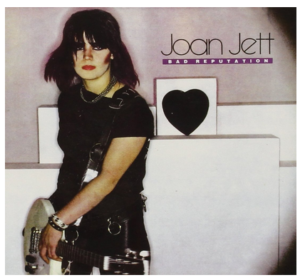
Bad Reputation
The pharmaceutical industry theme song may be Joan Jett’s "Bad Reputation."...Of 25 different business sectors, only the federal government is held in lower esteem by most Americans, according to a recent Gallup Poll. What’s more, the pharmaceutical industry last year registered its worst showing in the 16 years that Gallup has been tracking how different sectors are perceived...The findings are not all that surprising. There may be a steady stream of stories about new medicines that are producing unprecedented patient outcomes in tackling such hard-to-treat diseases as cancer and hepatitis C. But the ongoing controversy over the cost of prescription drugs may be overshadowing many of the advances made by the pharmaceutical industry...
- California court hangs out a welcome sign: Drug makers can be sued here (statnews.com)

In a closely watched decision, the California Supreme Court ruled 4-3...that hundreds of out-of-state residents had the right to sue Bristol-Myers Squibb in the state court system over side effects caused by one of its drugs...At issue was the question of jurisdiction, which can be used to determine where a lawsuit may be filed. This particular ruling clarified the extent to which the drug maker needed to have a presence in California in order to be sued by people from Texas, Ohio, and 33 other states, who claim they were harmed by the Plavix blood thinner...Although Bristol-Myers may not be headquartered in California, the court determined the company conducts enough business — sales, marketing, distribution, and R&D — for state courts to serve as a venue for lawsuits filed by out-of-state residents...the ruling applies only to this particular case, the court may have hung a welcome sign that invites still more people from around the country to file lawsuits in California against drug makers...That’s because California state courts are seen as more hospitable to people who bring lawsuits against drug makers...
- Pharmacy Benefit Managers Shouldn’t Fret Initial Fallout from Mylan Fiasco (thestreet.com)Mylan, Feeling Heat on EpiPen Price, Will Offer Cheaper Generic (msn.com)How Payers Contributed to the EpiPen Pricing Controversy (drugchannels.net)Mylan may have violated antitrust law in its EpiPen sales to schools, legal experts say (statnews.com)How Parents Harnessed the Power of Social Media to Challenge EpiPen Prices (well.blogs.nytimes.com)
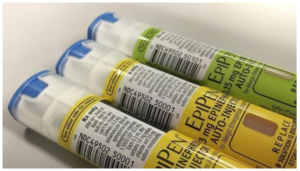
Mylan pushed the blame for high EpiPen prices onto PBMs...causing share prices to dip. Analysts say investors were mislead...In hopes of quelling patient and politician's outrage over the prices of EpiPen, Mylan pushed the blame for the high costs onto a few entities, including pharmacy benefit managers...CVS Corp. and Express Scripts...Both...saw significant drops in share price...after Mylan released an infographic explaining that PBMs, insurance companies, wholesalers and retailers all boosted the prices of EpiPen after the drug left Mylan's hands...The time to buy into PBMs could be upon us, as these are actually strong businesses that saw an unnecessary pullback…
- Purdue Pharma rejects request from New Hampshire attorney general for information on suspected diversion of OxyContin (latimes.com)

The top law enforcement official in New Hampshire...accused the manufacturer of OxyContin...of stonewalling demands for information the company collects about suspected criminal trafficking of its painkiller..."They are just refusing to turn over documents," state Atty. Gen. Joseph Foster said of drugmaker Purdue Pharma..."On one hand, they tell us they have nothing to hide and they are doing everything appropriately, but then why are they fighting so hard not to turn over this information?"…In refusing to comply with the...subpoena, Purdue cited longstanding objections to the state’s use of a private law firm in an ongoing investigation of the company and other opioid makers…company lawyers have said Purdue is willing to provide records to the attorney general and his lawyers, but on the condition they not share them with the private attorneys, who they have suggested have a financial incentive to wrest multimillion-dollar judgments from the company in civil suits.
- FDA Starts Showing Its Plans for Oversight of Pharmacy Compounding (ashp.org)

This spring and summer, FDA revealed in several guidance documents what the agency thinks pharmacy compounding should look like now that the relevant provisions in federal law are firmly in place and the agency has a budget for oversight...Some of FDA's ideas, if incorporated into the final versions of the guidances, could be challenging for hospitals and health systems to implement…as hospitals continue to affiliate or form multihospital systems...a plan to centralize compounding activities may need to be reconsidered.
- Guidances, not regulations
- Limits on anticipatory compounding.
- Geographic limit on distribution.
- Address-dependent facility definition.
- No copycats of commercially available products.
- Fentanyl and Other Synthetic Opioids Sold as Counterfeits in Deadly New Trend (realclearhealth.com)
In March and April, 56 people in the Sacramento area were hospitalized after taking Norco brand hydrocodone pills. Fifteen died...But, as we discovered, these pills were not pharmaceutical hydrocodone at all. They were counterfeits containing fentanyl that were purchased on the street. Fentanyl is an opioid far more powerful than hydrocodone...the distribution of illicitly manufactured fentanyl has risen to unprecedented levels...These...substances are generally formulated to look like others drugs – heroin or oxycodone tablets…These entirely synthetic, illicitly made "designer drugs" are designed to work on the same receptors in the body as drugs like marijuana, methamphetamine or heroin. The adulteration of counterfeit pharmaceuticals and street drugs with synthetic opioids is arguably the most worrying new trend...