
- Marijuana Petition Denied as U.S. Restrictions on Use Remain (bloomberg.com)

Denying a petition to loosen marijuana restrictions, U.S. officials said regulations on the drug’s use will remain in place, although more of it may be available for research into potential medical therapies...The Drug Enforcement Administration will maintain marijuana’s status as a schedule 1 drug, the most restrictive of five agency classifications, which means it’s considered highly addictive and without medical benefit. However, the agency will permit new suppliers to boost the quantity of marijuana available for study. Currently, researchers can only study marijuana overseen by the National Institute on Drug Abuse, which contracts with the University of Mississippi to grow supplies..."Not everyone agrees marijuana should be legal, but few will deny that it is less harmful than alcohol and many prescription drugs," Mason Tvert, a spokesman for the Marijuana Policy Project, said in a statement. "Removing barriers to research is a step forward, but the decision does not go nearly far enough. Marijuana should be completely removed from the CSA drug schedules and regulated similarly to alcohol."
- Big Pharma pushes to get farm animals off antibiotics and on vaccines (fiercepharma.com)

Eli Lilly recently opened a 48,000-square-foot research facility near Indianapolis that’s operated by its animal health division, Elanco, and that has one overriding goal: to develop vaccines that food producers can use in place of the antibiotics that they’re under increasing pressure to eliminate. In January, mandatory rules instituted by the FDA will prohibit companies from selling antibiotics for non-medical uses like promoting growth, and they will require farmers who want to use antibiotics in their animals to get the drugs from veterinarians...Elanco predicts the new rules will shift the food industry’s mindset from treating diseases to preventing it--and the company wants to be on the forefront of that transition, offering a range of new vaccines for farm animals...The new antibiotics rules were developed in response to growing global concerns about the rise of drug-resistant infections in people...the FDA and other regulatory agencies are stepping up their surveillance of antibiotics use on farms. That could cause the market for vaccines to explode, experts say...
- Analysis-Future of Drug Pricing: Paying for Benefits Not Per Pill (nytimes.com)

Global pressure on health spending is forcing the $1 trillion-a-year pharmaceutical industry to look for new ways to price its products: charging based on how much they improve patients' health, rather than how many pills or vials are sold...In the United States, both parties are promising fresh action on drug prices whoever wins the White House. In Europe, economies are stalled, squeezing state health budgets. And in China and other Asian markets, governments are getting tougher with suppliers...Pricing drugs based on clinical outcomes is one way to ensure that limited funds bring the most benefits to patients now and pay for the most promising medical advances in future. Some experiments in pricing have already been made...shifting the overall industry to a new model requires improvements in data collection and a change in thinking...The aim is a flexible pricing system that rebates healthcare providers when a drug doesn’t work as planned and charges more when it works well...
- The Justice Department Fights Health Insurers Trying To Survive The Obamacare Wasteland (forbes.com)

Most health policy experts knew, and many warned, that the Affordable Care Act would lead to massive consolidation in the health care industry, including hospitals, physicians’ practices, and especially health insurers. Now the Justice Department is pushing back by opposing the mergers of four large health insurers—Aetna with Humana and Anthem with Cigna —as they try to survive the Obamacare wasteland...The Obama administration defended its opposition by claiming the mergers would reduce competition. Attorney General Loretta Lynch explained, "If allowed to proceed, these mergers would fundamentally reshape the health insurance industry." That’s rich, since nothing has reshaped the health insurance industry more than Obamacare—and by design...Obama officials dismiss the health insurer losses, claiming that many of the insurers are still profitable. But that’s because health insurers often have several lines of business, some of which may be profitable even as they lose hundreds of millions of dollars selling in Obamacare exchanges. No responsible board of directors will let such losses continue indefinitely...Policyholders will likely be receiving the notice that their premiums are rising or policy is being canceled in September or October—just before the election...
- Behind rosy predictions, life sciences execs reveal unsettling concerns (statnews.com)

If you ask a life sciences chief executive to gaze into a crystal ball, he or she will tell you there is good reason to be optimistic about the future. Or so a new survey would have us believe....All 38 executives who participated in the survey reported that they are confident about what lies ahead; 79 percent are convinced their products will remain relevant for the next few years; and 97 percent are certain that they are staying on top of coming trends...What might explain such a bullish view of the world? Well, chief executives...by their very nature, tend to be optimistic people and the industry is coming to terms with its challenges...This may be a case, however, of seeing the world through the proverbial rose-colored glasses...Why? At the same time these chief executives are so upbeat, a whopping 89 percent also confessed they are concerned they will not be able to increase market share. And 74 percent expect top-line growth of between just 2 percent and 4 percent over the next three years...We wonder if their investors know how they feel about such prospects.
- Prescription drug abuse epidemic extends beyond the United States (rti.org)

There is a high rate of prescription pain reliever abuse in Europe, largely accounted by opioids, according to the first comparative study of prescription drug abuse in the European Union, which was conducted by researchers at RTI International....The study investigated nonmedical prescription drug use in five European countries – Denmark, Germany, Spain, Sweden and the United Kingdom...For certain classes of medications, like opioids, we found a significant rate of prescription pain reliever abuse in the EU...While the lifetime rates were not as high as in the U.S. – 20 percent for those aged 12 years and over, compared to between 7 percent and 13 percent in the EU – the past-year rates were only slightly lower. This suggests that the EU may be catching up to the United States for some substances...Previously, it was thought that the prescription drug epidemic was limited to the United States...but this study shows that the epidemic extends well beyond the U.S...Identification of the scope and prevalence of nonmedical prescription drug use in the EU is an important first step in building a worldwide system that can be used to monitor trends, track risk and protective factors and to develop targeted interventions aimed at reducing the risk of nonmedical prescription drug use...
- Six Retail Chains Now Dominate the Still-Booming 340B Contract Pharmacy Business (drugchannels.net)
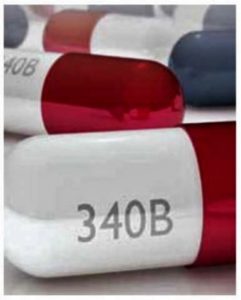
The pharmacy industry’s role in the 340B Drug Pricing Program continues to expand...latest analysis finds that nearly 18,000 pharmacy locations contract with 340B-eligible covered entities. That accounts for more than one in four U.S. retail, mail, and specialty pharmacy locations...Walgreens remains the biggest player, with about the same number of locations as those of Walmart, CVS, Rite Aid, Kroger, and Albertsons combined...Amidst the contract pharmacy boom...what’s really going on. How many prescriptions do contract pharmacies provide at discounted prices to uninsured, underinsured, and low-income patients? Who is really benefiting from the contract pharmacy business?…a 340B contract pharmacy doesn’t earn traditional spreads and dispensing fees. They instead profit from fees paid by the 340B entity. Given providers’ substantial profit opportunities, a 340B entity can afford fees that often far exceed a pharmacy’s typical profits from dispensing a third-party-paid prescription...There are many other profit opportunities...The extensive use of 340B contract pharmacies allows hospitals and other providers to benefit from 340B drug discounts earned from commercially paid prescriptions dispensed by contract pharmacies...Do needy patients benefit? No one knows. Covered entities are not specifically obligated to share any 340B savings with financially needy or uninsured patents, nor are they required to disclose how they use profits from the 340B program...
- Exploiting body’s fat absorption pathways may improve drug efficacy (upi.com)Glyceride-Mimetic Prodrugs Incorporating Self-Immolative Spacers Promote Lymphatic Transport, Avoid First-Pass Metabolism, and Enhance Oral Bioavailability (abstract) (onlinelibrary.wiley.com)
Many medications are broken down before making it to the bloodstream, preventing their arrival at the site of infection, but researchers think they've found a way to improve drug delivery by bypassing certain bodily processes...Researchers...have created a method of delivering drugs using the lymphatic system in order to bypass the liver and create a route directly to the bloodstream, increasing the amount of a substance making it to target areas...The advantage of our system is that drugs are shielded from degradation in the liver but are ultimately released when they reach their site of action, ensuring that the drug given to the patient goes where it is supposed to...researchers created a technology to modify drugs so they mimic dietary lipids, which are absorbed into the lymph system -- unlike other nutrients...No matter how good the drug is, it needs to be absorbed [into the bloodstream] and to avoid this first pass metabolism in order to get to the general circulation where it acts...
- EPA pharmaceutical waste rule examined (chaindrugreview.com)

The Environmental Protection Agency recently proposed steps to streamline the process surrounding the disposal and handling of hazardous pharmaceutical waste for all health care facilities that dispense pharmaceuticals as set forth by the Resource Conservation and Recovery Act...While the intent of the proposed rule is fundamentally solid, it raises several red flags with serious implications for the pharmaceutical supply chain and the patients it serves that must be addressed before EPA finalizes the rule...many organizations indicated during the comment period...the rule potentially may lead to unintended and extreme consequences for pharmacies, such as increasing costs, limiting inventories, possible product shortages and the need for pharmacists to take on additional back-office services...What are the red flags?
First...Excluding wholesale distributors from the requirements...means that distributors will no longer be allowed to send pharmaceuticals to reverse distributors to determine whether they are eligible for a credit from the product's manufacturer. Second...EPA has introduced a new provision that all pharmaceuticals including unopened, unused and those that have not yet expired will now be considered waste when sent to a reverse distributor.
- Pharma brings the heat in July as TV ad spending soars (fiercepharma.com)

Pharma marketers must have missed the memo about the dog days of summer. TV spending by the top 10 pharma advertisers topped $140 million, making the total for July the highest since January, according to data from real-time TV ad tracker iSpot.tv...Disease awareness campaigns were prominent last month, with two marketers debuting in the top 10 group. Merck, which began a campaign to promote the importance of HPV vaccinations in June, landed at No. 7, spending $9.9 million split between that HPV ad and an ongoing campaign aimed at encouraging shingles vaccinations for older people. Merck markets Gardasil for HPV and Zostavax for shingles...July was also a big month for diabetes marketers on TV, with total spending of $64 million on TV ads for the month. That category was led by Pfizer’s Lyrica, which maintained the No. 2 spender spot for the third month in a row...Watch the ads...
- Humira (adalimumab) - "Teacher"
- Lyrica (pregabalin) - "Coach"
- Xeljanz XR (tofacitinib) - "Mother"
- Entresto (sacubitril/valsartan) - "Tomorrow"
- Toujeo (insulin glargine) - "Journal"
- Eliquis (apixaban) - "DVT and PE Blood Clots"
- Merck disease awareness ads - "HPV Vaccination"
- Victoza (liraglutide) - "Moment of Truth"
- Mylan disease awareness ads - "Allergic Reactions"
- Tresiba (insulin degludec) - "Ready"