
- Pharma’s reputation improved slightly, but still has a ways to go (statnews.com)

Despite blistering criticism over its pricing, the pharmaceutical industry managed to improve its reputation last year, albeit very slightly, according to a new survey released this week. Using a formula that relies on ranking several different attributes, the industry received a passing grade of 67.6, a modest two-point improvement..."These results show that the industry is not perceived as badly as many industry insiders think...perceptions are "very polarized," since one-third of those asked said drug makers have an excellent reputation, but another third view their reputation as weak or poor...Overall, consumers thought the companies were doing better when it comes to the quality of products and services, as well as financial performance. But an industry weak spot is being a good corporate citizen, which is another way of describing a company that behaves ethically and is transparent in its dealings...
- Pharmacy Week in Review: May 27, 2016 (pharmacytimes.com)
Mike Glaicar, Business Development: Pharmacy Times...(PTNN) This weekly video program provides our readers with an in-depth review of the latest news, product approvals, FDA rulings and more.
- Cash prizes for pharma are needed to fight superbugs (statnews.com)TACKLING DRUG-RESISTANT INFECTIONS GLOBALLY: FINAL REPORT AND (amr-review.org)
Drug-resistant superbugs account for an estimated 700,000 deaths worldwide today, but that number could rise to 10 million within the next few decades unless new antibiotics are developed...That’s according to a new report commissioned by the UK government, which is proposing a provocative solution to the problem: a 10-year, $40 billion global fund to provide incentives to develop new superbug-fighting drugs...Under the proposed scheme, any drug maker that comes up with a useful antibiotic could receive a reward of around $1 billion...Governments are expected to provide much of the funding. But the report...also calls for a tax on any drug maker that fails to invest in new antibiotic research — and companies are already balking at the proposal. Industry trade groups quickly denounced the "pay or play" provision as "punitive" and warned it would "undermine goodwill."
- Senators urge FDA to approve Sarepta drug for Duchenne (statnews.com)FDA delays decision on whether to approve Sarepta drug for Duchenne (statnews.com)

As a crucial deadline nears for a closely watched regulatory decision, two Republican senators are urging the Food and Drug Administration to approve a controversial drug to treat Duchenne muscular dystrophy...In a letter sent last Friday, the senators expressed "disappointment" that an FDA advisory panel last month voted not to recommend eteplirsen to combat the disease, which is a rare and fatal genetic disorder that causes muscles to waste away...The panel determined the drug was not effective...The FDA is scheduled to decide whether to approve the drug...by this coming Thursday...its decision is being closely watched as a litmus test for the agency, which is grappling with increasingly assertive patient groups that want the agency to take a more expansive view toward approving medicines for unmet medical needs...The advisory panel, which consisted of scientists and doctors who are not FDA employees, voted seven to three, with three abstentions, against recommending approval. But asked whether accelerated approval should be granted, the vote was much closer vote: seven said no and six said yes. The agency is not obligated to accept panel recommendations, but usually does so.
- Debate over Duchenne drug hits fever pitch as D-day approaches (fiercebiotech.com)

The deadline for a final marketing decision at the FDA on Sarepta’s Duchenne muscular dystrophy drug eteplirsen arrives on Thursday. And the lead up to D-day continues to see patient advocates and their supporters passionately squaring off against some prominent experts who believe that an approval based on data regulatory insiders have deemed woefully inadequate would create a dangerous precedent at the FDA...Quite a few analysts give Sarepta only a 15% to 20% chance of success in gaining an accelerated approval this week, and that figure would likely be much lower if not for the powerful lobbying campaign that has enlisted the support of some prominent newspapers and politicians...The FDA's job is to get drugs out on the market that are proven safe and effective...there simply were not enough data in place from the corporate sponsor to make that possible. At the same time, companies shouldn't be deluding patients and families into thinking that they have enough data to go to the FDA. They shouldn't approach the FDA unless they truly have the available data to get approved. Relying on patient testimonials and lobbying is not the path to drug approval...There’s only one thing that’s absolutely certain at this point: Whichever way the FDA turns, there will be a storm of protest.
- The Transpharmation of Pharmacy Business Down Under (pharmacypodcast.com)
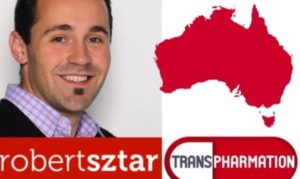
Robert Sztar is the founder of Pharmactive and has developed a unique 4-step method of ‘Transpharmation’ which covers:
- Education – I teach you the purpose of the currently available technologies.
- Discovery – I help pharmacy owners to discover processes in their business which can be aided or automated by technology
- Partnership – I introduce pharmacy owners to the right technology partners who will help them to plan, implement, train and maintain their products in their pharmacy.
- Optimisation – I help you review the solutions implemented to ensure that the original objectives have been delivered upon, and discussing areas of potential improvement. (podcast 24:29 min)
- Can a pricey implant to treat opioid addiction save lives — and money? (statnews.com)
The implant promises to treat opioid addiction without the hassle of a daily pill. And the company marketing the drug is so confident it’ll work, it’s planning to offer insurers a twist on a money-back guarantee: If the new device doesn’t save them money, they’ll get a refund...The implant, branded as Probuphine, relies on four tiny rods implanted under the skin to dispense the drug buprenorphine for six months at a time. The Food and Drug Administration is expected to decide on Friday whether to approve it...Braeburn Pharmaceuticals...has commercial rights to the implant...plans to price the implant "competitively" with other injectable drugs for neuropsychological conditions…"We are going to put our money where our mouth is," said Braeburn CEO Behshad Sheldon. "We believe that when you guarantee compliance with a medicine, it is going to save money in the long run."...The FDA rejected the implant the first time it came before the agency in 2013, requesting more data demonstrating its efficacy.
- This Week in Managed Care: May 28, 2016 (ajmc.com)

Brian Haug, president of The American Journal of Managed Care. Welcome to This Week in Managed Care, from the Managed Markets News Network.
- U.S. panel backs approval of Sanofi combination diabetes drug (reuters.com)

One day after recommending approval of a new diabetes drug made by Novo Nordisk A/S, a U.S. advisory panel...recommended approval of a similar product made by Sanofi SA…combination drug, iGlarLixi, for patients with type 2 diabetes...IGlarLixi combines Sanofi's insulin drug Lantus with its experimental diabetes treatment lixisenatide, a member of a class of drugs known as GLP-1 agonists...Lixisenatide by itself is an experimental drug. The panel discussed FDA concerns that the drug may cause more allergic reactions than others in the class but were satisfied that its safety and efficacy was broadly in line with others in its class...An FDA approval decision on lixisenatide is expected in July and on iGlarLixi in August...
- Israeli firms team up for high-speed 3D stem cell printing (reuters.com)

Israeli 3D printer firm Nano Dimension has successfully lab-tested a 3D bioprinter for stem cells, paving the way for the potential printing of large tissues and organs...While 3D printers are used already to create stem cells for research, Nano Dimension said the trial, conducted with Israeli biotech firm Accellta Ltd, showed its adapted printer could make large volumes of high resolution cells quickly...3D bioprinting enabled by the two companies' technologies, means that Nano Dimension and Accellta have the potential to accelerate high fidelity and high viability manufacturing of living cellular products...Accellta's technology can deliver large quantities of high quality cells which can be an enabler for printing even large and complex tissues and organs...