
- The Rise and Fall of Theranos: So Many Lessons in a Drop of Blood (realclearhealth.com)

The last few months have witnessed the unraveling of the remarkable life sciences company Theranos, culminating in the latest news that federal regulators may ban founder Elizabeth Holmes from the blood-testing industry for at least two years. The company is also facing a federal criminal investigation into whether it misled investors about its technology and company operations...How has this widely acclaimed biomedical innovator fallen so far, so fast?...Theranos' revolutionary claim...wowed investors, journalists and even groups like the Cleveland Clinic and Walgreens with what you might call an "iMedicine" vision of blood testing...A few drops of blood from a fingertip are collected into a "nanotainer" collection tube and analyzed on the company’s proprietary machine, named after...Thomas Edison. How exactly the Edison devices work is unknown. But the claim was that many – possibly dozens – of tests could be run on those few drops of blood...Millions invested without any proof?...Why didn’t investors and journalists dig more deeply, such as by demanding a head-to-head comparison of Theranos' Edison machine to standard chemistry analyzers?...Part of the problem seems to have been the secrecy surrounding these types of startups...which means that there was...no peer-reviewed information out there about its technology...the leading explanation seems to be that they were enthralled by the company’s charismatic young founder...It still remains possible that Theranos has discovered a breakthrough technology...But even if this increasingly unlikely prospect is a reality, Holmes' erstwhile acolytes need to remember the lessons learned from the pantheon of past pied pipers and summed up by statistician W. Edwards Deming: In God we trust; all others must bring data.
- Hospital groups, Congress laud delay of star-rating data (fiercehealthcare.com)
Hospital groups and lawmakers hailed a federal agency's decision Wednesday to delay the release of its new star ratings until July...The Centers for Medicare & Medicaid Services, bowing under industry and Congressional pressure, announced...that it would postpone the launch date, scheduled for today...until at least July...The ratings, which will measure hospitals on a five-star scale, are based on 113 measures of inpatient and outpatient quality derived from the Hospital Consumer Assessment of Healthcare providers and Systems survey. Quality measures are grouped in seven categories, giving higher weight to mortality, safety of care, readmissions and patient experience than effectiveness of care, timeliness of care and efficient use of medical imaging...The overall star rating is meant to give consumers an easy metric that they can use to shop for the best care...many industry watchers worried that the data doesn't provide an accurate picture of hospital quality care because it fails to consider patients' socio-demographic status. As a result, some of the nation's most prestigious hospitals that treat lower-income patients may unfairly receive lower star ratings...The delay, he said, was necessary so that hospitals and health systems can work with CMS to improve the rating methodology by taking socio-demographic factors into account...
- Pharmacy Week in Review: April 22, 2016 (pharmacytimes.com)
Mike Glaicar, Business Development: Pharmacy Times...(PTNN) This weekly video program provides our readers with an in-depth review of the latest news, product approvals, FDA rulings and more.
- FBI Recognizes Pharmacy Students for Generation Rx Work (pharmacytimes.com)University of New Mexico College of Pharmacy Receives FBI Director’s Community Leadership Award (fbi.gov)

Nicole Perea, 2017 PharmD candidate ,University of New Mexico College of Pharmacy
The FBI has bestowed the Community Leadership Award to the University of New Mexico College of Pharmacy’s Generation Rx chapter in honor of its students’ work to fight prescription drug abuse...the student-led initiative is geared toward educating the community on the use and abuse of prescription medications. Its main goal is to provide accurate information and resources in order to help decrease the number of fatal drug overdoses...The students accomplish these goals by providing presentations to different groups in the community and promoting National Prescription Drug Take-Back Days in collaboration with local pharmacies, the Drug Enforcement Administration, and the New Mexico Board of Pharmacy. They also hand out prescription drug use and abuse information, plus stickers and magnets, at health fairs and other events...The FBI recognized the school’s chapter both in Albuquerque, New Mexico, and Washington, DC. Perea (Nicole Perea, 2017 PharmD candidate) accepted the award from FBI Director James Comey on behalf of the University of New Mexico team.
- What’s California’s Prescription For Rising Drug Costs? (khn.org)

Hepatitis C drugs are not the only part of California’s troubling drug spending picture. Despite recent cost-cutting measures, such as putting tighter controls on which patients get coverage for which drugs and when, California’s spending on pharmaceuticals has gone up, and so has the number of pricey drugs it is covering. It’s not clear state agencies have the means to balance drug cost pressures in a way that serves the best interests of patients, taxpayers and public health...California voters are expected to decide in November on a measure to put a ceiling on what the state pays for drugs, and lawmakers have proposed drug price transparency requirements on pharmaceutical manufacturers and health insurers...Medi-Cal (Medicaid) says pharmaceutical costs are kept under control by a strong push toward generic drug use for the 10 million enrollees who get health services through health plans. Up to 95 percent of the prescriptions dispensed by these plans are lower-cost generics...The Department of Health Care Services, which manages Medi-Cal, says it has a 20-year practice of controlling drug costs by negotiating deep discounts with drugmakers...Health consumer advocates and economists argue that paying a lot for some drugs that only treat a limited population may not serve larger public health interests, or be the best use of taxpayer dollars...Are we going to have a sustainable (pharmaceutical) industry where we are making sure the drug companies make enough money where they can bring great new products to the marketplace, yet we control cost well enough that people — all people, even the most vulnerable, have access to the drugs they need?...State Medi-Cal administrators say it’s too soon to assess the sustainability of current prescription drug spending trends. If more high-cost drugs come on the market and treat small populations, it won’t have a major budget impact...
- Part B Drug Proposal Has Winners and Losers Alike (medscape.com)

Last month, a coalition of more than 300 medical societies, patient advocacy groups, and others asked Congressional leaders in a letter to help kill a proposal for changing how Medicare pays for drugs administered in clinical settings...They contend that under the less favorable terms of the new plan, many of their members would no longer be able to afford administering drugs in their offices that preserve a patient's eyesight, mobility, or life. As a result, those treatments would shift to a costlier hospital outpatient setting, and thus become unaffordable for many patients...Missing from the list of signatories, however, were societies for family physicians, internists, orthopaedic surgeons, and cardiologists. That might not be surprising: Their members stand to earn more money — for family physicians, more than 40% more — by administering drugs to Medicare patients...Medicare policy promises to make some physicians financial winners and some financial losers...
- Europe’s new trade secrets rule sparks debate over drug safety (statnews.com)

...the European Parliament...formally approved new rules to help companies protect their trade secrets. The move creates a framework for the European Union in which companies can take legal action against someone who allegedly steals confidential information...The rules...were devised in response to longstanding complaints by corporations that Europe lacks a uniform approach to dealing with the theft of trade secrets...harmonization should allow the creation of a safe and trustworthy environment for European companies, which will see their intangible assets and know-how secured...the rules, known as the Trade Secrets Directive, are sparking sharp protest from numerous organizations that claim the effort may jeopardize the legal rights of whistleblowers and others that attempt to disclose alleged wrongdoing by corporations
- More drug makers are taking hefty price hikes on more drugs (statnews.com)
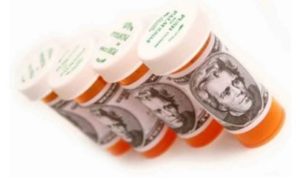
If you thought drug makers might hunker down in the face of public outrage over pricing, think again...Given the clamor over the cost of prescription drugs, most manufacturers were expected to avoid drawing attention to themselves by boosting price tags. But several companies have been hiking prices for their medicines at a rate that one Wall Street analyst found surprising...Johnson & Johnson took cumulative price hikes on more than a dozen drugs ranging from 5 percent to 28 percent. The biggest boost was for Simponi, which is used to treat rheumatoid arthritis. Amgen raised prices on seven different drugs from 7.6 percent to 28 percent. The largest was for Enbrel, which is used to treat psoriasis and rheumatoid arthritis, among other ailments...Celgene increased price tags between 10.3 percent and 27.9 percent on four medicines, while Gilead Sciences raised prices between 10 percent and 16.5 percent on five drugs...Biogen boosted prices for five drugs anywhere from 9.8 percent to 18 percent; the biggest price hike was for the Tysabri multiple sclerosis treatment.
- Some Firms Save Money By Offering Employees Free Surgery (khn.org)
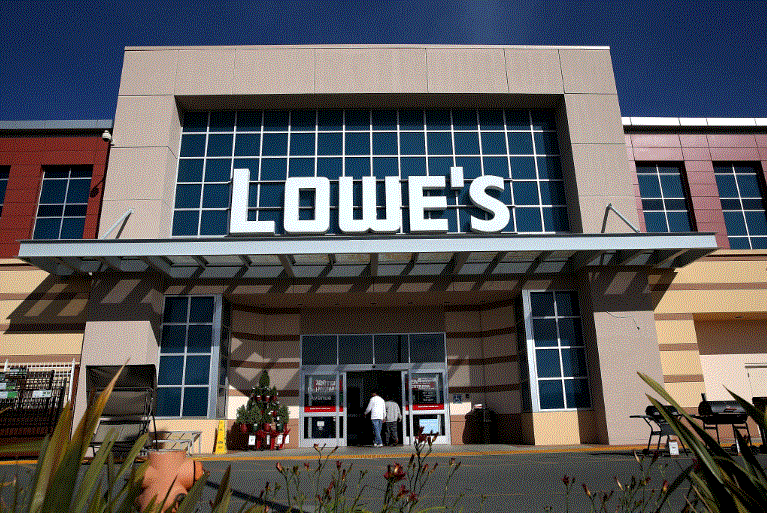
Lowe’s home improvement company, like a growing number of large companies nationwide, offers its employees an eye-catching benefit: certain major surgeries at prestigious hospitals at no cost to the employee...How do these firms do it? With "bundled payments," a way of paying that’s gaining steam across the health care industry, and that Medicare is now adopting for hip and knee replacements in 67 metropolitan areas, including New York, Miami and Denver...Here’s how it works: Lowe’s and other employers pay one flat rate for a particular procedure from any of a number of hospitals they’ve selected for quality, even if they are a plane ride away. And, under the agreement, the hospital handles all the treatment within a certain time frame — the surgery, the physical therapy and any complications that arise — all for that one price...It was Bob Ihrie, senior vice president for compensation and benefits at Lowe’s, who came up with the idea in 2010. When he told managers at other companies about it, he said, "The first question was always, ‘Oh, this is just for executives, right?’ And I said no, absolutely not, this is for any Lowe’s employee in the Lowe’s health care plans."
- Express Scripts says Anthem negotiated in bad faith -court filing (finance.yahoo.com)

Pharmacy benefit manager Express Scripts Holding Co has accused Anthem Inc of negotiating their contract in bad faith and is seeking a court order that the health insurer has no right to demand lower drug prices...The allegations, made in a filing in federal court...in response to a lawsuit Anthem brought against Express Scripts last month seeking $13 billion in price cuts over the remaining four years of the companies' contract...Express Scripts said...the contract did not require it to offer any specific price cuts, but only to negotiate in good faith...Express Scripts said it had proposed five price cuts "within the range" of Swedish's projections last June, but that all were rejected, suggesting that Anthem was acting in bad faith when it brought its $13 billion lawsuit.