
- Safety issues at compounding pharmacy underscore oversight problems (statnews.com)

A tussle between a Texas compounder and the Food and Drug Administration underscores the ongoing difficulties that regulators can have overseeing this controversial portion of the medical supply chain...The episode also illustrates how varying approaches taken by state and federal authorities to regulating compounding pharmacies can leave doctors and patients confused about the safety of medicines...the FDA issued a health alert recommending that doctors and patients should toss sterile medicines made by IV Specialty. The agency found numerous safety issues during an inspection...the compounder refused an agency recommendation to halt production or issue a recall until the problems were fixed...The FDA...lacks authority to force the compounder to take these steps...In response to the FDA actions, the state agency (Texas State Board of Pharmacy) sent its own inspector to review IV Specialty facilities...According to our rules, they’re doing what they need to do. We didn’t see anything that we felt would prompt us to immediately close them down...state regulations are not as stringent as FDA regulations..."We’re still in the early stages of figuring out how state and federal regulation schemes are going to work," said Elizabeth Jungman, director of public health programs at Pew Charitable Trusts, which tracks compounding issues. "So it’s confusing for patients and physicians to see disagreement between regulators at state and federal levels."
- ‘Chindia’ drug substance market not to be discounted (outsourcing-pharma.com)

China and India are causing a "tsunami" in the drug substance market – yet significant hurdles may bring fine chemical outsourcing back to the West...Without the drug substance there would be no drug…While the value of a drug is known, and fiercely debated, the value of drug substances are far more ethereal...there (is) no easy way to determine their value, for one because hardly any data exist on sales or value at the drug sub API level, due to extreme fragmentation in the industry...The combined markets of China and India...dubbed "Chindia," has the highest output at $27bn, and a demand of $10bn. This output is driven by 1,500 merchants in China and 2,300 merchants in India...over the years China has become "the center of gravity for several kinds of APIs," forcing many Western producers out of the market...This...is due in part to capacity build up and the increasing hurdles imposed in the west on local producers, which are driving up costs...No comparable such hurdles face Chinese and Indian players...there are some "rays of hope" for Western producers. These include, the strength of the US dollar, questions surrounding the reliability of "Chindia" as a supply source, and the realization that "penny wise may be dollar stupid" – as potential damage associated with supply disruptions more than offsets cost savings...Ultimately...it would be short sighted to discount vendors in these two countries, regardless of the uncertainties.
- A Venerated Medical Journal Finds Itself Under Attack (realclearhealth.com)

The New England Journal of Medicine is arguably the best-known and most venerated medical journal in the world. Studies featured in its pages are cited more often, on average, than those of any of its peers. And the careers of young researchers can take off if their work is deemed worthy of appearing in it...But following a series of well-publicized feuds with prominent medical researchers and former editors of the Journal, some are questioning whether the publication is slipping in relevancy and reputation. The Journal and its top editor, critics say, have resisted correcting errors and lag behind others in an industry-wide push for more openness in medical research. And dissent has been dismissed with a paternalistic arrogance...
- Drug dosing goes digital with software to personalize medication (statnews.com)Individualizing liver transplant immunosuppression using a phenotypic personalized medicine platform (stm.sciencemag.org)
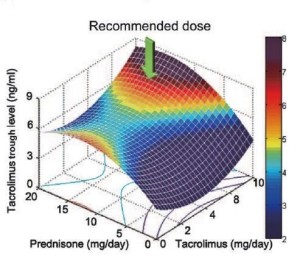
A new algorithm may take the guesswork out of medicating patients with cancer, bacterial infections, organ transplants, and other conditions that require very precise drug dosing...Individual differences can alter patient response to medications...Metabolism, body type, ethnicity, other illnesses, and genetics can play a role in how patients respond to drug treatment...The researchers call their method parabolic personalized dosing, or PPD. They gave patients medication and then observed the dosages which brought positive responses...the dosage could be reduced or increased based on how much medication was in the patient’s blood, with the successful doses added to the parabola. The researchers called the parabola "a robust map that identifies drug doses (inputs) that ensure that a patient will stay in a target range."...Establishing a patient’s parabola still requires administering drugs and then observing the response, something doctors already do. "This allows us to make a better guess,"...In the age of big data, algorithms could play a helpful role in integrating a lot of patient information to make dosing decisions.
- Pharmacy Week in Review: April 8, 2016 (pharmacytimes.com)
Mike Glaicar, Business Development: Pharmacy Times...(PTNN) This weekly video program provides our readers with an in-depth review of the latest news, product approvals, FDA rulings and more.
- Results of world’s first study on new treatment for heroin addiction (worldpharmanews.com)Hydromorphone Compared With Diacetylmorphine for Long-term Opioid DependenceA Randomized Clinical Trial (archpsyc.jamanetwork.com)Meeting the Growing Need for Heroin Addiction Treatment (archpsyc.jamanetwork.com)

The results of the ground-breaking SALOME (Study to Assess Longer-term Opioid Medication Effectiveness) research, published in the Journal of the American Medical Association Psychiatry, show chronic heroin addiction now has another effective treatment tool – hyrdomorphone...(The study) found hydromorphone to be as effective as diacetylmorphine (pharmaceutical-grade prescription heroin) for people who have not benefited from previous treatments, such as methadone or suboxone...Key findings of the research include:
- Injectable hydromorphone is as effective as injectable diacetylmorphine for long-term street opioid users not currently benefitting from available treatments
- Study participants on both medications reported far fewer days of street-heroin and other opioid use at six months
- Participants also reported a significant reduction in days of illegal activities
- Almost 80% were retained in treatment at six months.
- Hydromorphone and diacetylmorphine are both safe when taken in a clinical setting.
- As U.S. Pharmacy Sales Slow, Walgreens Says Rite Aid Deal On Track (forbes.com)

Walgreens Boots Alliance reported improving profits as it cuts costs in its U.S. pharmacy business ahead of its Rite Aid acquisition that executives expect to close in the second half of this year. Walgreens growth continues to be hampered by slowing U.S. retail pharmacy sales due in part to reimbursement pressures and a weaker-than-expected flu season with far fewer reported cases across the country. Walgreen U.S. pharmacy sales, which account for 65% of the U.S. division sales, were up just 3.2% in the company’s second quarter...compared to the year-ago period...Walgreens still reported a 14.4% increase in net earnings as the company continued to cut costs and improve margins amid the ongoing integration with Alliance Boots. Total sales were up 13.6% to $30.2 billion, "largely due to the full consolidation of Alliance Boots."...Walgreens executives say they continue their "integration planning," assuming the Rite Aid deal will close in the "second half of calendar 2016."
- Supply chain fraud continues to plague companies, poll says (outsourcing-pharma.com)

For the third year in a row, about 30% of Deloitte poll respondents say their companies experienced supply chain fraud, waste, or abuse in the previous year...In...conducting forensic investigations, trust in employees and third parties is often misplaced...many organizations are trapped in a pay-and-chase model for fighting supply chain fraud —invoices are paid first, then retribution is sought much later when fraud is found, if it's found at all...fraud at 35% in 2016, up from 31% in 2014...From a life sciences and health care perspective, regulatory and legislative pressure is expected to heighten around pricing and transparency for plans, providers, and pharma...It's a good time to verify that your supply chain is not hiding any unsavory vendors or other fraud, waste and abuse that could cause reputational harm and costly remediation later...different employee groups pose different supply chain fraud risks. Specifically, project managers and invoice approvers (26%) and procurement professionals (24.7%) present the largest risk to organizations...There is significant opportunity for efficiently and process control...the industry doesn’t use technology "to its fullest … or even partially."... more transparency is needed in the supply chain...
- Abandoned Pfizer deal leaves all sides tainted (blogs.reuters.com)Investors stick with Pfizer CEO after Allergan deal scrapped (reuters.com)Treasury Is Wrong About Our Merger and Growth (wsj.com)

Pfizer Chief Executive Ian Read
Pfizer’s abandoned deal leaves all sides tainted. The U.S. Treasury looks bad for changing the rules on Monday to kill the $160 billion merger with Allergan. Lawmakers’ inaction encouraged such tax-driven transactions. But Pfizer and Chief Executive Ian Read bear the most responsibility for wasting time and resources pushing an overpriced, risky deal...Monday’s new standards directly target Pfizer’s deal, as they disregard U.S. assets acquired in the past three years. That eliminates Allergan and its low Irish tax rate as a target. It’s unclear if the Treasury Department has overstepped its authority. But purposefully and rapidly mutating laws, especially when applied retroactively, are bad for business and legal authority...Lawmakers emerge covered in tar, too. They could have stopped inversions cold by adopting a territorial tax system. This would have stopped U.S. companies having to pay an extra levy to Uncle Sam on cash earned overseas if local taxes are lower than the U.S. statutory rate. Their fecklessness encouraged Pfizer and other firms to pursue complicated deals where the main payoff is tax avoidance...
- Are doctors overdiagnosing asthma? (statnews.com)Is asthma overdiagnosed? (adc.bmj.com)

Doctors are wildly overdiagnosing asthma, dispensing steroid inhalers like lollipops and possibly putting kids at risk...the prevalence of asthma more than doubled from the 1980s to the mid-1990s, and has stayed around a historical high of 8.3 percent of children and 7 percent of adults... Trouble is, the wrong people are being told they have asthma...So-called cough variant asthma, whose only symptom is a chronic cough, is especially likely to be overdiagnosed...reason for concern about overdiagnosing asthma is that inhaled corticosteroids — the ubiquitous puffers — can have side effects...the diagnosis of asthma has been trivialized, and inhalers [are] dispensed for no good reason … [becoming] almost a fashion accessory."... gold-standard pulmonary tests keep finding that many people diagnosed with asthma don’t have it...The percentage of children falsely labeled asthmatic can be as high as 90 percent...There is strong evidence, from several countries and different age groups, that a large fraction of people who are diagnosed with asthma do not have it.