
- Pfizer, Allergan scrap $160 billion deal after U.S. tax rule change (reuters.com)Allergan CEO: Merger with Pfizer was targeted by US government (cnbc.com)After failed Allergan merger, Pfizer once again considers splitting up the company (statnews.com)The big winners and losers of the Pfizer-Allergan breakup (statnews.com)Don't worry, Pfizer and Allergan. Treasury just did you a favor (fiercepharma.com)
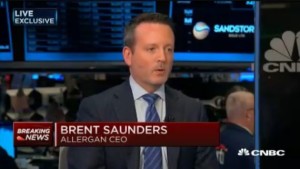
Pfizer Inc and Allergan Plc walked away from their $160 billion merger on Wednesday, a major win for President Barack Obama, who has been pushing to curb deals in which companies move overseas to cut taxes...Pfizer said the decision was driven by new U.S. Treasury rules aimed at such deals, called inversions. The merger would have allowed New York-based Pfizer to cut its tax bill by an estimated $1 billion annually by domiciling in Ireland, where tax rates are lower…Allergan Chief Executive Brent Saunders said...that the new Treasury rule would not stop the company from doing other stock-based acquisitions as soon as this fall...It really looked like they did a very fine job at constructing a temporary rule to stop this deal and obviously it was successful…
- Florida joins nine states in restricting DXM access to adults (drugstorenews.com)
Florida recently became the 10th state to restrict the sale of cough medicines containing dextromethorphan to adults over the age of 18, a move lauded by industry...a law addressing the issue of cough medicine abuse among teens...limiting teen access to DXM is an effective way to prevent abuse. We are assured that this legislation will empower parents to prevent abuse among their children, while continuing to ensure access for the millions of families who responsibly use products containing DXM to treat common cough symptoms...
- Pharmaceutical industry is lobbying hard against an L.A. County drug take-back proposal (latimes.com)Got Drugs - Turn in your unused or expired medication for safe disposal Saturday, April 30 (deadiversion.usdoj.gov)
Drug manufacturers have mounted a vigorous lobbying campaign against the county proposal, which would require pharmaceutical companies to finance a disposal program for unused medications and syringes...Proponents say the program would reduce chemicals ending up in the water supply, and would help curb prescription drug abuse by making sure that unused drugs are safely disposed of rather than stockpiled in medicine cabinets...The opponents say it would be costly and have little effect on the problem. They argue that the better solution would be to educate consumers about how to properly dispose of their unused medications...The county has about 20 collection sites run by the Sheriff's Department, and some pharmacies have voluntary take-back programs...But officials said there aren't enough available sites for the county's 10 million residents. They want the pharmaceutical industry to finance the creation of a larger network...pharmaceutical industry groups spent nearly $250,000 lobbying the county...Supervisors' offices received dozens of letters and phone calls from consumers worried that the measure would push up the cost of their medication...Consumer Healthcare Products Assn. said in a statement that the county proposal would create "an expensive, inefficient, unworkable and ineffective program that would garner low levels of participation and do little to accomplish the goals the county is seeking to resolve."
- Exclusive: Makers took big price increases on widely used U.S. drugs (reuters.com)
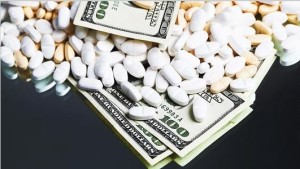
Major drug companies took hefty price increases in the U.S., in some cases more than doubling listed charges, for widely used medications over the past five years...Prices for four of the nation's top 10 drugs increased more than 100 percent since 2011...Six others went up more than 50 percent. Together, the price increases on drugs for arthritis, high cholesterol, asthma and other common problems added billions in costs for consumers, employers and government health programs...Routine price increases by bigger players may draw less attention, but they add up. Sales for the top 10 drugs went up 44 percent to $54 million in 2014, from 2011, even though prescriptions for the medications dropped 22 percent...At the top of the list was AbbVie Inc...which raised the price of...Humira (adalimumab) more than 126 percent...Amgen Inc and Teva Pharmaceutical Industries Ltd, which raised prices for arthritis treatment Enbrel (etanercept) and multiple sclerosis drug Copaxone (glatiramer) by 118 percent.
- Drugmaker plans to relaunch Addyi sales later this year (bloomberg.com)

Valeant Pharmaceuticals International Inc. has terminated the sales force for the female libido pill that it acquired last year for $1 billion...after the drug, Addyi, failed to gain traction in its first six months on the market...Valeant plans to relaunch its sales effort for Addyi with an internal team it will build in the coming months...Along with the 140 contract workers that make up the Addyi sales force, Valeant is firing about 140 employees across its dermatology, gastrointestinal and women’s health divisions, with dermatology taking the biggest hit...The cuts to Addyi’s sales force come after a sluggish start for the drug, which is the first of its kind for women suffering from a low libido. Insurers have been denying or limiting coverage for the pill and many prescriptions written by doctors aren’t getting filled...Valeant...failed to successfully commercialize the treatment by setting the price too high and neglecting to market it...
- Insulin prices have skyrocketed, putting drug makers on the defensive (statnews.com)Expenditures and Prices of Antihyperglycemic Medications in the United States: 2002-2013 (jama.jamanetwork.com)
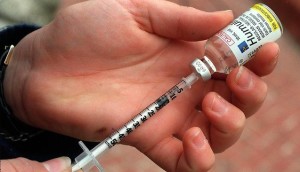
Here’s a sticking point for diabetics: the cost of insulin more than tripled — from $231 to $736 a year per patient — between 2002 and 2013...The increase reflected rising prices for a milliliter of insulin, which climbed 197 percent from $4.34 per to $12.92 during the same period. Meanwhile, the amount of money spent by each patient on other diabetes medications fell 16 percent, to $502 from $600...The analysis also found that the cost of various...oral diabetes drugs either dropped in price or did not rise nearly as significantly as insulin. Metformin...fell to 31 cents in 2013 from $1.24 per tablet in 2002. And the newer class of diabetes drugs known as DPP-4 inhibitors rose 34 percent since becoming available in 2006...some doctors say diabetic patients, who are typically 60 years old or more, have difficulty paying for drugs, especially those who have trouble once they hit the donut hole in the Medicare Part D program and have to cover costs themselves...The cost of therapy is huge...I have patients who tell me that they have to stretch out the use of their medicines...High costs can lead to reduced compliance...
- FDA proposes biosimilar labeling that favors generic drug makers (statnews.com) Labeling for Biosimilar Products - Guidance for Industry (fda.gov)

In a closely watched move, the Food and Drug Administration...released draft guidelines for labeling that should appear on biosimilars...the directive is likely to give a lift to generic drug makers as they battle their brand-name rivals in this nascent but important market...The battle over labeling is significant because this information is used by physicians to determine which medicine — the original biologic or the newer biosimilar — to prescribe to patients...the FDA rejected the argument made by brand-name companies that clinical trial data used to prove a drug is a biosimilar should appear on the product labeling. Brand-name companies believe the data should be included in order to distinguish the medicines...Instead, the agency proposed using the same information found on the brand-name label along with a simple statement indicating the biosimilar is similar...The issue is "a debate with far-reaching implications,"..."The content of the biosimilar label was argued as critical" for how companies position their different medicines. But in its guidance...the FDA "struck a clear position" for labeling that resembles the requirements found on generic drugs...
- Pfizer Vs. Obama: The Treasury Tries To Stop Pharma’s Tax Dodge (forbes.com)Allergan down over 20% after Treasury inversion rule (cnbc.com)Don’t Try to Leave (blogs.sciencemag.org)Would Pfizer And AstraZeneca Both Revisit That $100 Billion Deal? (forbes.com)
Most experts in corporate taxes thought there was little President Barack Obama could do to force Pfizer, the largest drug company in the U.S., from moving its corporate address to Dublin, Ireland, in order to escape paying American taxes...Yesterday evening, Jack Lew, Obama’s secretary of the treasury, called Pfizer’s bluff, instituting new rules to make the move as difficult as possible. The punch hit, and investors are reeling...Now the move could intensify an election-year battle over what it means for companies to be American, and the fairness of the U.S. corporate tax code...Lew is peeling the Allergan onion. Until last year, the company called Allergan...was based–and paid taxes–in Irvine, Calif. Then it was bought by Actavis , a Dublin, Ireland-based drug maker...But wait! Actavis itself was built by a rapid succession of deals, starting when Watson Pharmaceuticals...bought Actavis...partly in order to move its tax domicile to Dublin, Ireland. Now, for the purposes of laws related to the Pfizer deal, the Treasury says many of those other deals don’t count...the Treasury’s new rules reek of overreach. Really? We’re going to redefine what counts as a share of a company as a regulatory action, so that we can make the law mean what we want it to?...Pfizer is going to have to be just as clever as the Treasury is here, and then some...expect a fight: Pfizer versus the Obama administration.
- How Pharmacists Can Help Patients Remember Which Medication Is Used for Which Problem (pharmacytimes.com)
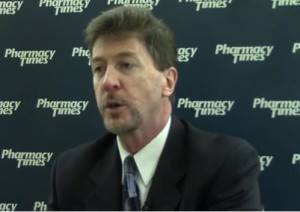
Michael Cawley, BS, PharmD, RRT, CPFT, FCCM, professor of clinical pharmacy at the University of the Sciences, discusses why it is important that patients know which medication they should use in a particular situation.
- Inventor Of Banned Drug Taken By Sharapova Insists It Protects Heart But Doesn’t Boost Performance (forbes.com)

Maria Sharapova has never met Ivars Kalvins, and it’s likely that she’s never even heard of the Latvian scientist, but the he has an offer for her…As pretty much the whole world knows by now, Sharapova announced last month that she had failed a drug test because she was found to have taken meldonium, which WADA, the World Anti-Doping Agency, banned...What isn’t as well known is that Kalvins invented meldonium, a heart drug…This is like insurance...explaining that the drug ensures that the heart gets enough oxygen, even when pushed to the limits of its capacity, as in elite-level sports...Athletes have to work very, very close to this border of the physical capacity of the human body...If they cross this border, there is no way back. Their hearts are damaged, their muscles are damaged, etc...He predicted that the WADA ban could lead to sudden deaths of athletes whose hearts aren’t able to get enough oxygen, resulting in permanent tissue damage...some scientists say that meldonium increases athletes’ endurance besides improving their recovery after exercise and protecting their hearts from stress…His (Kalvins) and WADA’s conflict over whether meldonium boosts athletic performance seems to rest on their different interpretations of "improves physical capacity." Kalvins says the drug doesn’t enable athletes to push themselves further, but it helps their hearts recover when they do so. WADA, on the other hand...determined that meldonium was being used by athletes with the intent of enhancing performance...