
- Bayer opens large China plant for traditional Chinese and Western OTC meds (fiercepharmamanufacturing.com)

Bayer boosted the reach of its international consumer health business when it picked up Chinese herbal and OTC special Dihon in 2014. Now it has boosted its production capacity with a new plant that will manufacture both Western OTC products and traditional Chinese medicines (TCM)...The German drugmaker last week opened the first phase of the 1.4 billion yuan ($213 million) plant in Majinpu in the Yunan province of China. At 111,534 square meters (1,200,542 square feet), it is Bayer's second largest over-the-counter products manufacturing site in the Asia-Pacific... first phase of construction has secured GMP approval for part of the TCM production line...additional work is ongoing that will allow the company to start manufacturing Bayer's key TCM product, Dan E Fu Kang, which is marketed as a gynecological medicine for women's health indications including dysmenorrhea...
- Interactive Pharmacist Counseling Could Optimize Patient Outcomes (pharmacytimes.com)

Patients may be more likely to retain information about their prescribed medications when the pharmacist-patient relationship becomes a 2-way conversation... A recent study published in the Journal of the American Pharmacists Association suggests that more interactive conversations between the pharmacist and patient can more than double the likelihood that the patient will understand how to take their medications properly....“The benefit of the interactive counseling technique is the fact that the patient can let the pharmacist know upfront what they know about their medications. The pharmacist can then fill in the knowledge gaps...The increased health literacy resulting from these more substantive conversations is strongly associated with greater medication adherence, which is widely considered one of the most crucial components of the value-based care model and optimized patient outcomes...This is the first real analysis to prove that [the interactive approach] works, and that the approach could be extremely important for health care in America...
- State measures to slash drug prices face big hurdles (statnews.com)

When shopping for a good deal, people usually want the same bargain as the next guy. And a group of AIDS activists is taking this approach in hopes of containing the rising cost of prescription drugs...In California and Ohio, they’re pushing ballot measures that would require state programs — such as Medicaid or prison systems — to pay no more for medicines than the Department of Veteran Affairs... “The goal [ballot initiatives] is to obtain lower prices, as well as gain more transparency on industry pricing, which is opaque,” said Ged Kenslea of the AIDS Healthcare Foundation...“And we’re hoping these will serve as a catalyst to other organizations or state legislators to enact similar measures in other states.”...well-intentioned, the effort may be somewhat quixotic...“These state initiatives might save a fistful of money in the short term and the first states where they are passed will get most of the benefit,”...“But the companies will find a way to compensate. So it isn’t likely to solve the problem in the long run.”...Still, the state initiatives may yet lead to change, if only because a groundswell of citizen-driven ballot measures might just force lawmakers to pay attention. In the end, getting a better deal might only be a vote away.
- Will GSK’s no-speaker-fee system work? Execs say yes; critics, not so much (fiercepharmamarketing.com)

GlaxoSmithKline has taken some bold steps to polish its image, tarnished by a Chinese bribery scandal and $3 billion settlement with the U.S. government. But naysayers blame its first big moves--nixing sales-rep quotas and pegging bonuses to "softer" measures instead--for disappointing roll-outs for several new meds...Now that it's dropping the time-tested tactic of paying doctors to promote its meds, critics are piling on there, too. But the U.K.-based drugmaker is sticking to its guns, recruiting its own doctors and other experts to tout its meds...Society now sees pharma-paid doctors as "hired guns,"...The only way to avoid that rap is for drugmakers to use their own employees instead...Since GSK first announced its no-payment policy--which went into effect Jan. 1--other Big Pharmas have addressed the question. Will they do the same? Several companies are on record with an unequivocal "No," saying that their doctor-speakers are important to their promotional efforts...Time will tell whether GSK's new policy will boost its credibility without cutting into revenue. More time will tell whether a buffed-up image would translate into bigger sales.
- Compounding Pharmacy Forced to Stop Production Due to Insanitary Conditions (specialtypharmacytimes.com)Federal judge enters consent decree against Downing Labs (fda.gov)FDA sues to stop a wayward drug compounder (statnews.com)
Compounding pharmacy Downing Labs LLC (formerly known as NuVision Pharmacy), its co-owners, and its pharmacist-in-charge have been issued a consent decree of permanent injunction...The Texas-based company is allegedly in violation of current good manufacturing practice requirements under the Federal Food, Drug, and Cosmetic Act...Downing Labs is accused of manufacturing and distributing adulterated drugs that were made in insanitary conditions, meaning they were bad enough to endanger public health...“Despite multiple warnings to the company, Downing Labs continued to manufacture injectable drugs under insanitary conditions, putting the health and safety of patients at risk,”...“The FDA pursued appropriate and aggressive action to protect the public health.”...Downing Labs said it has worked "collaboratively and cooperatively” with the FDA to reach an agreement that will enable it to resume the production of compounded sterile medication...also noted that, as part of the consent decree, it voluntarily agreed to participate in a regular program of testing, audit, and inspection “to ensure it is achieving and exceeding its quality goals.”
- 5 Treacherous Problems with Fentanyl Patches (pharmacytimes.com)
Although using a patch formulation of fentanyl can have some advantages, here are 5 common problems I've encountered with it in my pharmacy practice:
- Fentanyl patches are extremely potent
- Lost or missing fentanyl patches should scare you
- Fentanyl patches are meant for chronic pain
- Fentanyl patches can cause delayed withdrawal symptoms
- Fentanyl patches get diverted
- BioMarin CEO on drug pricing, approval (video.cnbc.com)

BioMarin CEO Jean-Jacques Bienaime, discusses drug pricing, the sentiment of investors in biotech and his expectations for the company's Duchenne muscular dystrophy drug.
- Drug Diversion in the 340B Program (pharmacytimes.com)
Section 340B of the Public Health Service Act requires drug manufacturers participating in the Medicaid Drug Rebate Program to sign an agreement...This...limits the price that manufacturers may charge certain covered entities for covered outpatient drugs...Drug diversion in the program is defined as a 340B drug being provided to an individual who is not an eligible outpatient of that entity and/or dispensed in an area of a larger facility that is not eligible (eg, an inpatient service or a non-covered clinic)...in 2013 that 94 audits were underway, which included 700 outpatient facilities and 1930 contract pharmacies. During these audits, drug diversion, duplicate discounts, and ineligible sites/providers were the common areas of noncompliance... Noncompliance to 340B program impacts patients’ bottom line because the more diversion that occurs, the more drug manufacturers increase prices for both public and private insurers, leading to an increase in rates and charges to patients. If HRSA were able to enforce 340B regulations and audit all hospitals on a continual basis, there would be fewer cases surrounding duplicate discounting, drug diversion, and ineligible site/providers...The 340B Program is in desperate need of stronger controls and more audits. Through proactive monitoring of drug inventory and dispensing, 340B drug diversion would decrease, leading to a decrease in drug spending.
- The Changing Landscape for Specialty Pharmacy Patients (specialtypharmacytimes.com)
Marc O'Connor, chief operating officer of Curant Health, discusses potential changes patients of specialty pharmacies may experience in the near future.
- CIOs celebrate end to meaningful use, want more details on future programs (healthcareitnews.com)Andy Slavitt puts meaningful use on ice; Read his J.P. Morgan speech transcript (healthcareitnews.com)
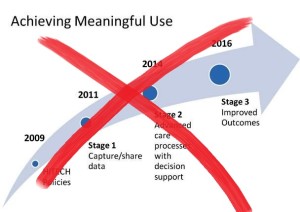
Some execs say easing off of the requirements will allow providers to focus more on innovation...Healthcare chief information officers breathed a sigh of relief on Tuesday when Andy Slavitt said the end of the meaningful use program was near. But many are waiting on the details before celebrating too much...The acting administrator of the Centers for Medicare and Medicaid Services Andy Slavitt said in a speech at the J.P. Morgan Healthcare Conference that meaningful use would be replaced with a more streamlined regulatory approach in line with the merit-based alternative payment models of the Medicare Access and CHIP Reauthorization Act of 2015...“The early stages of meaningful use took the country from ‘zero to 60' in five years, a remarkable achievement that would not have been possible without HITECH,”...“Now, it's time for the new payment model that rewards providers for achieving better health outcomes to be the driver of innovation, using the new electronic infrastructure that is now in place. That was the vision for ‘Phase 3’ from the very beginning.”..."It's truly unfortunate, but I'm not surprised,”...“The lack of alignment in Washington, varied interpretations by our industry and its vendors, and the resulting and inefficient ‘MU clicks,’ as termed and borne by our physicians have led down this path."...“The sad part of it all is that MU was designed with best intentions yet fated by regulation and political interests,”...