
- What’s next for Valeant? (video.cnbc.com)Valeant in new distribution deal with Walgreens (modernhealthcare.com)Walgreens and Valeant Devise a New Twist on Preferred Pharmacy Networks (drugchannels.net)
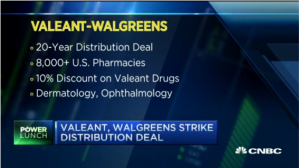
CNBC's Meg Tirrell talks to Valeant CEO J. Michael Pearson about the company's new distribution deal with Walgreens...
- FDA approves first chemo antidote (pharmatimes.com)FDA Approval of VISTOGARD®, the First Antidote to Treat Overdoses and Early-Onset Severe Toxicities Due to 5-Fluorouracil and Capecitabine Chemotherapies (wellstattherapeutics.com)
US regulators have issued a speedy green light for the first and only drug able to treat chemotherapy overdose or severe allergic reactions...The decision allows doctors to use Wellstat/BTG’s Vistogard (uridine triacetate) to treat patients following an overdose of 5-fluorouracil or capecitabine, or in patients exhibiting early-onset, severe or life-threatening toxicity affecting the cardiac or central nervous system...In combination with other drugs or radiation, 5-FU is a mainstay of chemotherapy across various solid tumours, and capecitabine is a prodrug of the chemotherapy that is enzymatically activated within the body and transformed into 5-FU...The approval of Vistogard is important because it represents the first treatment with a demonstrated track record of efficacy and, just as important, it allows some patients to resume chemotherapy sooner following the resolution of the toxicity...
- The untold story of TV’s first prescription drug ad (statnews.com)
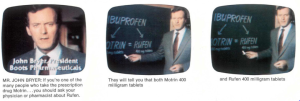
On May 19, 1983, Boots aired the first broadcast television commercial in the United States for a prescription drug, the pain reliever Rufen...Within 48 hours of the ad’s airing, the federal government told the company to take it down. And more than 30 years later, the fight over marketing prescription drugs directly to the public is still raging...Now, the American Medical Association, the largest doctors group in the United States, wants to stop direct-to-consumer advertising for prescription drugs in the belief that the ads encourage patients to seek medicines unnecessarily. But the effort to have drug ads banned alongside tobacco ads will face plenty of obstacles, none bigger than the First Amendment. Perhaps the most unusual thing about this decades-long saga is that it’s an issue at all...The United States is one of only two countries in the world to allow these ads. How did this little-noted example of American exceptionalism come to be?...It started with Boots.
- 26 Ways Pharmacists Can Make Extra Income in 2016 – Pharmacy Podcast (pharmacypodcast.com)

Pharmacy Podcast guest hosts Alex Barker, PharmD., and Blair Green Thielemier, PharmD discuss interesting, creative, and resourceful ideas for pharmacists to generate additional income in 2016...No matter where you are on your pharmacy career path, having extra cash on hand is a nice safety net, and a great way to pay off your pharmacy school loans more quickly...The challenge is holding a side job while balancing your current job and personal responsibilities. Although a second pharmacy job is achievable (especially weekend shifts), these 26 ways to make extra cash won’t take up as much of your valuable time—and the payoff may still be high. (podcast 43:54 min)
- Hospitals launch specialty pharmacies to curb drug costs (modernhealthcare.com)
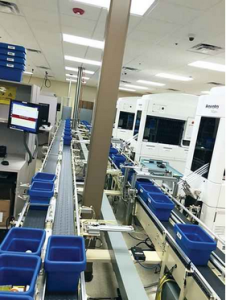
Banner Health spent $1 million on a drug-dispensing robot for its specialty pharmacy's home-delivery service.
With specialty drug spending soaring 60% in the past five years, large health systems have jumped into the specialty pharmacy business to assert some control over those costs by dispensing the drugs to their patients and covered employees...Health systems say those pharmacies help them better manage outpatient drug costs. A growing number of insurance contracts and Medicare initiatives tie payments to quality metrics that reach beyond hospital stays to hold providers accountable for patients' total medical costs, including drugs...Phoenix-based Banner Health started its own specialty pharmacy last year...hired three clinical pharmacists, three patient advocates and three staff members to support operations. The system also spent $1 million on a drug-dispensing robot for the specialty pharmacy's new home-delivery service...In the first year, Banner shaved about 1% off its specialty drug spending for about 1,200 workers and their families covered by the system's employee health plan...Health systems that own specialty pharmacies argue they can do a better job overseeing the use of the drugs they dispense. That's because their pharmacies can easily access medical records, laboratory results and physician notes, allowing pharmacists to closely monitor the effectiveness of the drugs prescribed and react quickly when something goes wrong or patients need help...They know if the patient is getting the value for the high-cost drug...Launching a specialty pharmacy does not require significant capital investment, and the high prices of the drugs—even sold at slim margins—make it possible to quickly see a return on that investment.
- Icahn: Change the international tax code, and Pfizer will drop its ‘travesty’ of a merger (fiercepharma.com)How to Stop Turning U.S. Corporations Into Tax Exiles (nytimes.com)
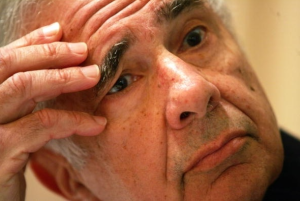
Carl C. Icahn is the chairman of Icahn Enterprises.
The tax benefits of buying Allergan are Pfizer's No. 1 reason for doing the $160 billion deal. In fact, some analysts see the $2 billion in potential tax savings as the merger's only substantial advantage...Activist investor Carl Icahn is one of those detractors, and on Monday, he amped up the criticism..."The Pfizer-Allergan deal is a travesty," Icahn wrote in a New York Times op-ed. "The point isn't to find corporate synergy. It is to leave behind our uncompetitive international tax system."...But what if those tax savings were moot?
- Reckitt Benckiser misled consumers on Nurofen painkillers: Australian court (reuters.com)
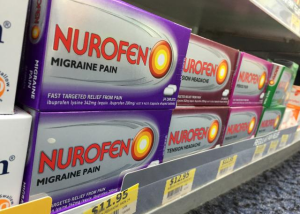
An Australian court ordered Reckitt Benckiser to pull several of its Nurofen pain relief products from the market, saying...the British firm had misled consumers by marketing identical products for different types of pain...The Federal Court ruled that the Nurofen Back Pain, Period Pain, Migraine Pain and Tension Headache products were identical and that Reckitt Benckiser had "engaged in misleading conduct" by labeling them for different ailments...We have known for years that they are all the same,"..."We have been advising our customers to go for the standard painkiller which is cheaper."...Nurofen specific-pain relief products were sold at almost double the price of Nurofen's standard painkiller...Patty O'Hayer, a spokeswoman for Nurofen's UK-based parent Reckitt Benckiser, said had agreed to amend its Australian packaging to show the specific-pain relief products were effective against other types of pain as well, adding this was to prevent any confusion over dosing...
- The promise and peril of Ted Cruz’s plan to overhaul the drug approval process (vox.com)
Republican presidential candidate Sen. Ted Cruz and Sen. Mike Lee just introduced a new bill that would completely overhaul the Food and Drug Administration...The main idea: The senators want to expedite approvals for lifesaving drugs, give Congress space to intervene in FDA decisions lawmakers don't like, and expand the drugs and devices Americans have access to by allowing products approved in other countries onto the market...here's what the Reciprocity Ensures Streamlined Use of Lifesaving Treatments Act...would do:
- Allow for "reciprocal approval of drugs, devices and biologics" from "trusted, developed countries" like the European Union, Israel, Australia, Canada, and Japan. This means that if a drug or device is approved in one of these countries, citizens here could access it — and vice versa.
- Create a 30-day window for FDA review of lifesaving drug and device applications, in order to speed them up.
- Instruct the Health and Human Services secretary to approve a drug, device or biologic if "the FDA confirms the product is lawfully approved for sale in one of the listed countries; not a banned device by current FDA standards; there is a public health or unmet medical need for the product."
- Give Congress the power to overrule FDA decisions about promising applications for lifesaving drugs that the FDA rejected.
Right now the FDA is actually the fastest regulatory system in the world, with several expedited approval pathways for important drugs...the agency had approved 96 percent of the applications that came its way in 2015. So, again, how this new legislation — which further speeds up approvals — will solve the real reason better medicines aren't getting to patients remains to be explained.
- 2015’s Worst Clinical Failures (nasdaq.com)
It's always disappointing when drugmakers' best efforts fall short and, unfortunately, it happens far too often. Historically, 90% of drugs entering human clinical trials end up in the laboratory dustbin rather than on pharmacy shelves, so while disappointing, it's probably not too surprising that these high-profile medicines flopped in 2016.
- Marijuana can't conquer cancer pain...Sadly, patients with cancer continue to suffer from significant pain and efforts by GW Pharmaceuticals and its partner Otsuka to scientifically prove marijuana can help many of these patients fell flat in 2016.
- A high-cholesterol treatment trips on its way to the finish line...Despite statins being widely used in tens of millions of patients to lower bad cholesterol levels, more than 600,000 Americans still die from heart disease every year and that's got big pharmaceutical companies, such as Eli Lilly , plowing hundreds of millions of dollars into the development of next-generation cholesterol busters that work differently than statins..
- Doubts emerge for NASH treatment...Nonalcoholic steatohepatitis is a fast-growing cause of liver failure that is estimated to occur in 5% of patients and it could become the leading cause of liver transplant by 2020. In a bid to keep that from happening, Intercept Pharmaceuticals is developing obeticholic acid...but enthusiasm for NASH therapy has faded since...Intercept reported...that a phase 2 study of obeticholic acid...failed...
The sheer number of trial failures makes drugmakers some of the riskiest stocks to buy. Risk of trial failure can be lowered by diversifying across stocks and focusing on drugmakers with late-stage clinical trials underway, but...there's no guarantee or magic formula for success...Investors must be willing to accept the risk that is inherent in this industry if they want to benefit from potential rewards associated with successful, game-changing medicines.
- Drug approvals top 2014 high but R&D returns still struggle (reuters.com)
The number of new drugs approved in the United States this year has already topped last year's 18-year high, yet large pharmaceutical companies are still struggling to get a decent return on their research dollars...returns on research and development spending by the world’s top drugmakers have fallen to just 4.2 percent, or less than half the 10.1 percent recorded in 2010...The mismatch between the rising number of drug approvals and falling returns reflects the fact that each new medicine is expected to yield significantly lower average sales, while costs are continuing to rise...We are now seeing a trend for companies to return more money to shareholders through dividends and share buybacks than they are investing in the future through R&D, licensing and acquisitions...Many...new treatments...are targeted at niche patient populations and are designed for treating rare diseases or very specific sub-types of cancer, limiting their sales potential...the rapid pace of new drug launches is forecast to continue, with 225 new drugs expected to be approved between 2016 and 2020...