
- A New Way to Define Value in Drug Pricing (hbr.org)
Prices for specialty drugs in the United States are out of control, with spending rising much faster than in many other health care domains. Some state Medicaid programs have been driven to the brink by the cost of new drugs for diseases such as hepatitis C, for which 12 weeks of treatment with Sovaldi can cost nearly $100,000…paying for drugs according to how well they actually work…A drug that works is worth something; one that doesn’t is not. If a new drug works no better than an older one, the two have equal worth. If a drug costs a lot, that’s OK only if it makes people so healthy that it reduces their spending on other forms of health care...
- It’s not easy being green, but biotechs should consider it according to Piramal (in-pharmatechnologist.com)
Pharma and biotech firms not using ‘green chemistry’ to make their products incur higher costs and risk losing market share… There is considerable drug industry interest in ‘green chemistry’ processes that improve efficiency and cut waste – at least that is according to the corporate social responsibility reports issued by firms like Pfizer, GSK and Roche…Whether these efforts are PR – so called greenwashing - or genuine is difficult to judge…while some drugmakers are investing to try and be environmentally-friendly others, particularly smaller biotechs, have yet to commit to greener manufacturing.
- Experts critical of America’s right-to-try drug laws (thelancet.com)
Laws that allow terminally ill patients access to experimental drugs are gaining momentum across the USA, but experts say they could do more harm than good…the right-to-try laws...are designed to circumvent the FDA…proponents of the laws view the agency's bureaucracy as a roadblock, not a pathway, for desperate patients seeking experimental drugs. "When patients are almost willing to try anything to live…we shouldn't see government stand in the way"…Critics...say the laws are misguided, that drug companies, not the FDA, restrict the availability of experimental drugs because of cost, limited supplies, or concerns about the effect on clinical trials…skeptics believe the laws could do more harm than good, possibly raising false hopes about drugs whose safety and effectiveness have not yet been proven…
- First liquid aspirin’ maker seeks licensing deal (in-pharmatechnologist.com)

Innovate Pharmaceuticals has launched…shelf-stable liquid aspirin, and says it is on the look-out for a licensing partner for the "$500m" market…. Innovate worked with chemicals company Croda for five years on engineering excipients to make what it calls a "truly liquid" aspirin. The pharma firm claims its product allows faster and more complete absorption than other delivery routes, "resulting in potentially drastic reductions in gastric side effects."
- Express Scripts to cover pricey new cholesterol treatments (washingtonpost.com)Pricey new cholesterol Rx covered by big drug plan, but... (cnbc.com)
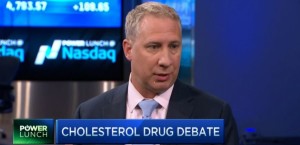
..nation’s biggest pharmacy benefits manager has decided to cover two new drugs that lower…cholesterol but raise concern over prices that can top $14,000 a year…Express Scripts said…that it will pay for prescriptions of…Repatha as well as Praluent…under a few conditions designed to control costs…It will require prior approval…before any prescriptions are filled…will need to see a patient’s cholesterol levels first as well as proof that the older statins failed…is requiring the drugmakers to provide rebates if prices climb more than a set amount each year…Express Scripts also has agreed to cover any costs that exceed a certain amount per person, annually.
- India considers drug testing labs in each state (fiercepharmaasia.com)
India may house drug testing laboratories in each state under an INR17.5 billion ($270 million) plan to shore up quality… the aim is to have at least one dedicated drug testing laboratory in every state, with 10 states currently not equipped with any testing services for drugs… India approved the spending to upgrade its federal and state drug regulation system with approval from the Cabinet Committee on Economic Affairs…funds, to be spent…on items such as new laboratories and a training academy for regulatory and drug testing officials, are seen as crucial to fixing quality issues that have bedeviled manufacturers and testing firms.
- AmerisourceBergen to buy PharMEDium for $2.58 billion (reuters.com)

Drug distributor AmerisourceBergen Corp agreed to buy PharMEDium Healthcare Holdings Inc for $2.58 billion…expanding its business of supplying compounded drugs to hospitals…"PharMEDium brings ABC a complementary service line that is undergoing a growth renaissance as hospitals more aggressively outsource compounded sterile needs in wake of new government regulations,"…
- Rise in online pharmacies sees counterfeit drugs go global (thelancet.com)

Increasing public use of online pharmacies, along with a new mass producer of fake medicines, have widened the global market for falsified drugs…. John Clark.. heads up Pfizer's Global Security team…has a question for doctors: do you know where your patients get their drugs from?...The official term for these types of medicines is spurious/falsely-labelled/falsified/counterfeit drugs….developing countries are more than aware of with estimates of the prevalence of counterfeit drugs in some parts of Africa and Asia reaching as high as 70%...it's hard to find a drug that's not being copied or falsified...Counterfeit drugs have been found in 124 countries across all continents and between 2011–14 more than 55 million doses were seized by authorities.
- Meds to Beds Program Provides More Opportunities for Patient Counseling (pharmacytimes.com)

Mail, pizza, now medicine: Some health care systems are allowing patients to get their discharge medication delivered while they are still in the hospital… main focus was on patient education and medication counseling…the program allows for more quality time with patients to make sure their medications are safe and effective for them…"When we deliver medications to patients’ bedsides immediately prior to discharge, patients seem more willing to listen and learn about their medications than when they are at a retail pharmacy in the community,"
- California governor signs bill legalizing physician-assisted suicide (reuters.com)
Physician-assisted suicide will become legal in California under a bill signed into law…by…Governor Jerry Brown, despite intense opposition from some religious and disability rights groups…allows doctors to prescribe medication to end a patient's life if two doctors agree the person has only six months to live and is mentally competent…Advocates for physician-assisted suicide have tried for decades to persuade California to legalize the practice as a way to help end-stage cancer and other patients to die with less pain and suffering…Opponents…said the bill would invite insurance companies to take advantage of poor patients by offering to pay for the cost of life-ending drugs but not for the expensive treatments that could save lives.