
- Barry and Honey Sherman were murdered by multiple killers, private investigators believe: source (cbc.ca)

Private investigators believe that the billionaire Toronto couple found dead at their home in December were murdered by multiple killers, a source with direct knowledge of the parallel probe into their mysterious deaths...The new information contradicts a widely circulated theory that Barry and Honey Sherman died as a result of a murder-suicide — a notion that is regarded as fiction by those who knew the Shermans well...Barry, 75, and Honey, 70, were found dead by a real estate agent in the basement of their Toronto mansion on Dec. 15. The source said their bodies were in an upright seated position on the floor near an indoor pool. Police deemed the deaths "suspicious" but have said little else since their investigation began...The Sherman family has hired a team of experts...Barry Sherman is the founder of Canadian pharmaceutical giant Apotex, and both he and his wife have been recognized internationally for their generous philanthropy.
- This Week in Managed Care: January 19, 2018 (ajmc.com)

Laura Joszt, assistant managing editor at The American Journal of Managed Care. Welcome to This Week in Managed Care from the Managed Markets News Network
- FDA Moving to Enhance Drug Approval Transparency, Gottlieb Says (ptcommunity.com)
New pilot program to evaluate disclosure of clinical study reports...As part of its efforts to enhance transparency around drug approval decisions, the FDA is exploring ways it can continue to build on its obligation to share information…The agency is especially focused on information that can improve patient care and better inform providers about the products they prescribe. One place where it is evaluating how it can release information that may better inform scientists, providers, and patients is clinical study reports (CSRs)...The FDA has launched a pilot program to evaluate whether disclosing certain information included within CSRs following approval of an NDA improves public access to drug approval information...The FDA intends to post the parts of the CSRs that were most important to the agency’s assessment of the safety and efficacy of the drug, specifically, the study report body, the protocol and amendments, and the statistical analysis plan for each of the participating product’s pivotal studies...
- Flu-pocalypse? Why scientists are scrambling to make a ‘universal influenza vaccine’ (foxbusiness.com)

Flu season is already shaping up to be one of the worst seasons in over a decade, claiming the lives of nearly 20 children across the U.S. and 7% of senior deaths over the last month, according to the Centers for Disease Control and Prevention...One of the reasons for the massive outbreak this year...is that it involves the dreaded H3N2, a strain of the influenza that isn’t “very well-matched” with the current vaccines that are being distributed across the U.S...In the making of the vaccine as it was being grown in eggs...it got mutilated a bit, so it drifted away from a really, really good match...even in a very good year the influenza vaccine is only about 60% effective. And, the projection of how effective it is going to be against the H3N2 this year is about 30%...Sanofi, who is one of the largest makers of flu vaccines...has been “continuously focused on improving influenza vaccines” over the years...This is evident in our introduction of Fluzone High-Dose Influenza vaccine, the first and only flu vaccine shown to have superior efficacy against influenza compared to Fluzone vaccine in adults 65 and older, and our recent acquisition of Protein Sciences, which has developed a recombinant DNA technology system for the production of recombinant proteins. The company additionally has ongoing efforts to develop a broadly protective influenza vaccine that would be effective despite natural mutation of flu strains over time...
- Lawmakers weigh measure to fight high drug prices (thehill.com)

Lawmakers are considering adding a measure aimed at fighting high drug prices to an upcoming spending deal, in what would be a rare defeat for the powerful pharmaceutical industry...The measure, known as the Creating and Restoring Equal Access to Equivalent Samples Act, is intended to prevent branded drug companies from using tactics to delay competition from cheaper generic drugs...Pharmaceutical companies are pushing back and lobbying against the measure, arguing it would harm patient safety and open companies up to wasteful lawsuits...But they might not be successful in their effort. Lobbyists and congressional sources say the measure could be added to a long-term government funding bill as a way to help pay for higher budget caps. The measure is estimated to save more than $3 billion...The measure would allow a generic company to develop its own safety protocol for a drug rather than have to develop a shared protocol with the branded company. Supporters of the bill say there would still be rigorous standards in place to ensure safety...The bill would also allow generic drug makers to sue to obtain the samples they need. Powaleny warned the bill would lead to “wasteful litigation between companies.”
- This Week in Managed Care: January 12, 2018 (ajmc.com)

Laura Joszt, assistant managing editor at The American Journal of Managed Care. Welcome to This Week in Managed Care from the Managed Markets News Network
- U.S. court invalidates patent on J&J cancer drug Zytiga (reuters.com)

A U.S. administrative court...invalidated a Johnson & Johnson patent on its blockbuster prostate cancer drug Zytiga, bringing rivals closer to selling generic versions...The Patent Trial and Appeal Board said a Johnson & Johnson patent describing a method of administering Zytiga should not have been granted because the process it described was obvious...The ruling was a victory for U.S. generic drug company Argentum Pharmaceuticals LLC, which had asked the board to invalidate the patent in hopes of bringing its own version to market...The patent is due to expire in 2027. Argentum and other generic drug makers have been blocked from launching their own versions of the cancer drug until its expiration date...Zytiga generated nearly $2.3 billion in sales for Johnson & Johnson in 2016.
- FDA issues warning letter to Australian CMO (fiercepharma.com)
The warning letter was sent late last month to Delta Laboratories of New South Wales, Australia, after the FDA put all of the company’s human and animal drugs and antibiotics on its import alerts list in September...According to the FDA, Delta didn’t fully investigate discrepancies, including signs that might have indicated microbial contamination and didn’t have the processes needed to assure products would remain stable during storage and through the expiration date. It also noted the quality assurance unit didn’t have the necessary authority to make sure those kinds of standards are met...Senior management stated that your firm has struggled with manufacturing this drug product, and that you were still conducting research to gain better product and process understanding. Although you acknowledged a lack of understanding to assure consistent quality, you still commercially distributed drug products to consumers...The agency strongly recommended that Delta hire a consultant if intends to continue to producing products for the U.S.
- Pharmacy Week in Review: January 19, 2018 (pharmacytimes.com)
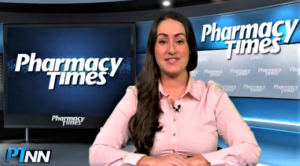
Nicole Crisano, PTNN. This weekly video program provides our readers with an in-depth review of the latest news, product approvals, FDA rulings and more.
- FDA Delays Implementing Parts of ‘Intended Use’ Rule (raps.org)
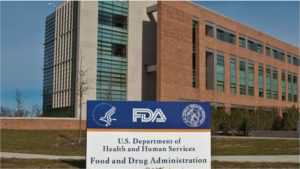
Confusion and concerns over portions of a tobacco-related final rule have pushed the US Food and Drug Administration to delay implementation of the sections dealing with the types of evidence FDA may consider to determine how a manufacturer intends for its medical product to be used...This is a determination that can have significant implications for, among other things, how manufacturers communicate about and promote their products. How we determine intended use is an important issue that touches many fundamental aspects of the FDA’s work...FDA is seeking comments on the proposal to delay...effective date of the portion of the rule related to intended use of medical products, though the tobacco-related portions of the final rule will go into effect...At issue is how the initially proposed rule sought to remove a sentence, which FDA Law Blog last February called "the famous 'knowledge' sentence: 'But if a manufacturer knows, or has knowledge of facts that would give him notice, that a [drug or device] introduced into interstate commerce...is to be used for conditions, purposes, or uses other than the ones for which he offers it, he is required to provide adequate labeling for such a drug/device which accords with such other uses to which the article is to be put.'"...But the final rule did not remove the sentence and instead amended it with new language that angered industry groups, which called the move "a new and unsupported legal standard."