
- Hospitals file lawsuit to block 340B drug payment cut (biopharmadive.com)
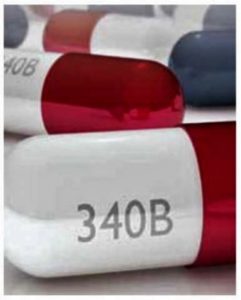
The American Hospitals Association and other organizations have made good on their promise to sue the federal government in an effort to halt a major cut planned for the 340B Drug Pricing Program...The hospitals are arguing the reimbursement change exceeds the authority of the HHS secretary and is "arbitrary and capricious." They ask the court to force HHS to delay implementation or strike the cut entirely...HHS released a final rule earlier this month that changes the amount 340B hospitals will be paid for most drugs to 22.5% less than the average sales price starting at the beginning of next year. Currently those hospitals are paid the average price plus 6%...The cut of about 30% would hurt nonprofit hospitals' margins, according to a recent report from Moody's. The CMS has argued the change would reduce out-of-pocket costs and improve patient-provider relationships. The agency has calculated the 340B cut would save about $900 million next year...AHA has been strongly critical of the cut, saying it threatens patient care, particularly for vulnerable populations that are most likely to use safety net hospitals benefiting from the drug payment program...A recent report found 340B hospitals had a larger decrease in charity care spending than other hospitals, but AHA said the study was misleading and incomplete.
- Drug shortages loom from hurricane-impaired manufacturing in Puerto Rico (pharmacist.com)

Damaged Baxter plants on the island make large portion of saline products, already in short supply...hospitals are feeling even more compromised from the shortage ever since production at Baxter facilities in Puerto Rico was hampered...by hurricane Maria...“Clearly this has a huge impact on hospitals as well as home infusion pharmacies and infusion centers since many medications given by the I.V. route are mixed into these bags and given by infusion,” said Matthew Grissinger, RPh, from the Institute for Safe Medication Practices...The most severe shortages are being felt with small-volume parenteral solutions, such as the 50 and 100 milliliter minibags of sodium chloride 0.9%, dextrose 5%, and I.V. nutritional products made by Baxter...the American Society of Health-System Pharmacists had been hearing from both large and small hospitals alike that they only had a 1- to 2-week supply of small-volume parenteral solutions left. ASHP has been working around the clock to identify solutions and strategies for facilities...FDA has also been actively involved, and is monitoring a list of about 30 critical drug products that are either manufactured solely or primarily in Puerto Rico. Of those 30 drugs, 14 are sole-source products, meaning there are no alternatives available...To mitigate the shortage of I.V. solution products, FDA is doing something that it rarely does: import products from overseas plants. In this case, FDA is allowing temporary importation of an alternative supply of sodium chloride 0.9% injection bags, dextrose 5% injection bags, and metronidazole injection into the U.S. from Baxter facilities in Ireland, Australia, Mexico, and Canada...
- FDA approves first drug in U.S. with digital ingestion tracking (reuters.com)Digital Pills That Talk to Your Doctor Are Here (wsj.com)

The U.S. Food and Drug Administration said...that it had approved Otsuka Pharmaceutical Co Ltd’s Abilify MyCite, the first drug with a digital ingestion tracking system to be approved in the United States...The product, which uses digital tracking to record if the medication was taken, has been approved for the treatment of schizophrenia, acute treatment of manic and mixed episodes associated with bipolar I disorder and for use as an add-on treatment for depression in adults...The system sends a message from the pill’s sensor to a wearable patch, which then transmits the information to a mobile application, so that patients can track the ingestion of the medication on their smartphone.
- Drug bingo: EU readies vote for London-based pharma agency (reuters.com)'Hard' Brexit risks disrupting supply of thousands of drugs (biopharmadive.com)

Nineteen EU governments will slug it out in a series of secret ballots in 10 days’ time for the right to host the European Medicines Agency once it leaves London after Brexit...Confirming that none of the cities, from Porto to Helsinki, has dropped out of the running...those organizing it confessed they had no idea how long the voting would take...The EMA itself has warned that moving to some of the cities on the list -- sources have said notably those like Warsaw or Sofia in eastern Europe -- would see so many of its 900 London staff quit that it would harm Europe’s health. Top choices for employees are Amsterdam, Vienna and Barcelona...States agreed to a number of criteria, including that cities chosen should offer premises ready for a start in March 2019, when Britain leaves the EU, be accessible from across Europe and take account of “geographical spread” -- the fact newer members in the east host fewer agencies than richer neighbors.
- 7 cases of Legionnaires’ disease tied to Las Vegas’ Rio hotel (reviewjournal.com)

Five months after an outbreak of Legionnaires’ disease was reported at the Rio, the number of confirmed cases of the pneumonia-like bacterial illness among guests has risen to seven, with 29 more cases suspected, the Southern Nevada Health District said...Meanwhile, cleaning and testing of the hotel’s water system is continuing to ensure the disease has been eradicated...“In a situation like this, part of the process of these investigations on an environmental aspect is continued testing and monitoring,” said Robert Cole, the health district’s senior environmental health specialist...Often the process, which includes precautionary disinfection of water systems, will continue for up to a year, Cole said...In addition to the Legionnaires’ outbreak, an October report from the health district said there were 56 suspected cases of influenza-like Pontiac fever, a milder illness caused by the same bacteria, at the hotel, for a total of 92 confirmed or suspected cases related to the outbreak...
- Temporary Solution Reached for Tonopah Ambulance Service (ktvn.com)

Nye County Emergency Management says it is signing a temporary agreement with Reno-based REMSA to provide ambulance service for Tonopah through November 27th...The county says it will appeal in the coming weeks to both the Northern Nye County Hospital District Board and the Board of Nye County Commissioners for a long-term solution for its volunteer ambulance service...Emergency Management says it was previously notified on November 8th that the volunteer ambulance service would shut down on November 13th. Emergency Management and County Administration worked through the weekend to address the situation.
- DEA cracking down on fake fentanyl traffickers (statnews.com)

The U.S. Drug Enforcement Administration wants to make it easier for federal prosecutors to go after people who peddle illicit versions of the deadly opioid fentanyl that are fueling the nation’s drug abuse crisis...The agency said Thursday it intends to classify drugs that are chemically similar to fentanyl as illegal controlled substances, letting prosecutors avoid the hurdles they often face in bringing charges in such cases...The move aims to stop the flow of fentanyl variants into the U.S. as the opioid abuse crisis rages...The new classification, which would last two years, lets prosecutors bring charges against fake-fentanyl traffickers under the federal Controlled Substances Act. Prosecutors have been able to use the Analogue Act for cases involving variants, but that requires them to call chemists and other experts to prove that, while molecularly different, the drugs are just as potent and dangerous as fentanyl in its true form. Prosecutors often complain of being stymied by the additional hurdles that delay cases and sometimes lead to charges being dropped...Law enforcement officials are frustrated by chemists who frequently alter the chemical compounds in their drugs to create substances that are not expressly illegal. Justice Department and DEA officials say they play a constant game of “whack-a-mole” to keep up with the changes.
- FDA Expands Generic Drug Priority Reviews (raps.org)

Talk of bringing down the price of pharmaceuticals often hinges on generic competition, and the US is seeing approvals of new generic drugs faster and more consistently than ever – a trend likely to continue...The progress comes as Food and Drug Administration Commissioner Scott Gottlieb...indicated that the agency will expand which abbreviated new drug applications will see priority reviews..."Earlier this year we made changes to how we prioritize the agency’s generic drug submissions. The goal was to prioritize the review of generic applications until the FDA has approved three generic versions of each particular drug," Gottlieb said in a statement. "Today we’re expanding this competition-focused policy to prioritize any application that can meet the FDA’s approval standards at the point when the 180-day exclusivity period expires on a first generic entrant to a branded medicine."...The shift could accelerate generic competitors to market more quickly and help bring down costs, and comes a day after the Federal Trade Commission held a workshop on drug competition.
- US transportation workers to face testing for prescription opioids next year (cnbc.com)

Safety-sensitive transportation workers — including flight crew, air traffic controllers, truck drivers and train engineers — will be screened for several common opioid painkillers starting next year, according to a new federal rule...Previous drug tests screened for cocaine and marijuana. The rule adds screening for hydrocodone, hydromorphone, oxymorphone and oxycodone...The broadened testing will take effect Jan. 1, 2018..."The opioid crisis is a threat to public safety when it involves safety-sensitive employees involved in the operation of any kind of vehicle or transport," Transportation Secretary Elaine Chao said in a release. "The ability to test for a broader range of opioids will advance transportation safety significantly and provide another deterrence to opioid abuse, which will better protect the public and ultimately save lives."
- This Week in Managed Care: November 10, 2017 (ajmc.com)

Laura Joszt, assistant managing editor at The American Journal of Managed Care. Welcome to This Week in Managed Care from the Managed Markets News Network