
- Connecticut AG on generic drug price-fixing suit: ‘This is just the tip of the iceberg’ (cnbc.com)
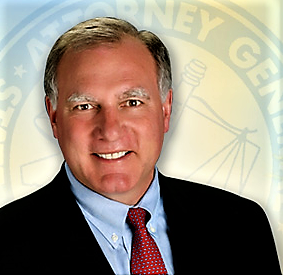
Connecticut Attorney General George Jepsen, who is leading a coalition of states suing generic drugmakers, told CNBC..."We've uncovered through emails, text messages and telephone patterns, plus cooperating witnesses, a very compelling case of systematic and pervasive price fixing within the industry,"...45 states, including Connecticut, as well as the District of Columbia and Puerto Rico moved to expand their lawsuit to 18 companies and 15 medicines. The suit also names two individual executives, including Rajiv Malik, president (of)...Mylan...The original complaint, filed in December, had focused on six companies and two medicines...
- This Week in Managed Care: October 27, 2017 (ajmc.com)

Kelly Davio, welcome to This Week in Managed Care from the Managed Markets News Network
- Amazon gains wholesale pharmacy licenses in multiple states (stltoday.com)

Throughout the past year, and without much fanfare, Amazon.com Inc. has gained approval to become a wholesale distributor from a number of state pharmaceutical boards...It’s unclear, though, whether the regulatory filings support speculation that the e-commerce giant is planning a move into the prescription drug delivery business, territory currently dominated by a handful of companies...Industry analysts in recent weeks have raised the possibility that Amazon was eyeing this lucrative new business, posing a potential threat to such companies as north St. Louis County-based Express Scripts Holding Co...According to a review of records by the St. Louis Post-Dispatch, Amazon has received approval for wholesale pharmacy licenses in at least 12 states, including Nevada, Arizona, North Dakota, Louisiana, Alabama, New Jersey, Michigan, Connecticut, Idaho, New Hampshire, Oregon and Tennessee....
- 2017 edition of Drugs of Abuse, A DEA Resource Guide (dea.gov)

- Is FDA Going Too Far in Enforcing Drug Compounding Law? (c.ymcdn.com)

...the FDA is overstepping its authority and jeopardizing patient access to compounded medications...The pharmacies say the Food and Drug Administration has misinterpreted Congress’s intent when it enacted the Drug Quality and Security Act (DQSA)...by not allowing office-use compounding...The pharmacies also are concerned that the FDA has issued no rules for compounding but only guidance documents, which aren’t legally enforceable...‘Mass confusion has resulted from the usage of guidance documents, and the FDA is definitely circumventing the Administrative Procedure Act (APA) in our opinion,’’ Cynthia Blankenship, executive vice president of the International Academy of Compounding Pharmacists (IACP)...The APA governs how federal agencies propose and establish regulations. IACP wants Congress to pass a bill (H.R. 2871) they say will fix these issues...Since the DQSA was enacted, the FDA has significantly..increased its inspections of drug compounding...facilities...The FDA has conducted more than 350 inspections of compounding pharmacies as of Nov. 27, 2016, and nearly 120 of those inspections were due to reports of serious adverse events or product quality issues...
- Week in Review: October 27, 2017 (pharmacytimes.com)

Nicole Crisano, PTNN. This weekly video program provides our readers with an in-depth review of the latest news, product approvals, FDA rulings and more.
- U.S. to promote use of opioid alternatives to treat addiction (reuters.com)

The U.S. Food and Drug Administration plans to encourage widespread use among opioid addicts of less harmful opioid drugs such as methadone and buprenorphine, a radical shift in policy that could draw opposition from those in the addiction field who believe abstinence is the only effective treatment...FDA Commissioner Scott Gottlieb outlined a proposal under which every addict who suffers a non-fatal overdose would be treated with an opioid substitute, for long periods if necessary, or even for life...“I know this may make some people uncomfortable,” Gottlieb said...“FDA will join efforts to break the stigma associated with medications used for addiction treatment.”...The FDA, Gottlieb said, will issue guidance for drugmakers to promote the development of new addiction treatments and lay out the agency’s interest in “novel, non-abstinence-based” products...
- What’s Causing America’s Rural Health Insurance Crisis? (realclearhealth.com)

...numerous rural health insurance markets have teetered on the brink of collapse. Rural areas have long posed a special challenge to health care policymakers, but a poorly-designed system of subsidies for rural hospital care has turned this into a crisis. It has fostered a rural hospital market structure that has crippled the ability of private insurers to negotiate reasonable payment rates, without fully securing the provision of essential care. By refocusing federal assistance on emergency care, it should be possible to restore rural insurance markets to health, while improving the affordability and access to care available to residents...MedPAC (Medicare Payment Advisory Commission)...has argued that CAHs (Critical Access Hospitals) are “not the best solution”, as “many small towns do not have the population to support efficient, high-quality inpatient services.” MedPAC has proposed...lump-sum payments to cover the overheads needed to provide 24/7 emergency care at geographically isolated outpatient-only facilities and suggested that Medicare reimbursement be extended to care provided by standalone emergency departments...This would focus subsidies to secure emergency services, which must be delivered locally, while leaving elective care to be located efficiently according to market demand. Such a reform would give emergency rural hospital care a firmer financial foundation while restoring payment rules for elective care that would make it possible for insurers to re-enter the rural marketplace.
- The Unhealthy Politics of Pork: How It Increases Your Medical Costs (nytimes.com)

No industry in America spends more on lobbying than health care...In 2016, the health care industry spent half a billion dollars on lobbying, with pharmaceutical companies, hospitals and health professionals making the largest contributions...Closely related to industry lobbying is the political maneuvering that congressional leaders use in an effort to pass legislation — specifically, targeted provisions known as earmarks, “sweeteners” or pork barrel spending...In 2010, Democrats hoping to secure votes from reluctant rural state senators added the “Frontier States” provision to the A.C.A., which increased Medicare payments to five states with low population densities...We all know earmarks and lobbying influence policymakers and policy. In health care, this has critical implications: who gets care, how much they get, how we pay for it. But there’s little hard data on exactly who benefits and how large the effects can be. A new study illuminates the ways these political dynamics can change congressional and hospital behavior — and how they can increase health care costs for the rest of us...America’s increasingly burdensome health care spending has many roots: new technologies, high drug prices, fragmented care, administrative expenses and the like. But lobbying and political maneuvering can increase costs, too — without clear benefits for patients, communities or society at large...Often these costs are borne by all of us, while the benefits — if any — go to a favored few. Excess medical spending, then, is driven not only by inefficiencies in our health system, but also by those in our political system. Our solutions, it seems, must confront that uncomfortable reality.
- Navigating New FDA Guidance on Preapproval Payer (ajmc.com)

In light of recent guidance from the FDA on appropriate communications between payers and drug manufacturers prior to a drug’s approval, a panel of stakeholders at the Academy of Managed Care Pharmacy 2017 Nexus meeting...discussed how these new guidelines can raise as many questions as they answer.
Soumi Saha...background on the implications of the guidance...Payers and other healthcare decision makers need thorough healthcare economic information (HCEI) on a potential new drug’s budgetary impact and treatment population in order to plan and budget their resources...Saha pointed to surveys that found that 64% of payers perceived a gap between the information they needed and what they received, and 91% of manufacturers said it was difficult to have their HCEI materials approved under FDAM (Food and Drug Administration Modernization Act)...
Mark Gaydos...was not aware of any enforcement letters that had been sent by the FDA regarding formulary communications, and that it would have been difficult for the FDA’s Office of Prescription Drug Promotion to write such letters anyway, considering the lack of clarity in the rules...
Jay Jackson...provided more insight on how manufacturers are using the updated guidance to change how they generate HCEI. It is important for companies to establish standards on the scope of the data they will present, the scientific evidence supporting it, and how it should be presented, in a process he called “beginning with the end in mind.”...“I think we’re moving in the right direction,” Jackson said. “We’re not even 1 year into this, but I do think there’s increased knowledge of how to handle” HCEI both proactively and reactively....
Kat Wolf Khatchatourian...discussed her experiences with HCEI communications...Because formularies and rate filings are locked in by June for the next year, they cannot be adjusted to account for any additional products that are approved later on in the year. As such, plans are “perpetually playing catch-up with the innovation that’s coming to market.”...She called for additional legislation that “would improve both the timing and the quality of information that’s able to be exchanged and enable a safe harbor where people are not fearful” of sharing information...