
- Trump’s FDA Commissioner on Drug Prices, Regulations, Science (bloomberg.com)
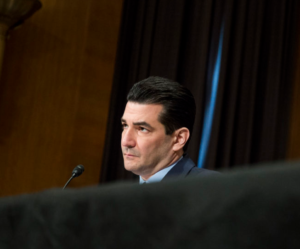
Trump vs. Big Pharma: Can He Bring Drug Prices Down?...U.S. Food and Drug Administration Commissioner Scott Gottlieb spoke with Bloomberg News about drug pricing, new medicine and regulations. This transcript of the interview has been edited for clarity and length.
- What’s the FDA’s role to play in drug pricing and what can the agency do, given that it hasn’t traditionally had a mandate to address the issue?
- Is it just small, opportunistic drug companies that are "gaming" the system, or is this something bigger companies do as well?
- What about the rest of the administration? Trump talked a lot about drug pricing on the campaign trail and after, yet we haven’t seen much action other than yours.
- What about an executive order on drug pricing -- there was talk that Trump was going to come out with something. Is that still being worked on?
- What about drugs like EpiPen, would you come out with new rules there to create more competition? [EpiPen, made by Mylan NV, is what’s known as a drug-device combination, where both the medicine and the device that administers it can have patent protections.
- But is it reasonable to assume you’re looking at doing something like this, on these types of devices?
- One of the things we’ve seen from the administration is, get rid of regulation, get rid of regulation, get rid of regulation. How does your philosophy as a regulator –- one of the biggest regulators in the U.S. government –- how does that line up with what the Trump administration has called for?
- Some of the things you’re doing to create more competition among drugs, people could interpret as a loosening of standards. I wonder if you think that’s the case?
- Through the years we’ve seen the agency go through cycles, of pushing drugs out into the market faster, versus being much more conservative about safety. Is the balance at the FDA changing?
- How broadly can you apply new standards or guidelines for drug approval? There’s been talk about it in cancer, but what about other diseases?
- Pharmacy Week in Review: July 20, 2017 (pharmacytimes.com)
Nicole Crisano, PTNN. This weekly video program provides our readers with an in-depth review of the latest news, product approvals, FDA rulings and more.
- U.S. Proposes Deep Cuts to Some Drug Payments Under Medicare (bloomberg.com)The Booming 340B Contract Pharmacy Profits of Walgreens, CVS, Rite Aid, and Walmart (drugchannels.net)The 340B Program Hits $16.2 Billion in 2016; Now 5% of U.S. Drug Market (drugchannels.net)What I Told HHS Secretary Tom Price About the 340B Drug Pricing Program (drugchannels.net)
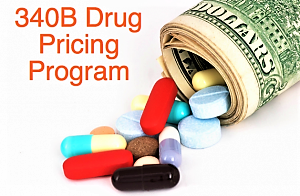
The U.S. Medicare program...proposed deep cuts to how much it reimburses hospitals to buy drugs under a policy that gives some health facilities access to cheaper medicines...The proposal...by the Centers for Medicare and Medicaid Services, would change the rate paid to hospitals for drugs under what’s known as the 340B program. The program gives hospitals who serve many poor patients access to deep discounts on some drugs. The new proposal would significantly cut the payments hospitals receive for those medications...Medicare would essentially be clawing back most of the discount from hospitals, (without any impact to payment made to drug manufacturers)…Medicare would pay hospitals for drugs purchased through the 340B discount program at a price more consistent with the actual cost hospitals and other providers pay to acquire those drugs. Seniors would see those savings passed on to them in the form of lower copays...The changes would cut seniors’ drug costs in Medicare by $180 million a year...Currently, hospitals are reimbursed for the drugs at their average sales price, plus 6 percent. The proposed rule would pay average sales price, minus 22.5 percent. The proposal would selectively hurt hospitals serving the poor, said Tom Nickels, executive vice president of the American Hospital Association.
- Updating drug labels would greatly help patients — but few companies do it (statnews.com)
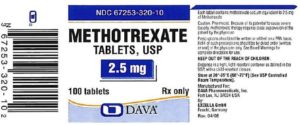
Unfortunately, information contained in the label often lags far behind the evolution of a drug’s use. Drug makers can update product labels to include additional uses when new data supports such modifications. In many cases, though, they don’t do this because there’s little incentive to do so, especially when a drug is no longer being actively marketed or when its patent has expired and it faces generic competition...The problem is widespread...Friends of Cancer Research, found that leading oncologists recommended additional uses beyond those listed on product labels for 79 percent of cancer drugs approved between 1999 and 2011. This means that a large number of well-accepted uses of cancer drugs that emerge over time are completely absent from drug labels...Take the drug methotrexate. Despite being the standard of care for a large number of rheumatologic conditions, the drug label lists only three. When labels are missing critical information like this, particularly regarding diseases other than cancer, insurers often refuse coverage, putting added strain on patients...In the long run, letting labels fall out of date will do a lot of damage by undermining reliance on the drug approval process, which was put in place to protect patients and safeguard public health…
- A Drug Maker Spends Big in Washington to Make Itself Heard (nytimes.com)Dean Heller-Senate-R-NV : $11,000 (datawrapper.dwcdn.net)
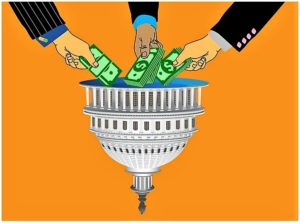
Two federal investigations — were only part of the troubles Mallinckrodt faced as the year began. The stock of the drug maker...was tanking. Wall Street worried that Medicare might reduce the half-billion dollars it was spending yearly on a Mallinckrodt drug with limited evidence of effectiveness...This year, the company left the industry trade group Pharmaceutical Research and Manufacturers of America...after the group threatened to kick out companies that did not spend enough on research...Mallinckrodt, however, has been increasing its spending in another area: It has been writing checks to politicians...After making meager donations in 2015, the company’s political action committee began raising its contributions for congressional campaigns last year. Lawmakers in both the House and Senate collected $44,000 from Mallinckrodt in 2017’s first quarter, nearly nine times what they got from the company in the same period two years ago...Mallinckrodt also spent $610,000 lobbying Congress, triple the amount of 2015’s first quarter...This year, a critical and risky one for drug companies, the industry as a whole is ratcheting up campaign donations and its presence on Capitol Hill...The totals do not include contributions from individual executives and lobbyists, or donations to leadership PACs...Drug companies are hedging their bets, writing checks to individual Democrats and Republicans. With Mr. Trump breaking ranks with Republicans to favor reform, "You can’t tell who’s your friend and who’s not,"…"So you have to go to a ground game — a more one-on-one legislator basis."
- EU watchdog concerned drug agency EMA may be too close to companies (reuters.com)

The European Medicines Agency, eager to accelerate access to promising new drugs, may be getting too cosy with the pharmaceutical companies it regulates...That is the concern of the watchdog charged with overseeing administrative irregularities in the European Union, which is launching a strategic inquiry to see if early-stage interactions with firms could influence agency approval decisions...The probe by the European Ombudsman will focus on meetings and discussions between drugmakers and agency officials before a new medicine is formally submitted for regulatory approval...Such "pre-submission activities" have grown in importance in recent years as the EMA has sought to fast-track important new treatments through special arrangements designed to streamline the approval process...Some in Europe, however, fear that moves to accelerate marketing authorizations, including by promoting "adaptive pathways" for clinical trials and designating some products as priority medicines, will increase risks. Critics include Germany's IQWiG, which plays a key role in determining the cost-effectiveness of drugs.
- Nevada State Board of Pharmacy Newsletter, July 2017 (bop.nv.gov)
- Our Newest Board Member - Melissa Shake
- Prescription Transfers
- National Pharmacy
- WHO Launches Global Patient Safety Challenge on Medication Safety
- Continuous Quality Improvement and Patient Safety Organizations
- NCPDP Releases Guide to Ensure Patients Get Their Medications During a Disaster
- FDA Warns of Illnesses and Deaths in Pets Exposed to Fluorouracil
- FDA Revises Final Guidance Documents on Bulk Drug Substances Used in Compounding
- APhA Resource Guide Applies JCPP Pharmacists’ Patient Care Process to Immunization Services
- CPE Training on Older Adult Fall Prevention Available Online
- New FDA Drug Info Rounds Training Video Addresses the Combat Methamphetamine Epidemic Act
- FDA Presents Series of CE Webinars for Students and Clinicians
- E-Prescribed Faxed Prescriptions
- This Week in Managed Care: July 21, 2017 (ajmc.com)

Laura Joszt, assistant managing editor at The American Journal of Managed Care. Welcome to This Week in Managed Care from the Managed Markets News Network
- Understanding CMS’s Surprising Reimbursement Cut for 340B Hospitals (drugchannels.net)
Centers for Medicare & Medicaid Services shocked everyone with a proposal altering a small part of the 340B Drug Pricing Program. CMS proposed reducing reimbursement for certain Medicare Part B drugs purchased by 340B-eligible hospitals: from Average Sales Price plus 6% to ASP minus 22.5%. Hospitals will also have to identify 340B claims with a new modifier...CMS explains its rationale for reducing reimbursement to hospitals. It references key studies from the Office of Inspector General, the Government Accountability Office, and the Medicare Payment Advisory Commission...The new ASP-22.5% reimbursement figure is based on a MedPAC study. It estimated that hospitals in the 340B program receive a minimum discount of 22.5% of the Average Sales price (ASP) for drugs paid under the outpatient prospective payment system…Three important items to note:
- The proposal would reduce patients’ coinsurance obligations.
- Manufacturers would not gain from this proposal. CMS designed the proposal to be budget neutral.
- The proposal does not address contract pharmacies.
- This Week in Managed Care: July 14, 2017 (ajmc.com)

Kelly Davio, Welcome to This Week in Managed Care from the Managed Markets News Network