
- Pharmacy Week in Review: May 19, 2017 (pharmacytimes.com)

Mary Bridgeman, Clinical Associate Professor at Ernest Mario School of Pharmacy, Welcome to This Week in Managed Care from the Managed Markets News Network.
- Pharmacy Week in Review: May 12, 2017 (pharmacytimes.com)

Nicole Crisano, PTNN. This weekly video program provides our readers with an in-depth review of the latest news, product approvals, FDA rulings and more.
- Revolt Against Sky-High Drug Prices Prompts a Pioneer to Cash Out (wsj.com)

Sticker shock over $89,000 muscular-dystrophy treatment from Marathon Pharmaceuticals and shame campaign against CEO led to hasty sale...Entrepreneur Jeffrey Aronin said a few years ago he hoped to eventually sell Marathon Pharmaceuticals LLC, which he controls and runs, for billions of dollars...Some employees have said they now expect him to shut down the company...His deflated ambition is a sign of the increasingly hostile reaction to drug companies that specialize in sharply raising the prices of old medications. Mr. Aronin did that over and over again for 15 years, most recently after Marathon won approval in February to sell a drug for muscular dystrophy in the U.S...It took only a month for sticker shock to cascade into criticism from families of patients with Duchenne muscular dystrophy...a shame campaign from congressional lawmakers in both parties and then a surprise deal by Marathon to sell the treatment to another company...It’s too soon to tell if Marathon’s fast retreat has damaged the long-term viability of the business model of sharply raising the prices of drugs. Other companies that have used a similar strategy include Valeant Pharmaceuticals International Inc. and Horizon Pharma PLC...Mr. Aronin seemed to have concluded that the negative publicity was insurmountable. He decided to sell despite reservations from a Marathon executive who favored trying to ride out the controversy...The Emflaza sale was completed in April. Marathon got $140 million in cash and stock, plus more than 20% of the drug’s future sales and a potential $50 million payment.
- Cancer drug pricing: the truth and the rhetoric (abpi.org.uk)Cancer Drugs Fund 'huge waste of money' (bbc.com)

In the last couple of weeks we’ve seen a number of articles in the press describing the Cancer Drugs Fund a ‘tragedy for patients’ and a ‘waste of money’...In part, this has been sparked by a recently published academic study that also claimed that several the medicines on the fund did not add value to patients – even suggesting that some did more harm than good...Sensationalist headlines about the cost of medicines are rarely a fair reflection of reality…Several of these medicines had been approved early by regulators, who decided that there was an urgency in getting them to the patients who needed them...there was little real world data available on these medicines at the time...The fact is it takes time, even after regulatory approval, to gather longer-term data to form a complete picture of the value of any medicine– the longer a medicine keeps someone alive the longer it takes to collect overall survival data...The trouble is we were – and for the most part still are – pretty far from having a perfect evidence-based way of allocating resources across the NHS…
- Pharmacy Society of Wisconsin Teams with Attorney General to Reduce Pharmacy Armed Robbery (pharmacytimes.com)
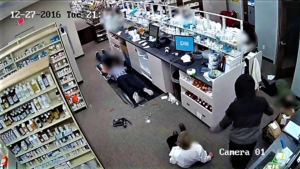
In 2015, the State of Wisconsin was third in the nation with 45 pharmacy armed robberies. In 2016, the state dropped to 31st in the nation with only 6 pharmacy robberies. That’s 39 fewer robberies than in the previous year or a 750% decrease..." Wisconsin AG Unveils New Effort to Prevent Pharmacy Robberies."...Wisconsin Attorney General, Brad Schimel, along with the Pharmacy Society of Wisconsin and law enforcement have formed a "comprehensive pharmacy robbery prevention and response training program."...Attorney General Schimel...told me, "we have a strong relationship with the Pharmacy Society of Wisconsin and have been working closely with them for the past 3 years. Certainly it was the high numbers (robberies) in 2014/2015 that concerned us. It’s probably been in the last 6 months that we have been working most intensively with them and this program."...the robbery program focuses on the following:
- Opening and closing practices at retail pharmacies
- Good in-store surveillance camera placement
- Time-delayed opening narcotic safes
- Phone etiquette
- Signage within a pharmacy (Time delayed safes, video equipment is use, etc.).
- Scottish government backs new integrated five-year pharmacy degree for 2020 (pharmaceutical-journal.com)

A five-year integrated pharmacy degree, leading to pharmacist registration, is set to be introduced throughout Scotland in three years’ time. However, the detail of how the workplace learning will fit into the degree timetable and which model to adopt, has not yet been decided...Shona Robison, the Scottish secretary for health and sport, is backing the proposal from the special advisory group that...published its report, ‘Five-year integrated initial education programme for pharmacists in Scotland’…"Given our current focus on workforce planning and development and the extending role of pharmacists within multidisciplinary teams, this report provides a real opportunity to better prepare our new pharmacists for practice in Scotland by ensuring they are able to practice in the evolving NHS health and social care landscape."...there is also a need for more "enhanced experiential learning in clinical practice" and a recognition of the benefits of workplace learning which can reinforce confidence and professional competence...The new degree also supports the Scottish government’s priorities to strengthen the primary care workforce and its desire for every GP practice to have access to a pharmacist with advanced skills...
- Aetna drops last 2 state markets under Affordable Care Act (hosted.ap.org)

Aetna said...that it won't sell individual coverage next year in its two remaining states - Nebraska and Delaware - after projecting a $200 million loss this year. It had already dropped Iowa and Virginia for next year. The insurer once sold the coverage in 15 states, but slashed that to four after losing about $450 million in 2016...The government-backed marketplaces are a pillar of the Obama-era federal law because they allow millions of people to buy health insurance with help from income-based tax credits. But insurers like Humana, and now Aetna, have been fleeing that market, and the remaining coverage options are growing thin…
- This Week in Managed Care: May 12, 2017 (ajmc.com)

Laura Joszt, assistant managing editor at The American Journal of Managed Care. Welcome to This Week in Managed Care from the Managed Markets News Network
- MP group wants pharmacist prescribers and minor ailment scheme in England (pharmaceutical-journal.com)

All-party parliamentary group recommends community pharmacy play a bigger role in the NHS to take pressure off Gps...Giving all community pharmacists the opportunity to become prescribers by 2022 and introducing a minor ailment service throughout England are among a series of recommendations made in a report by the All-Party Pharmacy Group, following an investigation into the impact of government reforms...The APPG, which is made up of a cross section of MPs with an interest in pharmacy, has also called on NHS England to outline their strategy for implementing the recommendations of the Murray Review into "community pharmacy clinical services"…Community pharmacy is a highly valued, but an underutilised resource, the APPG said, and the profession needs to play a more integrated role in both primary care services, and the treatment of patients with long-term health conditions...The health service is facing huge challenges due to patient demand, and by working to develop services, community pharmacy can shoulder some of the burden facing GPs, and other parts of the NHS...
- What I Told HHS Secretary Tom Price About the 340B Drug Pricing Program (drugchannels.net)
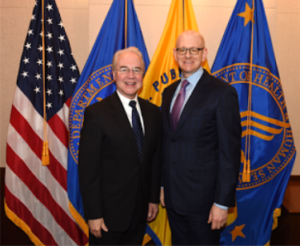
Tom Price and Adam Fein (left to right)
I (Adam Fein) had the privilege of meeting with Secretary of Health and Human Services Tom Price. I was invited to meet with Secretary Price for one of his listening sessions with industry experts and stakeholders. I appreciated the opportunity to share my perspectives...In our meeting, I highlighted four ways that the 340B Drug Pricing Program is raising drug costs. I then offered eight specific recommendations for improving the program by addressing the widespread channel distortions the program has caused.
HOW 340B RAISES DRUG COSTS
- Encouraging a shift in site of care from lower-cost physician offices to higher-cost hospital outpatient settings.
- Reducing manufacturers’ rebates to Medicare Part D and commercial payers.
- Raising out-of-pocket costs for uninsured patients.
- Reducing the generic dispensing rate and slowing the adoption of biosimilars.
HOW TO ADDRESS CHANNEL DISTORTIONS FROM THE 340B DRUG PRICING PROGRAM
- Require that covered entities share financial savings from the 340B program with uninsured and vulnerable patients.
- Revise hospital eligibility for the 340B program to create a clearer patient definition.
- Remove incentives for extraordinary hospital profits and site-of-care consolidations.
- Require HRSA and Apexus (the Prime Vendor) to report the size and scope of the 340B program.
- Mandate that contract pharmacies for 340B hospitals charge no more than the discounted 340B price to uninsured, underinsured, and vulnerable patients.
- Require contract pharmacies to identify 340B prescriptions at the time of adjudication (payer prescription approval).
- Require the disclosure of and transparency into the fees and profits generated by 340B contract pharmacies.
- Limit the number and geographic scope of contract pharmacy arrangements.