
- China’s new foreign drug proposal: Pharmas excited, analysts cautious (fiercepharma.com)

China’s FDA proposed changes to its foreign drug registration regulation in mid-March, aiming at speeding up approvals. The changes have provoked anticipation for growth among Western drugmakers, particularly around two provisions having to do with drug trials…
- The CFDA would no longer require that a drug be tested through phase 1 elsewhere before being tested in humans in China, and
- ...foreign drugmakers can use data from international multicenter trials that have been conducted in China to directly file for marketing approval.
...the change would attract greater investment from drugmakers and dramatically reduce the time to introduce blockbuster treatments...the new regulation "allows the imported innovative drug to move forward more naturally in China and not be required to be tied to international[-only] processes…I think [the Chinese government] has removed some significant obstacles and at the same time wishes to retain flexibility...what is clear is China’s goal to take the lead in pharmaceutical innovation, to become a launch pad of new meds...it’s about a national pride that doesn’t want to forever be left out in a global innovation discourse..."There is less the need to protect domestic industry than to play a leading role,"…Western companies will remain an "ever-present competitive force," and gradually opening up that competition will force domestic firms to up their game, to stand on their own feet and not rely on subsidies, and gradually eliminate those who cannot keep up…
- Remedy for Threat to US Pharmaceutical Industry’s Profitability (forbes.com)
US pharmaceutical companies...are...very vulnerable to increasing political pressure from the Trump Administration. The good news is there are actions these companies can take…
- Pharma’s Vulnerability - Small number of US jobs vs. large US revenues...pharma companies’ largest market and largest profit pool is the US. But only a small percentage of the jobs it offers are in the US. The Trump Administration has already been vocal about returning jobs to the US...Pharmaceutical companies have taken full advantage of offshoring...The Administration can apply pricing pressure in the US, to get these companies to commit to move work back from offshore…
- What Can Pharmaceutical Companies Do In The Face Of This Pressure?...pharmaceutical firms will need to demonstrate substantial job growth in the US...this (is) possible without destroying their margins...Disruptive digital technologies and capabilities are now mature enough to allow them to migrate work from the traditional low-cost labor locations to the US into far more efficient, automated, digital processes.
- In the debate over rising drug prices, both drugmakers and PBMs claim innocence (cnbc.com)
The battle over rising drug prices has become a full-blown he-said-she-said...Drug companies have pointed the finger at middlemen in the health-care system, saying they not only benefit from rising drug prices but contribute to their increases...Those middlemen — namely, pharmacy benefits managers (or PBMs) — have said the only parties responsible for drugs' list prices are the manufacturers...So who's right?...In a study released today, the PBM lobbying group, the Pharmaceutical Care Management Association, says an analysis it commissioned revealed no correlation between drug prices and rebates paid back to PBMs...The drug industry's lobby, the Pharmaceutical Research and Manufacturers of America...disagrees...
- Big Pharma faces $26.5B in losses this year as next big patent cliff looms, analyst says (fiercepharma.com)
With 18 branded drugs on the line, patent losses this year could jeopardize $26.5 billion in annual sales from Big Pharma, projected to be the biggest fall-off until at least 2025…Which companies are at risk? Roche, GlaxoSmithKline, Eli Lilly, Pfizer and AstraZeneca to name a few...This year's potential patent expiry damage is much more daunting than 2015 and 2016, when only four and nine meds from companies...lost exclusivity, respectively...Anticipated expirations for 2017 include Roche’s Rituxan, GSK’s Advair, Eli Lilly’s Humalog and Cialis, AstraZeneca’s Byetta, Pfizer’s Viagra and Merck’s Vytorin...the 2017 patent losses and associated sales declines will "continue to pressure growth" in the industry...about 45% of the sales at risk looking forward are for biologics, which will face biosimilar competition rather than generics..."erosion rates will be slower," but still "unpredictable.
- Key lawmakers reject bulk of Sandoval’s proposed mental health cuts (rgj.com)
Key lawmakers building the state's next budget rejected more than half of the cuts Gov. Brian Sandoval proposed to mental health services in Northern Nevada...The sub-committee in charge of reviewing and altering Sandoval's mental health budget restored nearly $5.5 million when it "closed" the budget for Northern Nevada Adult Mental Health Services...Sandoval had proposed cutting $10.1 million from the mental health agency, arguing that demand for state services are dropping as more Nevadans obtain coverage through Medicaid that allows them to access private health care providers. Sandoval's budget includes increased funding for Medicaid...lawmakers weren't convinced that those with a mental illness are able to access adequate care in the private market, especially as Congress works to repeal the Affordable Care Act, which provides expanded Medicaid coverage...lawmakers refused to:
- Close the 10-bed rapid stabilization unit at the Dini-Townsend Psychiatric Hospital, restoring $3.7 million to the budget;
- Slash $1.2 million in funding to provide services to severely mentally ill patients who are "treatment resistant";
- Eliminate outpatient counseling services at NNAMHS, restoring $367,217 to the budget;
- Pharmacy Week in Review: April 28, 2017 (pharmacytimes.com)
Nicole Crisano, PTNN. This weekly video program provides our readers with an in-depth review of the latest news, product approvals, FDA rulings and more.
- Meet the lawyer trying to pry drug pricing secrets out of Big Pharma (statnews.com)

He has a private jet, a pedigree of winning billion-dollar settlements, and the (sometimes grudging) respect of his adversaries. Now, he wants to become pharma’s latest headache...Class-action attorney Steve Berman is coming after a drug industry he says is "gouging" the American consumer. And his suits have the potential to crack the lid on the black box of drug pricing, shedding light on a secretive process that has sparked an escalating blame game between drug makers and the many middlemen in the US health care system...Berman sees the drug pricing system as a Rube Goldberg machine for extracting money from patients: Pharma sets a high price for a given medication, and then promises a big, undisclosed rebate to the pharmacy benefit managers who control which drugs get covered by insurers. As prices go up, so too do the secret rebates. Berman’s conclusion: The big guys get richer, and the patients pay the price...So he’s suing...
- This Week in Managed Care: April 28, 2017 (ajmc.com)
Laura Joszt, assistant managing editor at The American Journal of Managed Care. Welcome to This Week in Managed Care from the Managed Markets News Network
- University Vending Machine Offers Morning-After Pill (drugs.com)
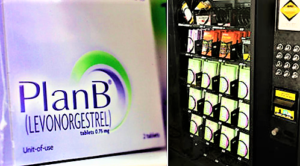
The morning-after pill is being sold in a vending machine at the University of California, Davis and many people support this type of availability...Along with condoms and pregnancy tests, the Wellness-To-Go Machine in a study lounge also dispenses the Plan B pill for $30 a box…It took economics major Parteek Singh nearly two years to get the vending machine into the lounge... Singh is getting calls from student across the country who want the same type of vending machine. "I want to see this on every college campus,"...
- FDA sends warnings letters to companies making cancer cure claims (drugstorenews.com)
The Food and Drug Administration...posted warning letters addressed to 14 U.S.-based companies allegedly illegally selling more than 65 products that fraudulently claim to prevent, diagnose, treat or cure cancer. The products are marketed and sold without FDA approval, most commonly on websites and social media platforms...Consumers should not use these or similar unproven products because they may be unsafe and could prevent a person from seeking an appropriate and potentially life-saving cancer diagnosis or treatment…The illegally sold products cited in the warning letters...include a variety of product types, such as pills, topical creams, ointments, oils, drops, syrups, teas and diagnostics (such as thermography devices). They include products marketed for use by humans or pets that make illegal, unproven claims regarding preventing, reversing or curing cancer; killing/inhibiting cancer cells or tumors; or other similar anti-cancer claims.