
- Nevada coalition wants drugmakers to reimburse diabetics (reviewjournal.com)
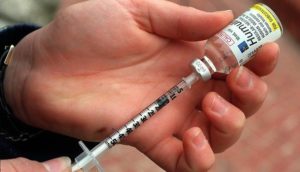
Nevadans dismayed by soaring drug prices told lawmakers...the state should take unprecedented action to curb costs...A coalition of hotel and casino owners, union leaders and Democratic lawmakers are attempting to mandate pharmaceutical companies refund people for overpriced American insulin...The bill targets diabetes medications...would require drugmakers to reimburse Nevada patients and insurers for what they pay above the highest price in other developed countries for the same prescriptions. Drugmakers would also have to reimburse people if American insulin prices increase more than inflation would suggest they should...Senate Bill 265 would require manufacturers to disclose the costs of all research, materials, manufacturing and administrative expenses that go into producing drugs for diabetics. Additionally, it would force them to notify government health agencies and insurance companies 90 days before they increase prices above the preceding year’s inflation rate...Nevada’s proposal would also have the state license all pharmaceutical sales representatives...Implementing that program in Nevada would cost about $350,000 and upkeep would cost $125,000 annually after that, according to the state Department of Health and Human Services...
- This Week in Managed Care: April 7, 2017 (ajmc.com)

Laura Joszt, assistant managing editor at The American Journal of Managed Care. Welcome to This Week in Managed Care from the Managed Markets News Network
- Pharmacy Week in Review: April 7, 2017 (pharmacytimes.com)

Nicole Crisano, PTNN. This weekly video program provides our readers with an in-depth review of the latest news, product approvals, FDA rulings and more.
- Greece’s corruption prosecutor quits, citing pressure over Novartis bribery probe (fiercepharma.com)
Novartis is embroiled in a soap opera in Greece, complete with bribery allegations and a suicide threat. Now the plot is thickening. The country’s chief corruption prosecutor, Eleni Raikou, has resigned—and she’s blaming the Swiss pharma giant’s legal issues for her decision...Raikou...sending a letter to Greece’s Supreme Court claiming she was targeted by "unofficial power centres" over her investigation of Novartis...Greek authorities raided Novartis’ offices...after one of the company’s local managers reportedly made a suicide threat...The executive was one of the employees the authorities were interviewing...The probe began after media reports appeared alleging that Novartis had paid bribes to local "functionaries,"…Raikou’s resignation letter said that the bribery probe turned up "substantial and crucial evidence" that doctors and some politicians in Greece had received €28 million ($30.4 million) worth of bribes from a Novartis bank account...some of the evidence was linked to the prosecution of a local businessman and former minister of defense Yiannos Papantoniou...
- European Regulatory Roundup: EMA Drafts Guidelines on Controlling False Positives in Clinical Trials (raps.org)

The European Medicines Agency has released draft guidelines about multiplicity in clinical trials. The text deals with how to mitigate the risk of false positives arising when clinical trials look at multiple treatment groups and endpoints...EMA’s guideline is applicable to most clinical trials. Once a study design expands beyond having two treatment groups, one predefined null hypothesis and a single primary variable — or adds an interim analysis — its sponsor needs to control for false positives. EMA cites the example of a trial that analyzes five subgroups independently. If each subgroup has a significance level of 2.5%, the likelihood of the study finding a statistically significant false positive hits 12%. As biotechs are under pressure to succeed, there is a risk they will seize on anomalies as evidence a drug works...To ensure trial designs diminish the risk of this happening, EMA has released a 15-page guideline. The draft runs through the situations in which it is necessary to adjust for multiplicity, when it is possible to draw reliable conclusions from subgroup analyses, when success against secondary endpoints can form the basis for additional claims and how to handle composite endpoints.
- The government’s struggle to hold opioid manufacturers accountable (washingtonpost.com)

Sixty-six percent of all oxycodone sold in Florida came from this company. But the DEA’s case against it faltered...Mallinckrodt’s blue 30-milligram oxycodone tablets became so popular among drug users and dealers that they acquired a street name — "M’s," for the company’s distinctive block-letter logo…the Drug Enforcement Administration trained its sights in 2011 on Mallinckrodt Pharmaceuticals, one of the nation’s largest manufacturers of the highly addictive generic painkiller oxycodone. ..It was the first time the DEA had targeted a manufacturer of opioids for alleged violations of laws designed to prevent diversion of legal narcotics to the black market. And it would become the largest prescription-drug case the agency has pursued…But six years later, after four investigations that spanned five states, the government has taken no legal action against Mallinckrodt. Instead, the company has reached a tentative settlement with federal prosecutors…Under the proposal…Mallinckrodt would agree to pay a $35 million fine and admit no wrongdoing.
- Failure to Reauthorize User Fee Programs Would Result in About 3,000 FDA Layoffs (raps.org)

Representatives from the biotechnology, medical device and generic drug industries told members of the Senate Committee on Health, Education, Labor & Pensions...that if the five-year user fee programs are not reauthorized, the US Food and Drug Administration would likely see more than 3,000 job cuts...Those layoffs...would significantly curtail new medical product approvals for pharmaceutical, biotech and medical device companies and likely delay research...Senators on both sides of the aisle also criticized Trump’s budget proposal on Tuesday, which would cut billions from the National Institutes of Health and replace congressional appropriations at FDA with more user fees...Representatives from industry groups BIO, AdvaMed and AAM reiterated to the committee what FDA officials told the House Energy & Commerce Committee late last month: that a failure to act on the already-agreed-to reauthorizations would be devastating...
- Ex-New York assemblyman, doctors charged in illegal opioid prescription scheme: officials (reuters.com)

A former New York assemblyman and a dozen pain clinic workers were arrested on Friday, accused of operating some of the largest "pill mills" in the northeastern United States and illegally prescribing more than 6 million opioid pills...Alec Brook-Krasny, who served in the New York State Assembly from 2006 to 2015 representing South Brooklyn, was charged with conspiracy and scheming to defraud by unlawfully selling prescriptions…Also arrested in the sweep of three pain clinics were at least one nurse practitioner, three physician's assistants, and two doctors including Dr. Lazar Feygin, who owned two of the clinics...They were accused of over-prescribing oxycodone...to clinic patients who showed signs of selling pills or abusing other narcotics...in exchange for oxycodone, the defendants also pressured patients to undergo unnecessary medical tests and procedures, then billed Medicare and Medicaid for millions of dollars...
- Uruguay gives pharmacies green light to start selling marijuana (reuters.com)

Uruguay's three-year process of legalizing recreational cannabis consumption reached its final stage...when the government said it would authorize pharmacies to begin selling the substance as of July...Sixteen pharmacies have registered with the government of the tiny South American country to be able to sell marijuana for recreational purposes. That number is expected to increase to 30 in the coming months, said Juan Roballo, head of the National Drug Board...The government hopes the formalization process will "guarantee the quality and the purity of the product" citizens consume, Roballo said. The cannabis sold in pharmacies will be grown by producers licensed by the state...The process will be heavily regulated by the government...Interested Uruguayans 18 or older must enroll in a government registry...and are limited to purchasing 40 grams per month…
- Sanofi Pasteur coughs up $19.8M to settle claims it overbilled the VA (fiercepharma.com)
Sanofi Pasteur agreed to pay more than $19.8 million to settle allegations that it overcharged the Department of Veterans Affairs for its products...The French pharma’s vaccines unit voluntarily reported the "calculation and reporting error" with the VA in 2012, and has since "cooperated fully and negotiated in good faith with the government,"...Sanofi Pasteur based its first disclosure to the U.S. government on products sold to the VA from 2007 to 2011. A follow-up investigation by the VA's Office of Inspector General found the overcharging error dated back to 2002, the DOJ said…This is not the first settlement in a pharma overpricing case. A range of drugmakers have paid settlements to wrap up improper billing allegations, which often fall under the False Claims Act, which governs overcharging for Medicare, Medicaid and other government programs. The most prominent recent case was Mylan’s $465 million deal to settle allegations that it overcharged Medicaid for EpiPens...