
- Healthcare fraud: A look back at a pivotal year (fiercehealthcare.com)

From a healthcare fraud enforcement perspective, 2016 was nothing short of a dynamic year...It was punctuated by the arrival of several important trends within the addiction treatment, post-acute care and compound pharmaceutical industries…It also featured a Supreme Court ruling on a False Claims Act legal theory, and a changing enforcement landscape in the aftermath of the Yates memo...As 2016 comes to a close, let's look back at some of the fraud trends that emerged—or in some cases intensified—over the last 12 months.
- Impact of the Yates memo
- Government targets post-acute care providers
- Big healthcare fraud busts continue
- Compound pharmacies under fire
- OxyContin marketing concerns revisited
- Addiction treatment gains ground, raises concerns
- Data continues to influence fraud detection
- EpiPen price hikes lead to overpayment settlement
- Medicare Advantage overbilling resurgence
- Supreme Court rules on implied certification
- Collins, McCaskill Release Committee Report of Bipartisan Drug Pricing Investigation (aging.senate.gov)
 Senator Susan Collins...Chairman... of the Senate Aging Committee, released a report on drug pricing...titled, “Sudden Price Spikes in Off-Patent Prescription Drugs: The Monopoly Business Model that Harms Patients, Taxpayers, and the U.S. Health Care System.” The comprehensive report details the findings stemming from the Committee’s bipartisan investigation into abrupt and dramatic price increases for prescription drugs whose patents expired long ago. Through close examination of the monopoly business model used by four pharmaceutical companies to exploit market failures, the report examines how companies acquired decades-old, off-patent, and previously affordable drugs and then raised the prices suddenly and astronomically at the expense of patients. The report provides case studies of the four companies; explores the influence of investors; assesses the impacts of price hikes on patients, payers, providers, hospitals, and the government; and discusses potential policy responses.
- Enact the Increasing Competition in Pharmaceuticals Act...to incentivize competition to address regulatory uncertainty, small market size, and other factors that serve as limitations to generic entry;
- Encourage generic competition by ensuring the right to obtain samples and simplifying Risk Evaluation and Mitigation Strategies;
- Consider allowing highly targeted, temporary prescription drug importation to provide prompt price relief for major price increases in off-patent drugs;
- Take steps to prevent the misuse of patient assistance programs and copay coupons;
- Reinvigorate the Federal Trade Commission to take greater enforcement action on drug company mergers, operations, and drug market dynamics; and
- Improve transparency in the health care system.
- Beijing buyers club? China’s cancer patients gamble on gray market (reuters.com)

There is no official data on how many cancer patients in China turn to unregulated channels, but research indicates an increase globally in the use of gray and counterfeit markets...Medicines bought through unofficial channels are not necessarily harmful, and some of the Indian generics available online are approved for use in other markets. But they can include drugs that are ineffective or fake...The reason patients in China turn to these unregulated channels are largely financial...Low average salaries, a chasm between urban and rural wealth, and creaking state reimbursement schemes mean serious disease is among the leading causes of poverty, creating a major social burden and rising debt...Turning to unofficial channels can also carry a legal risk...It's because of problems with China's public health insurance system that so many seriously ill patients aren't able to survive…
- This Week in Managed Care: December 23, 2016 (ajmc.com)
Laura Joszt, with The American Journal of Managed Care. Welcome to This Week in Managed Care, from the Managed Markets News Network.
- Thousands of medical marijuana dispensary applications possibly leaked in Nevada (lasvegasnow.com)

The state of Nevada’s government website has potentially exposed the personal data on over 11,700 applicants for dispensing medical marijuana in the state...each application, eight pages in length, includes the person’s full name, home address, citizenship, and even their weight and height, race, and eye and hair color. The applications also include the applicant’s citizenship, their driving license number, and social security number...A Google search done by a man in Dallas led to the discovery of the problem. Justin Shafer said he discovered the breach Tuesday night while he was looking to see if any government websites had errantly posted social security numbers online. Shafer said he noticed one of the completed applications pop up in the search results with a social security number in plain view...Many of the people affected are employed by members of the Nevada Dispensary Association…Riana Durrett, executive director of Nevada Dispensary Association...says she's been assured the state is focusing all of its efforts to fix the breach...The state disabled the website...as a precaution...
- NICE and FDA join forces to improve medtech access (pharmaphorum.com)
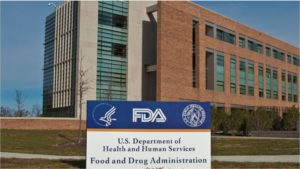
The UK’s cost effectiveness body is to work with the US regulator to speed up patient access to medtech innovations...NICE’s Scientific Advice programme team and the FDA’s Payer Communication Taskforce are now looking at how best to help developers of medical devices, diagnostics and other medtech technologies gather the best evidence to demonstrate their product’s effectiveness...In their efforts to get a product to market, companies can get caught out...To win regulatory approval in the US, companies give the FDA data on the safety and efficacy of their devices. But although they often do enough to win FDA approval, they need additional evidence to prove to the organisations who would actually pay for those devices that they are cost-effective and clinically-effective...NICE and the FDA’s collaboration is the latest effort to help clarify the pathway that new medtech innovations have to navigate to reach patients
- Cardinal settles with U.S. over painkiller shipments to pharmacies (reuters.com)

A drug distributor owned by Cardinal Health Inc has agreed to pay $10 million to resolve claims it failed to alert the U.S. Drug Enforcement Administration to suspiciously large orders of...painkillers by New York-area pharmacies...The settlement with Kinray LLC, a New York City-based pharmaceutical distributor, disclosed in papers filed...in federal court in Manhattan...Kinray shipped the drugs to more than 20 New York pharmacy locations in amounts that were many times greater than the distributor's average sales of controlled substances to all of its customers...Kinray ignored numerous "red flags" and did not report any suspicious orders to the DEA...latest agreement stemmed from a 2012 settlement with the DEA in which its facility in Lakeland, Florida, was suspended from selling painkillers and other drugs for two years...The 2012 deal only resolved administrative aspects of the case, not potential fines Cardinal Health faced in Florida or elsewhere...(Cardinal Health)...has set aside $44 million to cover those potential liabilities.
- E.U. Agency in Limbo as Hidden Costs of ‘Brexit’ Continue to Mount (nytimes.com)

When it switched offices in London not long ago, the European Medicines Agency signed a 25-year lease on a shiny new building in the east of the city...Just two years later, the organization is preparing to relocate again, but this time its likely move has sent tremors through Britain’s pharmaceutical industry and raised fears over public safety...the European Medicines Agency...will almost certainly have to leave Britain, just one of the many unanticipated consequences of the vote that is forcing the country to unscramble 40 years of European integration...cities...are scrambling to lure its team of experts, who license drugs and monitor their use for safety...Most worrisome is an internal assessment suggesting that relocating the agency might mean losing up to half its personnel...With a full workload of applications in the pipeline, the organization is already close to the breaking point…If it loses more than 15 percent of its experts….the agency will probably not be able to maintain current schedules for licensing new drugs and monitoring existing ones...
- Scheduling data altered at VA’s Las Vegas-area mental health clinics, report says (reviewjournal.com)
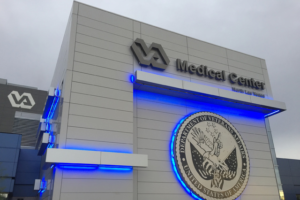
Schedulers for VA mental health services in the Las Vegas area altered wait time data in 2013, months before a national scandal erupted over similar practices at a VA hospital in Arizona, according to a long-delayed report by the agency’s inspector general...A report summary by the Veterans Administration’s Office of the Inspector General, published this week, did not conclude that the practices were a deliberate attempt to fool a tracking system of wait times...But it noted that “several of the (medical support assistants) interviewed indicated that they were directed by supervisors to manipulate scheduling data.”…In response to the report, the VA Southern Nevada Healthcare System...disputed the allegation that the wait times were deliberately manipulated to fool the tracking system, saying the Inspector General’s Office found no hard evidence to support the claims...Rep. Dina Titus...released a statement...calling the allegations in the initial complaint troubling and requesting a briefing on steps taken to ensure the problems have been resolved...“I have been assured for years that this was not happening in our state,” Titus said...“Such behavior is shameful and unacceptable.”
- Inside the DEA: A chemist’s quest to identify mystery drugs (hosted.ap.org)
New drugs were appearing in the lab every other week, things never before seen in this unmarked gray building in Sterling, Virginia. Increasingly, these new compounds were synthetic opioids designed to mimic fentanyl...The fentanyl-like drugs are pouring in primarily from China...an assertion Beijing maintains has not been substantiated. Laws cannot keep pace with the speed of scientific innovation. As soon as one substance is banned, chemists synthesize slightly different, and technically legal, molecules and sell that substance online…Right now we're seeing the emergence of a new class - that's fentanyl-type opioids...Based on the structure, there can be many, many more substitutions on that molecule that we have not yet seen...Entrepreneurial chemists have been creating designer alternatives to cannabis, amphetamine, cocaine and Ecstasy for years. But this new class of synthetics is far more lethal...Today, it is almost as easy to order synthetic opioids on the open internet as it is to buy a pair of shoes...Payments can be made by Western Union, MoneyGram or Bitcoin, and products are shipped by DHL, UPS or EMS - the express mail service of China's state-run postal service. As the lines between licit and illicit commerce blurred, it became possible for just about anyone with internet access to score an ever-changing array of lethal chemicals...