
- Health-insurance commission cuts make it harder for consumers to get expert help (reviewjournal.com)

As insurance companies nationwide look for ways to cut costs, commissions for individual plans have been reduced and in some cases eliminated...That has led many of the hundreds of brokers and agents in Nevada to focus on other more-profitable sectors and made it harder for shoppers to find help navigating the complicated and confusing marketplaces for individual health insurance, either private or via the Affordable Care Act exchange...On the Silver State Health Insurance Exchange, the state’s official portal for so-called Obamacare plans, the number of brokers and agents registered to assist users declined from roughly 500 last year to about 150 this year…Nevada’s largest insurer, UnitedHealthCare, said that it will still pay commissions on renewals, though at a lower rate, but not on new policies...Our actions are consistent with our long-stated approach to continually evaluate the dynamics of the market as they evolve, and to refocus our resources as necessary so that we can provide consumers with access to quality care…
- Drug Prices, Senior Programs May Deliver Blow to State Budgets (realclearhealth.com)
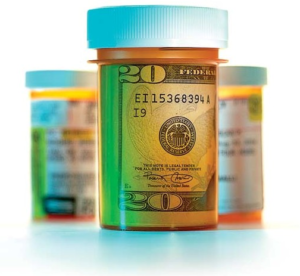
Higher prescription drug prices, combined with changes to Medicare and Social Security, could deal a $1.6 billion blow to state budgets next year by forcing them to ratchet up spending on Medicaid…Without congressional intervention, most state Medicaid agencies will have to come up with tens of millions of dollars to cover the bill...The new costs could prompt states to tighten eligibility requirements or cut benefits...The new costs come at a time when many states already are experiencing budget strains...About $1.2 billion of the $1.6 billion projected Medicaid hike for the states is the result of higher prices for prescription drugs in Medicare, the federal health plan for the elderly and disabled people. Medicaid and therefore the states are affected by a group of “dual eligible beneficiaries,” who receive both Medicare and Medicaid benefits because of their low income...
- Mylan refuses to testify at Senate hearing about EpiPen rebates to Medicaid (statnews.com)
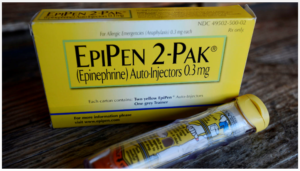
In a move that angered a key Senate lawmaker, Mylan Pharmaceuticals has declined to testify at a planned Nov. 30 Senate hearing to review a $465 million settlement the drug maker purportedly reached with the US Department of Justice for shortchanging Medicaid...In a letter to...the Senate Judiciary Committee...Mylan explained the company will not appear for three reasons – the “stated focus of the hearing,” because the hearing involves a “pending matter,” because both the Justice Department and the Centers for Medicare & Medicaid Services have already said they will not send officials to testify...(Senator) Grassley (chairs the Senate Judiciary Committee) responded by blasting the feds, as well as the drug maker...“The Obama Administration is dodging accountability for an expensive problem, and now a company is following its bad example,” he said in a statement. “Taxpayers have paid and [reportedly] continue to pay hundreds of millions of dollars more for the EpiPen than they have to pay. This happened because either the agencies in charge dropped the ball, the company gamed the system, or both.”
- 5 Most Expensive Medicare Drugs — and Which Companies Are Getting Rich from Them (fool.com)

Medicare spends billions of dollars each year on prescription drugs. That's not surprising. What might be surprising, though, is how much the federal healthcare program spends per patient on some of these drugs. Here are the five most expensive drugs covered by Medicare on a per-patient basis -- and which companies are making a lot of money from them.
- H.P. Acthar (corticotropin)…Medicare spent $162,371 per patient in 2015 on a drug that's been around since the 1950s -- H.P. Acthar. The drug, which is made from an extract from the pituitary glands of pigs, is used to treat several indications, including multiple sclerosis relapse and infantile spasms.
- Remodulin (treprostinil)…which treats pulmonary arterial hypertension, ranked as the second most expensive drug covered by Medicare. The average cost per patient for Remodulin in 2015 was $144,070. Unlike most of the high-cost drugs reimbursed by Medicare, the price for Remodulin didn't increase last year.
- Tyvaso (treprostinil inj)…Another pulmonary arterial hypertension treatment, Tyvaso, came in right behind Remodulin on Medicare's list of costly drugs. Medicare spent $107,489 per patient for Tyvaso in 2015.
- Provenge (sipuleucel-T)…ranks as the most expensive cancer treatment (on a per-patient basis) for Medicare. The federal program spent $95,290 per patient for the advanced prostate cancer immunotherapy last year.
- Harvoni (ledipasvir and sofosbuvir)…Medicare spent $92,847 per patient last year for Harvoni. That landed the hepatitis C drug at No. 5 on the list of most expensive drugs covered by Medicare. However, Harvoni is at the very top of the list when it comes to total spending. Medicare spent over $7 billion in 2015 for Harvoni, by far the most of any drug covered by the program.
These five most expensive drugs covered by Medicare have one surprising thing in common: None of them had big price increases last year...Another thing that most of these drugs have in common is that they play a significant role in the fortunes of the companies that sell them.
- 8 Things to Know About Biosimilars (medscape.com)

With the recent US Food and Drug Administration approval of a fourth biosimilar medication, these compounds remain a hot topic in many areas of medicine, including nephrology, oncology, endocrinology, gastroenterology, and rheumatology…Despite the growing body of knowledge about biosimilars—and despite their increasing coverage in peer-reviewed journals and presentations—a recent Biosimilars Forum press release reveals that more physician education is needed about these medications...
- What Are Biosimilar Medications?
- What Is the Approval Process of Biosimilars?
- How Many Are Approved, and for What Conditions?
- What Does 'Interchangeable' Mean?
- What Is Extrapolation?
- Are Biosimilars Safe, and Can They Be Trusted?
- Do Patients Know and Trust Biosimilars?
- How Do the Costs of Biosimilars Compare to Biologics?
- This Week in Managed Care: November 23, 2016 (ajmc.com)
Sara Belanger with The American Journal of Managed Care. Welcome to This Week in Managed Care from the Managed Markets News Network
- High prices for some leukemia drugs will make them less cost-effective (statnews.com)

Pills used to treat a form of leukemia may be more effective and convenient than chemotherapy, but a new study suggests pricing is projected to raise the annual cost of care by 590 percent – to more than $5 billion – over the next decade, straining payer budgets and causing financial hardship for patients...Here’s why: The number of people in the US living with chronic lymphocytic leukemia, which is a rare blood and bone marrow disease, is forecast to reach 199,000 in 2025, up from 128,000 five years ago, thanks to more effective treatment. But a higher-priced pill, which is used as a first-line therapy and taken indefinitely, will also outpace the cost of chemotherapy, which has a fixed duration for treatment...As a result, the annual cost of managing the disease is projected to rise to $5.1 billion by 2025, up from $740,000 million in 2011, based on current pricing. And the cost of treating each patient for a lifetime is expected to increase 310 percent, to $604,000 from $147,000 during that same period. And for Medicare patients, the out-of-pocket cost is forecast to jump 520 percent, to $57,000 from $9,200.
- GAO Releases Compounding Report (iacp.site-ym.com)

The U.S. Government Accountability Office has published a report...on compounding entitled “ Drug Compounding – FDA Has Taken Steps to Implement Compounding Law, but Some States and Stakeholders Reported Challenges.”
- Pharmacy Week in Review: November 23, 2016 (pharmacytimes.com)
Kelly Walsh, PTNN. This weekly video program provides our readers with an in-depth review of the latest news, product approvals, FDA rulings and more.
- NYPD Union Goes After Drug Prices Amid DOJ Pharma Probe (bloomberg.com)

As the generic drug industry braces for charges from a two-year U.S. Justice Department antitrust investigation, a union representing the sergeants of the New York Police Department is attempting to hit some companies with civil penalties as well...A pair of lawsuits filed by the Sergeants Benevolent Association Health & Welfare Fund against two groups of drugmakers, which include...Novartis AG’s generic drug unit,...Perrigo Co., India’s Wockhardt Ltd. and Taro Pharmaceutical Industries Ltd., allege the companies colluded to raise prices on two dermatological creams as much as 1,000 percent…U.S. pharma sector is now facing sharp scrutiny on pricing, including a sweeping Justice Department probe. That antitrust investigation spanning companies from around the world is examining whether some executives agreed with one another to raise prices on generic medicines in the U.S...