
- New tools for assessing drug value haven’t caught on with payers — yet (statnews.com)

As prices for prescription drugs keep rising, several organizations have developed different ways to assess the value of new medicines based on such attributes as cost, quality of life, and effectiveness. But a new survey finds that even as health plans continue to criticize drug prices, they have not yet embraced these new tools...None of the 11 plans queried actively rely on these new methods and a majority do not expect to do so next year either, according to the survey conducted by Avalere Health...The tools are being developed by four groups — the American Society of Clinical Oncology, the Institute for Clinical and Economic Review, the National Comprehensive Care Network and Memorial Sloan Kettering Cancer Center...The plans are...anxious to get better comparative information on the value of different therapies, but are also concerned these tools are somewhat nascent and not robust enough...
- FDA enhances warnings on group of strong antibiotics (reuters.com)FDA updates warnings for fluoroquinolone antibiotics (fda.gov)

The...Food and Drug Administration has enhanced warnings of side effects of a group of strong antibiotics used to treat a variety of respiratory and urinary tract infections and limited their use to patients with no alternatives...fluoroquinolones include Johnson & Johnson's Levaquin, Bayer's Cipro extended-release tablets and Merck Inc's Avelox....FDA added a box warning to the antibiotics in July 2008 to inform users about the increased risk of tendinitis in which the tissue connecting muscle to bone becomes inflamed.
- How Buprenorphine Implants Help People Fight Opioid Addiction (forbes.com)Implant for Opioid Dependence (req subscription) (jama.jamanetwork.com)
Poor medication adherence can lead to reduced treatment benefits, even death in some cases. Implants are being used by some medical professionals to increase the likelihood of patients “following the doctor’s orders.” Specifically, some clinicians are using these devices in individuals with an addiction to opioids...Even though buprenorphine can be used to treat opioid addiction, its efficacy is limited by the potential lack of adherence to daily, sublingual doses. To...increase...compliance among patients undergoing buprenorphine treatment...the FDA approved the first buprenorphine implant for the treatment of opioid dependence...Called Probuphine, the treatment provides a low-level dose of buprenorphine for six months...This treatment option may also be considered an effective relapse prevention tool. Icahn School of Medicine at Mount Sinai researchers found...
- To avoid shortages, FDA allows imports from 8 drug plants banned for quality shortfalls (fiercepharma.com)
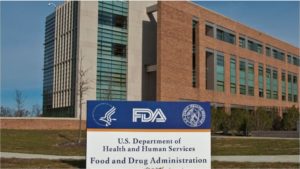
With the vast majority of drugs and drug ingredients being manufactured outside the U.S., the FDA has had to step up its international oversight and often ban products from plants that don’t meet its standards. But the FDA also has found itself increasingly having to walk a tightrope between drug safety and drug availability...Because of the nature of the business, with companies in China or India often being a primary source of essential drugs, the FDA sometimes must exempt products and allow imports from plants that it believes have a poor record. Since 2013 the FDA has allowed 8 plants whose products are otherwise banned from the U.S. to go ahead and import some drugs or ingredients to avoid shortages, according to FDA Import Alert records.
- State Department accused of interfering with efforts for affordable medicines (statnews.com)

The...Department of State is being accused of inappropriately interfering with efforts by the United Nations and two countries to ensure access to affordable medicines for poor people...In a...letter...dozens of patient advocacy groups (Public Citizen, Oxfam, National Physicians Alliance, AFL-CIO) charged that State Department officials questioned the premise of a UN panel devoted to exploring wider access, pressured the Colombian government not to sidestep the patent on a Novartis cancer drug, and pressed India to adopt policies that could result in higher drug prices and eliminate the production of lower-cost generics....they asked...Secretary of State John Kerry to detail "whether the State Department sees these incidents as coherent with US government policy and (to clarify) State Department commitments and position on the right of governments to use (World Trade Organization treaties) to protect public health and access to medicines."
- Medicare safeguard overwhelmed by pricey drugs (toledoblade.com)
A safeguard for Medicare beneficiaries has become a way for drugmakers to get paid billions of dollars for pricey medications at taxpayer expense, government numbers show...The cost of Medicare’s “catastrophic” prescription coverage jumped by 85 percent in three years, from $27.7 billion in 2013 to $51.3 billion in 2015...Out of some 2,750 drugs covered by Medicare’s Part D benefit, two pills for hepatitis C infection — Harvoni (ledipasvir/sofosbuvir) and Sovaldi (sofosbuvir)— accounted for nearly $7.5 billion in catastrophic drug costs in 2015...The pharmaceutical industry questions the numbers, saying they overstate costs because they don’t factor in manufacturer rebates. However, rebates are not publicly disclosed...Medicare’s catastrophic coverage was originally designed to protect seniors with multiple chronic conditions from the cumulatively high costs of taking many different pills. Beneficiaries pay 5 percent after they have spent $4,850 of their own money. With some drugs now costing more than $1,000 per pill, that threshold can be crossed quickly...
- Facing Cancer Drug Shortage, U.S. Relies on Banned Chinese Plant (bloomberg.com)

Last September, U.S. regulators faced a dilemma: whether to allow importation of drug ingredients from a Chinese factory (Zhejiang Hisun Pharmaceutical Co.) with a history of poor quality controls, or face shortages of treatments for American cancer patients...Food and Drug Administration inspectors had uncovered what the agency later called “broad data manipulation” at the factory, located in Taizhou....Information about the potency and purity of some product batches had been deleted, making it difficult to investigate a significant increase in customer complaints...The agency issued an indefinite ban on the factory...one of China’s leading exporters of pharmaceuticals products. Yet to avoid possible shortages of drugs, the FDA allowed the plant continue exporting about 15 ingredients for use in finished drugs in the U.S., including nine key cancer medicine components. Hisun says that it takes quality seriously and has complied with requirements.
- More than half of adults misuse medications, study finds (washingtonpost.com)

More than half of adults and 44 percent of children who were drug-tested by a national clinical laboratory last year misused their prescription medications, according to a study...by Quest Diagnostics...Misuse of medications can mean that patients were either taking too much, too little or none of their medications. It also can mean test results showed they were using other drugs that had not been prescribed, including illicit drugs -- as 45 percent of adults were doing...The rate of misuse identified by the study might skew higher than what would be found in the general U.S. population. Some patients were tested because their health providers determined there was a "high probability" of them mismanaging medications...The study also identified the drugs most often misused by patients depending on their age: amphetamines for youth 17 and under, but benzodiazepines and anti-anxiety medications for adults 25 and older, followed by opioid painkillers.
- Medical groups push to water down requirements for disclosing industry ties (statnews.com)S. 2978: Protect Continuing Physician Education and Patient Care Act (govtrack.us)OpenPayments (cms.gov)
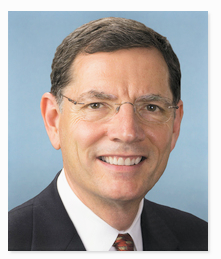
Senator John-Barrasso
Nearly 100 national and state medical societies from around the United States are backing a Senate bill (Protect Continuing Physician Education and Patient Care Act, (SB 2978) that would exempt drug and device makers from reporting payments made to doctors for receiving continuing medical education...sessions, medical journals, or textbooks. Among them are the American Medical Association and the American College of Cardiology...The move is the latest push in a long-running effort to roll back requirements for reporting such payments to a federal database, which tracks financial relationships between companies and physicians. Known as OpenPayments, the database was launched...in response to concerns that financial ties between drug firms and device makers and doctors may unduly influence medical practice and research. It was included in the Sunshine Act provision in the Affordable Care Act. A recent analysis found that payments can affect prescription rates...
- Facing thousands of Accutane claims, Roche wins appeal of $18M jury verdict (fiercepharma.com)
Roche won another reprieve in its fight against Accutane safety claims. The...drugmaker persuaded a New Jersey appeals court to overturn an $18 million jury verdict in favor of two Accutane (isotretinoin) plaintiffs...Appellate Division ruled...that the trial court judge "seriously erred" in allowing some revelations in court while restricting others. The judge’s mistakes were weighty enough to warrant a new trial...It’s the latest in a series of victories on appeal for Roche...The lawsuits are among 3,000 assigned to multicounty litigation in New Jersey. The plaintiffs allege that Roche’s acne drug, pulled from the market in 2009, triggered their inflammatory bowel disease...Accutane once was a blockbuster med for Roche and a staple therapy for acne sufferers. Roche pulled Accutane for "business reasons"...long after the drug went off patent and generics hit the market. The company already was facing hundreds of liability lawsuits at the time