
- Troubled Teva plant in Hungary faces an FDA crackdown (statnews.com)

The latest broken link in the pharmaceutical supply chain has appeared in Hungary, where Teva Pharmaceuticals has suspended production at a plant following a crackdown by the US Food and Drug Administration...The drug maker voluntarily halted work at its Godollo facility, which makes sterile injectable medicines, as "a precautionary measure" shortly after FDA inspectors visited last January...The company is "working around the clock to restart manufacturing operations as soon as possible,"...The shutdown only came to light after Hungarian regulators late last week issued a notice in an attempt to address concerns about drug shortages...The disclosure by Hungary’s National Institute of Pharmacy...came several days after the FDA also issued a so-called import alert, which is a notice about products that are banned from entering the United States. The FDA alert cites issues with good manufacturing practices, a regulatory term for minimum standards, but specific problems were not disclosed...the episode underscores the ongoing challenges that even the largest drug makers face in maintaining their plants...
- Drug makers pay $67 million for misleading docs about cancer drug survival data (statnews.com)

Two drug makers — Roche’s Genentech and OSI Pharmaceuticals — announced a deal...to pay $67 million to resolve charges they made misleading statements about the effectiveness of the Tarceva drug to treat non-small cell lung cancer...between 2006 and 2011, the companies gave promotional materials to oncologists that included misleading and overstated survival data to influence prescribing. The drug was originally approved by the US Food and Drug Administration as a second-line or back-up treatment, but the inflated data prompted some doctors to use Tarceva as a first choice, which boosted usage...the feds contend the companies violated the False Claims Act, because federal health care programs, such as Medicare and Medicaid, overpaid for the medicine…The infractions came to light thanks to a whistleblower lawsuit that was filed by Brian Shields, a former Tarceva senior product manager. His 2011 lawsuit described an elaborate scheme that was used to bolster Tarceva prescriptions, including kickbacks purportedly paid to physicians...
- Florida Stores Help Consumers Buy Imported Drugs Despite Federal Ban (realclearhealth.com)
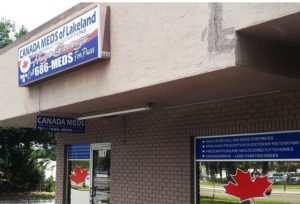
Canada Meds Of Lakeland, Florida
A hardy market for imported low-cost prescription drugs has taken root in Florida, nourished by older Americans and tolerant regulators...About 15 storefront businesses across Florida claim to help thousands of customers each year place online orders from pharmacies in Canada and overseas for medicines at prices up to 70 percent off what people pay in the U.S...Federal authorities say the practice is illegal and dangerous because the U.S. has not reviewed the safety of some drugs approved for sale in foreign countries or they could be counterfeit. But since the first storefront opened in 2002 in Delray Beach, Florida, the government has never charged shops or their customers, according to operators and researchers who follow the business...The trade’s surprising survival spotlights both seniors’ continuing difficulties with medication expenses, and how far some people will go to save money...the Bush and Obama administrations have let the imported drug stores stay open...If they clamped down on these storefronts, it would be seen as restricting access to affordable drugs and supporting big bad [drug] corporations...The administration is saying that they are against this as a matter of policy, but programmatically [they] are not doing anything about it...At the time, U.S. Customs and Border Protection was routinely seizing mail-order packages of prescription drugs entering the U.S. from Canada...
- Over-the-Phone Cancer Counseling Found to Reduce Costs (specialtypharmacytimes.com)Patient-reported outcomes in a multicenter randomized study of in-person versus telephone disclosure of genetic test results for cancer susceptibility. (meetinglibrary.asco.org)

Providing genetic test results over the phone to patients at risk for cancer-causing genetic mutations does not cause individuals additional stress and could be an effective way to help reduce costs and access burdens compared with those who receive results in person, a recent study found...While health care providers deliver results for many tests over the phone, results of genetic tests have traditionally been delivered in-person because of the complexity, potential for increased levels of distress, or confusion over what the results could mean...delivering results over phone...does not generate more distress, even for those with positive results and even now that we are using multi-gene testing...those who received their results over the phone had fewer barriers in accessing genetic counseling services compared with patients given their results in-person.
- Senators ask drug makers to explain prices for opioid overdose antidote (statnews.com)

In the latest attempt to combat prescription drug abuse, two US senators want several drug makers to explain their pricing for naloxone, a decades-old drug that is widely used to reverse the effect of opioid and heroin overdoses...The move comes amid ongoing reports that the cost of the treatment continues to rise, despite bitter complaints from public officials. At the same time, public health officials cite a growing number of overdose deaths…In identical letters to five drug makers...(Amphastar Pharmaceuticals, Mylan Laboratories, Kaleo, Adapt Pharmaceuticals, and Pfizer-Hospira)...the Senate Special Committee on Aging, wrote that they are concerned that rising prices...They asked what the companies are doing to ensure access to their treatments...
- 5 Things Pharmacists Should Know About Dabbing (pharmacytimes.com)

For some, dabbing is a dance popularized by pro athletes like Cam Newton and LeBron James...For others, it refers to using a potent marijuana extract...Here are 5 things pharmacists should know about the potentially less familiar form of dabbing that is increasingly a public health concern.
- The tetrahydrocannabinol (THC)-concentrated substance is yellow and looks like honey or butter.
- The concentrate can have THC levels anywhere between 40% and 80%.
- The marijuana concentrate is often placed in e-cigarettes or vaporizers.
- The long-term effects of dabbing are unknown.
- One method to manufacture marijuana concentrate can lead to explosions.
- The NIH is abandoning vital clinical research centers. That’s a mistake (statnews.com)Eulogy for the clinical research center (jci.org)

NIH's clinical research hospital, known as the Clinical Center, 1950. The Clinical Center opened in 1953.
One of the most successful research enterprises funded by the NIH, the Clinical Research Center program, is dying, its highly productive life cut short...In 1910, Rockefeller University in New York built basic research labs around a suite of 20 or so hospital beds...this...translational research...using patient care to inform research and research to improve patient care...CRCs have provided human laboratories where diseases are studied and new treatments developed and tested. The CRCs include not only specialized inpatient beds and outpatient facilities, but a highly skilled group of research nurses, dietitians, research coordinators, technicians, and physicians who study patients with complex disorders...The decision to cut off funding for the CRCs comes as a surprise...the NIH leadership has ruled that funding...of the CRCs will no longer be permitted...This defunding is likely to lead to...abandonment of this vital resource for clinical research. The loss of the trained clinical nurses will be particularly damaging. The study of patients by academic physicians who intimately understand disease processes has long been under assault. Physician scientists, particularly those who focus on clinical research, have been marginalized in grant competitions for decades. The NIH’s unjustified decision to defund the CRCs further imperils their work...
- Hope for Sarepta drug approval? FDA requests more data (statnews.com)
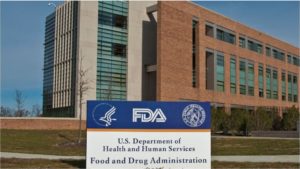
In the latest twist surrounding Sarepta Therapeutics and its rare disease drug (eteplirsen), the Food and Drug Administration has asked the company to provide additional data to review, a move some see as a sign that the agency is looking for ways to approve the treatment. Shares in Sarepta...jumped more than 25 percent...The request comes amid ongoing uncertainty over the fate of a medicine being developed to combat Duchenne muscular dystrophy, which destroys muscle fibers and eventually confines boys to wheelchairs before sending them to an early death...The controversy increasingly resembles the fracas over HIV drugs three decades ago...the FDA appears caught between its mandate to adhere to scientific standards for approving medicines and finding ways to appease the public and authorize treatments for unmet medical needs.
- Pharma Deals Reviewed at Much Higher Rates, BNA Study Finds (bloomberg.com)

Pharmaceuticals deals are being reviewed much more often than other mergers at the Federal Trade Commission, according to an analysis...from the FTC...Drug company acquisitions -- vilified as a key driver of price increases that hurt consumers -- were scrutinized twice as frequently as other mergers in 2013 and about four times more in 2014...they were reviewed at roughly three times the rate of other mergers in 2015. Most of the acquisitions ultimately won approval because the agency could assuage concerns with targeted asset sales...Pharmaceuticals is a narrow area with many sub-markets that each have a lot of consumer impact, prompting the frequent reviews. Any two companies are likely to have at least some overlap in an area that requires a more careful look than the boilerplate reporting information provides – including information about drugs in the pipeline that might compete in the near future...pharmaceutical industry has "experienced significant merger activity in recent years" and that the FTC ...continues to carefully review mergers between pharmaceutical manufacturers and require divestitures where necessary to maintain competition...The Commission is committed to enforcing the antitrust laws in pharmaceutical markets to promote competition and prevent conduct that is likely to harm consumer welfare...
- Gilead won’t have to pay $200 million in patent case because Merck lawyer lied (statnews.com)

In an embarrassing blow to Merck, a federal court judge...decided that Gilead Sciences does not have to pay $200 million in damages that was recently awarded in a patent dispute because Merck displayed a "pervasive pattern of misconduct."...At issue was testimony from a retired Merck patent attorney, who was found to have "lied" repeatedly when recounting events that took place more than a decade ago concerning patents for hepatitis C compounds...Merck held exploratory talks with another company, Pharmasset, about a collaboration...Merck lawyer, Philippe Durette, intentionally gave false testimony during a deposition and a recent trial about his role in those talks...After spending $11 billion to acquire Pharmasset in 2011, Gilead virtually struck gold when it launched the first of the Pharmasset hepatitis C compounds, called Sovaldi...Merck sought royalties from Gilead, claiming the Pharmasset compounds closely mimicked the hepatitis C compounds it was researching a dozen years ago, when talks with Pharmasset were held...Gilead...is "pleased" by the decision that Merck’s patents are unenforceable against Gilead...Merck’s patents are invalid and unenforceable, and we feel vindicated by today’s decision...