
- Pharmacies Won’t Compound Lethal Injection for Alabama Executions (pharmacytimes.com)
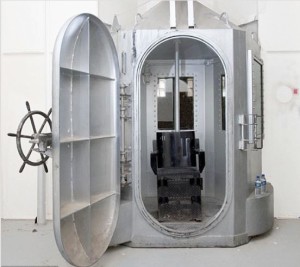
Alabama recently executed its first inmate using a 3-drug cocktail containing midazolam in place of the more commonly used pentobarbital...This is because compounding pharmacies in Alabama were not willing to make pentobarbital for lethal injection...Four other states’ pharmacies also declined to compound pentobarbital for the Alabama Department of Corrections...Both the International Academy of Compounding Pharmacists and the American Pharmacists Association have issued statements discouraging pharmacists from participation in executions...IACP said compounding lethal injection drugs goes against pharmacists’ focus on healing and care. It also pointed out that state boards of pharmacy could potentially seek ramifications against a pharmacy that knowingly prepares a drug that will cause harm...With manufacturers and compounding pharmacies’ resistance, state departments of corrections may have to turn to alternative methods for executions...in April 2015, Oklahoma approved the use of nitrogen hypoxia in a gas chamber if the state could not obtain lethal injection drugs...In Utah, Governor Gary Herbert signed a law in March 2015 that allows for the use of a firing squad as a plan B.
- Virginia the latest state to push drug pricing transparency bill (statnews.com)
Like a legislative game of whack-a-mole, lawmakers in yet another state are pushing a pair of bills that would force drug makers to reveal their costs. Although similar efforts have either failed or stalled in 10 other states, Virginia is now the latest venue where legislators hope a law will provide some transparency into the drug pricing process...Companion bills were introduced in the Virginia House and Senate last month to require drug makers to provide detailed information for each medicine sold with a wholesale cost of $10,000 or more for a single course of treatment. This would include costs for R&D, manufacturing and marketing, as well as price changes, profits, and financial assistance for consumers. Data would appear on a public website...In the absence of action at the federal level, however, more state officials are trying to take matters into their own hands...the pharmaceutical industry has largely succeeded in keeping such legislation at bay...
- Pharmacists take on medical cannabis dispensing role in three states (pharmacist.com)

Pharmacists in Connecticut have been dispensing medical cannabis for more than a year now. The state’s medical cannabis law requires that a board-certified pharmacist be onsite to dispense the product at a medical cannabis dispensary, of which there are currently six in Connecticut...Minnesota pharmacists began dispensing medical cannabis under the state’s 2014 cannabis legislation, and now New York’s law, also passed in 2014, includes language requiring pharmacists to dispense..."There are now three states that have a solid health care model [with a pharmacist to dispense]," said Joseph Friedman, BSPharm, founder of a medical cannabis dispensary in Illinois. Friedman is a vocal supporter of pharmacists’ role in the growing industry. No mandate under Illinois’ medical cannabis law requires pharmacists to dispense, however...Under federal law, cannabis is a Schedule I drug, but Connecticut’s law reclassifies it as a Schedule II drug. Because of this change, medical cannabis goes through the same process as other controlled substances in Connecticut, meaning it’s tracked through the Connecticut Prescription Monitoring and Reporting System, a statewide database updated weekly with patients’ prescription data...University of Minnesota College of Pharmacy is also looking into incorporating education courses about medical cannabis into the pharmacy curriculum...Including New York, 23 states and the District of Columbia currently have laws that legalize and regulate cannabis for medicinal purposes. It’s uncertain, at this point, if and how pharmacists will be part of other states’ dispensing operations...
- U.S. charges drug researchers with sending trade secrets to China, but will case stand up? (sciencemag.org)Scientists Indicted For Allegedly Stealing Biopharmaceutical Trade Secrets (justice.gov)

Attorneys are urging caution in evaluating the strength of a U.S. trade secrets case against two GlaxoSmithKline scientists who were accused last week of transferring trade secrets to China. The case bears some similarities, they say, to other recent cases involving Chinese American or Chinese defendants in which federal prosecutors abruptly dropped charges because of improper analysis or insufficient evidence...Last week, federal prosecutors in Philadelphia...announced the indictments of biomedical researchers Yu Xue and Lucy Xi, as well as three associates, for trade secrets theft, wire fraud, and other charges. The scientists stand accused of emailing and downloading proprietary data about GSK products and sending it to contacts working for the Chinese startup Renopharma, which provides contract research services for early drug discovery...The case comes on the heels of several high-profile investigations into Chinese or Chinese American scientists in which prosecutors have abruptly dropped charges, sparking accusations of racial profiling. This past September, prosecutors dropped charges against Xiaoxing Xi, the interim chair of Temple University’s physics department, after experts submitted affidavits suggesting that his alleged crimes were merely standard scientific collaborations.
- Bowing to pressure, FDA to reform painkiller approval process (reuters.com)
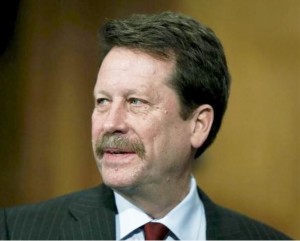
Bowing to pressure from lawmakers, Dr. Robert Califf...nominee to lead the Food and Drug Administration, said on Thursday the agency would reform its process for approving opioid painkillers...Last month Democratic Senator Edward Markey of Massachusetts placed a hold on Califf's nomination, preventing it from being voted on by the full Senate, until the agency agreed to convene an advisory panel to review future opioid approval decisions...The FDA said it has agreed
- ...to convene a committee before approving any new opioid that does not have abuse-deterrent properties. And it said the agency's pediatric advisory committee will make recommendations before any new labeling relating to children is approved.
- ...develop additional safety information for immediate-release opioid painkillers; strengthen the requirement for drugmakers to produce information after a drug reaches the market; and expand access to abuse-deterrent opioid drug formulations.
- ...considering making naloxone...accessible over the counter to treat opioid overdose.
- Gilead accused of manipulating HIV patents (statnews.com)
In the latest legal challenge to Gilead Sciences and its register-ringing strategy, the AIDS Healthcare Foundation has filed a lawsuit accusing the drug maker of manipulating the patent system in order to thwart competition to its HIV medicines. And the nonprofit alleged that countless HIV patients have been prevented from accessing treatment — and may have been harmed — as a result...At issue is tenofovir, or TDF, which is a cornerstone of the combination HIV treatments that Gilead sells. The patent on the TDF compound expires in December 2017 and Gilead hopes to replace it with a modified version known as TAF (Genvoya)....TAF is more potent and causes fewer side effects, notably bone damage and kidney toxicity. The foundation argued that Gilead knew of these differences thanks to animal testing dating back to 2001, but that the company delayed testing TAF in humans until 2011. In doing so, Gilead extended patent protection by a few years, the foundation charged in the lawsuit...the foundation argued that TAF is an obvious modification of TDF and, therefore, does not deserve patent protection... The nonprofit....seeks to have the TAF patents invalidated...Gilead’s refusal to make TAF available as a stand-alone drug appears to be a calculated, anticompetitive maneuver aimed at keeping competing TAF drugs off the market for years despite the weakness of Gilead’s patents covering TAF, the lawsuit claimed. The failure to make TAF available as a stand-alone drug highlights Gilead’s motive of avoiding competition at all costs...Gilead "reevaluated TAF as part of its ongoing R&D review process" and "decided to prioritize" TAF development...the company believes its patents are valid.
- Year in review: Advocating for provider status legislation (pharmacist.com)The Expanding Role of Pharmacists in a Transformed Health Care System (nga.org)
The campaign to pass the Pharmacy and Medically Underserved Areas Enhancement Act (H.R. 592/S. 314) made major strides in 2015. The legislation enables patient access to, and coverage for, Medicare Part B services by state-licensed pharmacists in medically underserved communities. H.R. 592 was reintroduced in the House of Representatives in January 2015… a companion bill, S. 314, was introduced in the Senate...APhA continued its leadership role in growing support for the legislation. PharmacistsProvideCare.com, APhA’s website dedicated to the campaign on provider status, was revamped with information, resources, and tools to help pharmacists advocate to elected officials, policy makers, and decision makers…At the state level, 94 bills—three times as many as last year—were introduced to address patient access to pharmacists’ care. Sixteen bills were introduced on the definition of pharmacists as providers; 53 bills were introduced addressing scope of practice issues, including collaborative practice agreements; and 25 bills were introduced on payment for services. In January, the National Governors Association issued a report recognizing the value pharmacists provide in improving public health and urging states to "consider actions to expand pharmacists’ scope of practice." In April, North Dakota passed a series of measures increasing opportunities for pharmacists and their patients. Other states like Washington and Oregon followed suit..."Our goal in 2016 is to keep the momentum going,"…."In addition to success at the state level, we hope to see continued progress on federal legislation."
- Alibaba health initiative takes it on the chin with CFDA move, lawsuit (fiercepharmaasia.com)

Chinese Internet giant Alibaba suffered two blows this past week: the China Food and Drug Administration announced that it will no longer work with the company on an initiative to track medicines to ensure their authenticity, and a pharmacy chain has filed a lawsuit against the company saying the initiative gave it an unfair advantage over other drug sellers...CFDA Vice Director Sun Xianze held a confab with 20 pharmacy and drug companies and wholesalers on Jan. 27 at which the decision was announced to curtail the deal with Ali Health, a subsidiary of Alibaba...The original plan with Alibaba had its detractors early on who complained about the costs involved and said the plan would do little to stop fake drugs from getting into the hands of unsuspecting patients...CFDA officials said they would continue to push for the bar code tracking system, but would instead work with a nonprofit institution and not a commercial entity...Meanwhile, Alibaba found itself in the middle of a lawsuit filed...by Yangtianhe Pharmacy...The suit says the CFDA broke the law by partnering with a commercial entity to create the system, which is called the Product Identification, Authentication and Tracking System.
- How Would Government Negotiation of Medicare Part D Drug Prices Work? (healthaffairs.org)
Medicare Part D premiums have been flat in recent years but will increase by 13 percent from 2015 to 2016...PDPs are also increasingly placing high-cost drugs on specialty tiers within formularies, which require patients to pay as much as 33 percent of the cost of these medications...Given these rising costs, a growing number of policymakers believe the government, through the Secretary of Health and Human Services, should be allowed to negotiate drug prices in Medicare Part D...federal law currently prohibits the government from negotiating with the pharmaceutical industry to lower the cost of drugs purchased under Medicare Part D. Instead, PDPs are required to negotiate directly with pharmaceutical manufacturers to obtain rebates and other discounts on drugs.
Proponents of government negotiation argue that HHS—because of its significant purchasing power—can more effectively negotiate drug prices than individual Part D plans.
Opponents argue that allowing the government to negotiate prices for Part D would inhibit innovation and limit beneficiary access to medications.
...what it means for the government to "negotiate" drug prices.
- Potential Scope Of Negotiations
- Which Drugs Would Be Negotiated?
- What Is Being Negotiated?
- Would HHS Negotiate For All PDPs?
- The Negotiation Process
- Additional Details Needed
- Estimated Cost Savings Of HHS Price Negotiations
- Next Steps
- U.S. appeals court ruling may clear barrier to generic OxyContin (reuters.com)
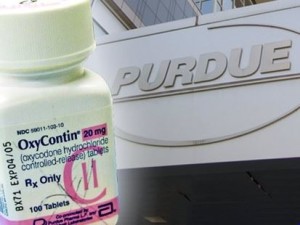
A federal appeals court ruled Monday that four patents related to Purdue Pharma's painkiller OxyContin are invalid, potentially bringing Teva Pharmaceutical Industries Ltd and others a step closer to introducing generic versions of the drug...Purdue had sued Teva, Amneal Pharmaceuticals, Epic Pharma and a U.S. arm of Mylan NV after they sought approval from the Food and Drug Administration to make generic OxyContin...Despite the court's ruling, Purdue has several other patents protecting OxyContin, and we do not anticipate generic manufacturers selling the product in the near future...Three of the patents Purdue sought to enforce in its lawsuits are related to an improved formulation of oxycodone, the active ingredient in OxyContin...The other patent describes technology designed to prevent abuse of the drug by making it difficult to crush and causing it to form a gel when dissolved in water so that it cannot be injected...Purdue appealed all four cases to the Federal Circuit...